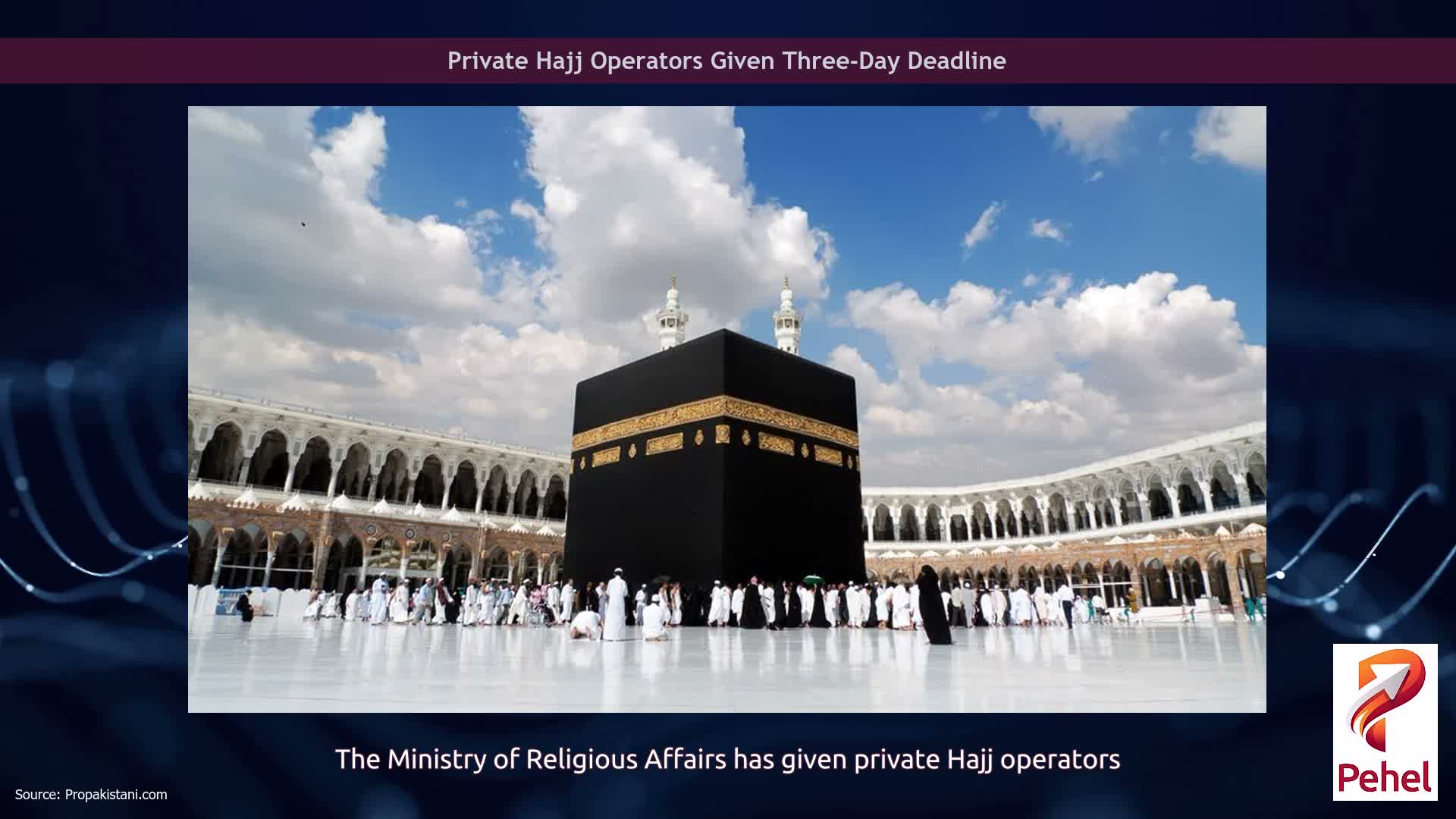
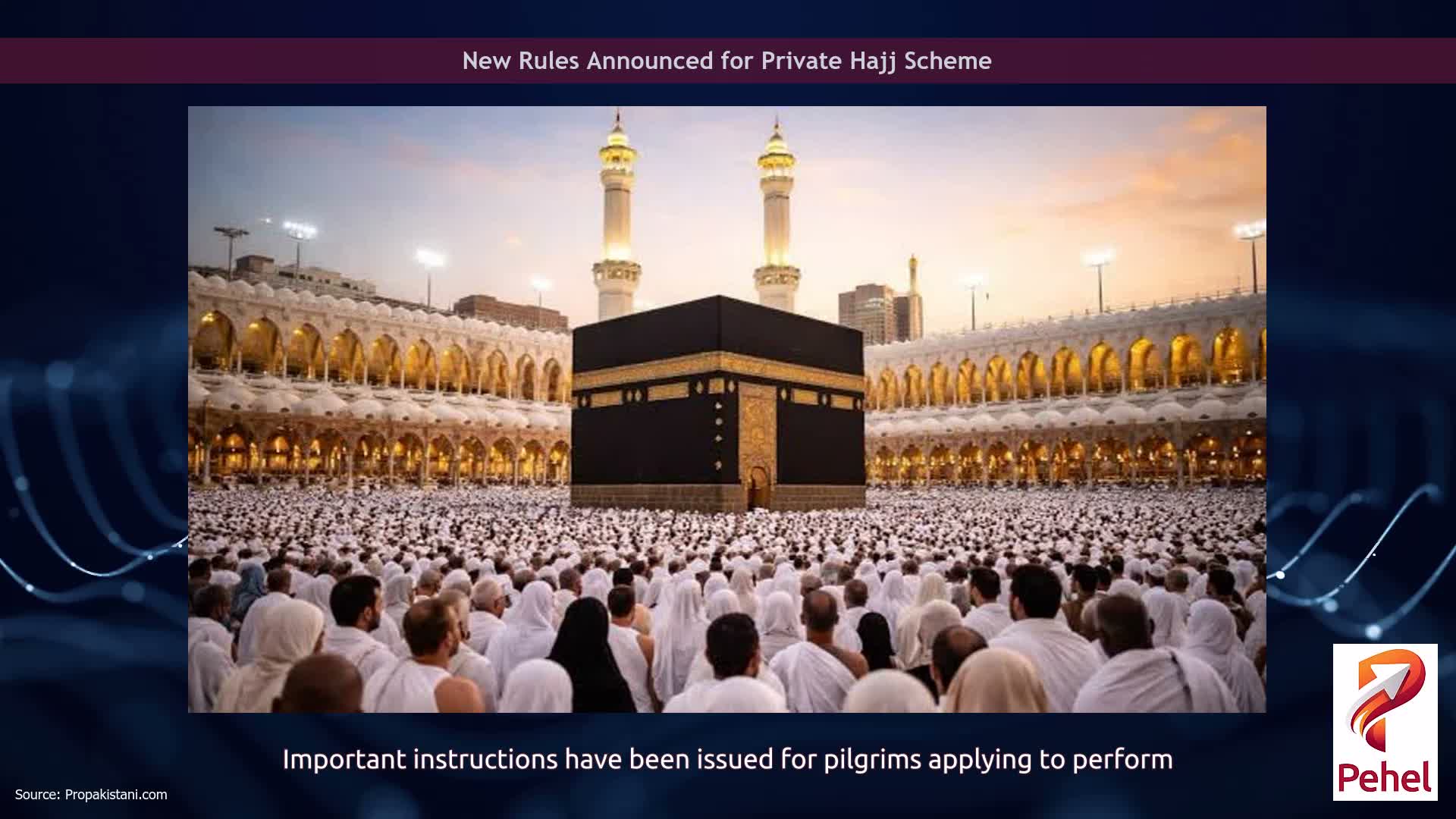
Pakistan’s Ministry of Religious Affairs and Interfaith Harmony has introduced the country’s first comprehensive multi-year Hajj Policy and Plan, covering the period from 2027 to 2030.
The 16-page policy aims to improve cost efficiency, transparency, and operational stability by replacing the traditional year-to-year planning model with a longer-term framework.
Under the new system, the government plans to secure three- to four-year contracts in Saudi Arabia for accommodation, air travel, transportation, catering, and baggage handling.
The overall Hajj quota will be divided between the government and private sectors, with 60% allocated to the Government Hajj Scheme and 40% assigned to private operators.
All paper-based cash transactions will also be discontinued. Payments and other financial operations will be processed through the State Bank of Pakistan and integrated digital portals.
A multi-year registration system will be introduced to help citizens plan their pilgrimage in advance.
Applicants will be able to reserve priority for their preferred Hajj year by depositing 10% of the estimated total cost under the new Hajj Savings Scheme. Registrations will be processed on a first-come, first-served basis.
Government scheme applicants will have the option of choosing between a standard package lasting 38 to 42 days and a shorter package of 20 to 25 days.
Any surplus remaining after the completion of Hajj operations will be refunded directly to pilgrims.
The policy allows women to perform Hajj without a male guardian, or Mahram, provided they submit an official undertaking.
The move is among several social and regulatory reforms included in the new long-term plan.
The government has also introduced stricter regulations for private Hajj companies to prevent monopolies and eliminate cartelization.
The buying, selling, and subletting of Hajj quotas will be prohibited.
Private operators will be required to register with the Securities and Exchange Commission of Pakistan, maintain specified capital reserves, and process all pilgrim information through the official Private Hajj Management Portal.
Companies will also have to provide a 5% performance guarantee to qualify for a three-year license.
Operators that fail to maintain a minimum quota of 2,000 pilgrims will be deactivated. They will lose half of their security deposit, while their pilgrims will be transferred to other operators.
Mandatory training sessions will be held for pilgrims covering Hajj rituals, Saudi laws, health and hygiene requirements, and the use of relevant mobile applications.
Welfare assistants, known as Moawineen, will be recruited on merit under guidelines prepared by the Cabinet Committee on Private Hajj Policy.
The policy also includes financial protection through the Takaful-based Hujjaj Muhafiz Scheme.
Each pilgrim will pay a non-refundable fee of Rs. 1,000. Under the scheme, the family of a pilgrim who dies during Hajj will receive Rs. 2 million, while Rs. 250,000 will be provided for emergency medical evacuation.
An Emergency Response Team will also be established under the Director-General of Hajj to manage crisis situations.
The federal minister will retain the authority to amend the policy in response to changes in Saudi regulations and operational requirements.
Get the latest news and stories wherever you prefer.
Add ProPakistani to Preferred Sources and see more of our stories in Google Search and Top Stories.
Shares