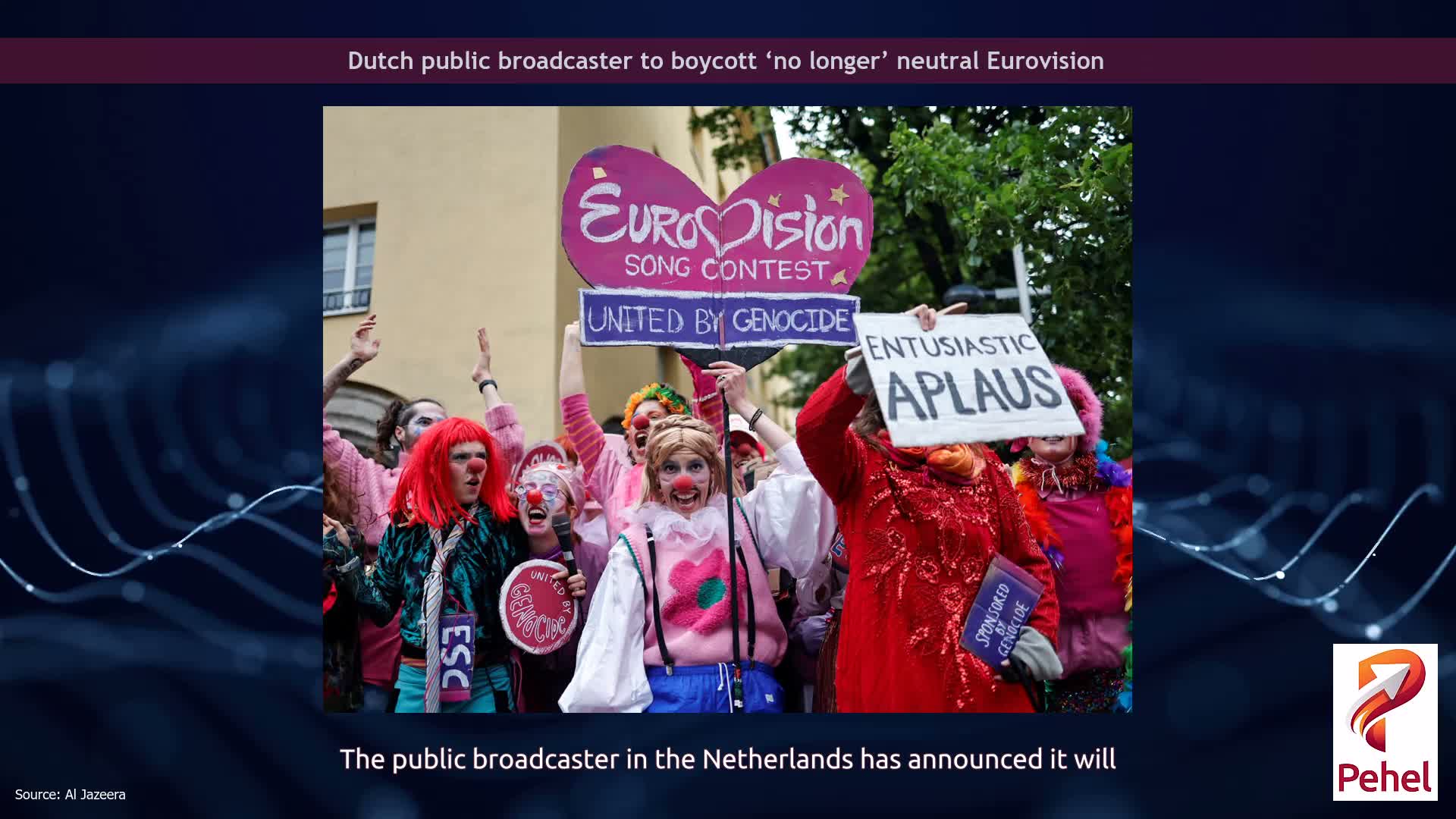
On Saturday, millions of viewers will tune in to the Eurovision Song Contest final , a veritable feast of sequins, smoke machines, and unabashedly kitsch, formulaic Europop.
At its heart, the contest has always had a tongue-in-cheek quality, with commentators often adopting dry, sardonic tones, while artists lean into the spectacle with flamboyant costumes and performances that revel in not taking themselves too seriously.
Its organiser, the European Broadcasting Union (EBU), describes the contest as a celebration of music and unity and insists it remains above politics.
But in recent years, Israel’s participation has placed that claim under unprecedented strain.
The controversy over its inclusion has prompted boycotts by artists and broadcasters, as well as accusations that the EBU, which has banned Russia after its full-scale invasion of Ukraine in 2022, is guilty of double standards.
For critics, the issue is not only whether Israel should compete while its attack on Gaza and Lebanon continues, but it is also whether it can still be considered a neutral cultural event when participation itself has become a geopolitical battleground.