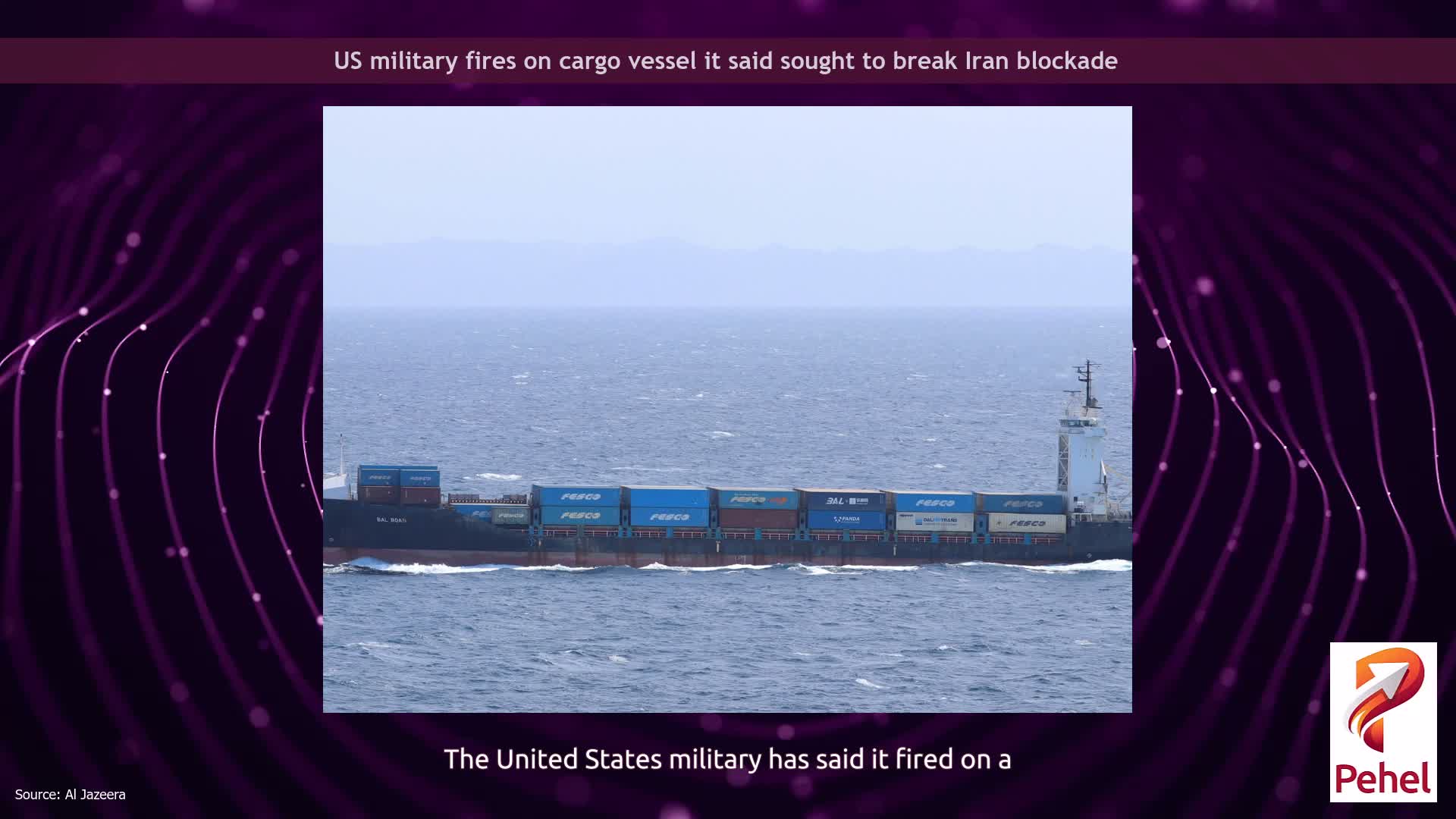
President Donald Trump says the US has struck seven Iranian "fast boats" in the Strait of Hormuz, as Washington seeks to guide stranded ships out of the Gulf through the largely closed waterway.
The UAE and South Korea both reported strikes on ships in the vital channel on Monday. The UAE also said a fire broke out at the oil port of Fujairah after an Iranian attack.
Shipping company Maersk told the BBC that one of its US-flagged vessels had successfully exited the strait with US military protection - under what Trump has called "Project Freedom".
Iranian Foreign Minister Abbas Araghchi said that events in the strait "make clear that there's no military solution to a political crisis".
He added: "Project Freedom is Project Deadlock."
Maersk said the transit of one of its commercial vessels was "completed without incident, and all crew members are safe and unharmed".
The Strait of Hormuz has remained largely blocked since the US and Israel launched air strikes on Iran in February. Tehran responded by blocking the crucial waterway through which 20% of the world's oil and liquefied natural gas is meant to pass freely.
In early April the US and Iran announced a ceasefire under which Iran ended its drone and missile strikes on Gulf countries including the UAE, but few vessels have been able to transit the strait since then and the US imposed its own blockade on Iranian ports.
Trump said: "We've shot down seven small boats or, as they like to call them, 'fast' boats. It's all they have left." The US military said it had used helicopters to attack the boats. Iran denied such attacks had taken place.
Earlier the US said navy destroyers and US-flagged merchant ships sailed through the strait on Monday. Iran called the claims "entirely false" and said its military said it fired warning shots at a US warship. The US military denied this.
Later on Monday shipping firm Maersk said its US-flagged vessel the Alliance Fairfax, which had been stranded in the Gulf since the US and Israeli attack on Iran at the end of February, had exited the Strait of Hormuz.
The firm had been contacted by the US and "offered the opportunity for the vessel to exit the Gulf under US military protection", the firm said. "The vessel subsequently exited the Persian Gulf accompanied by US military assets, the firm, said in a statement.
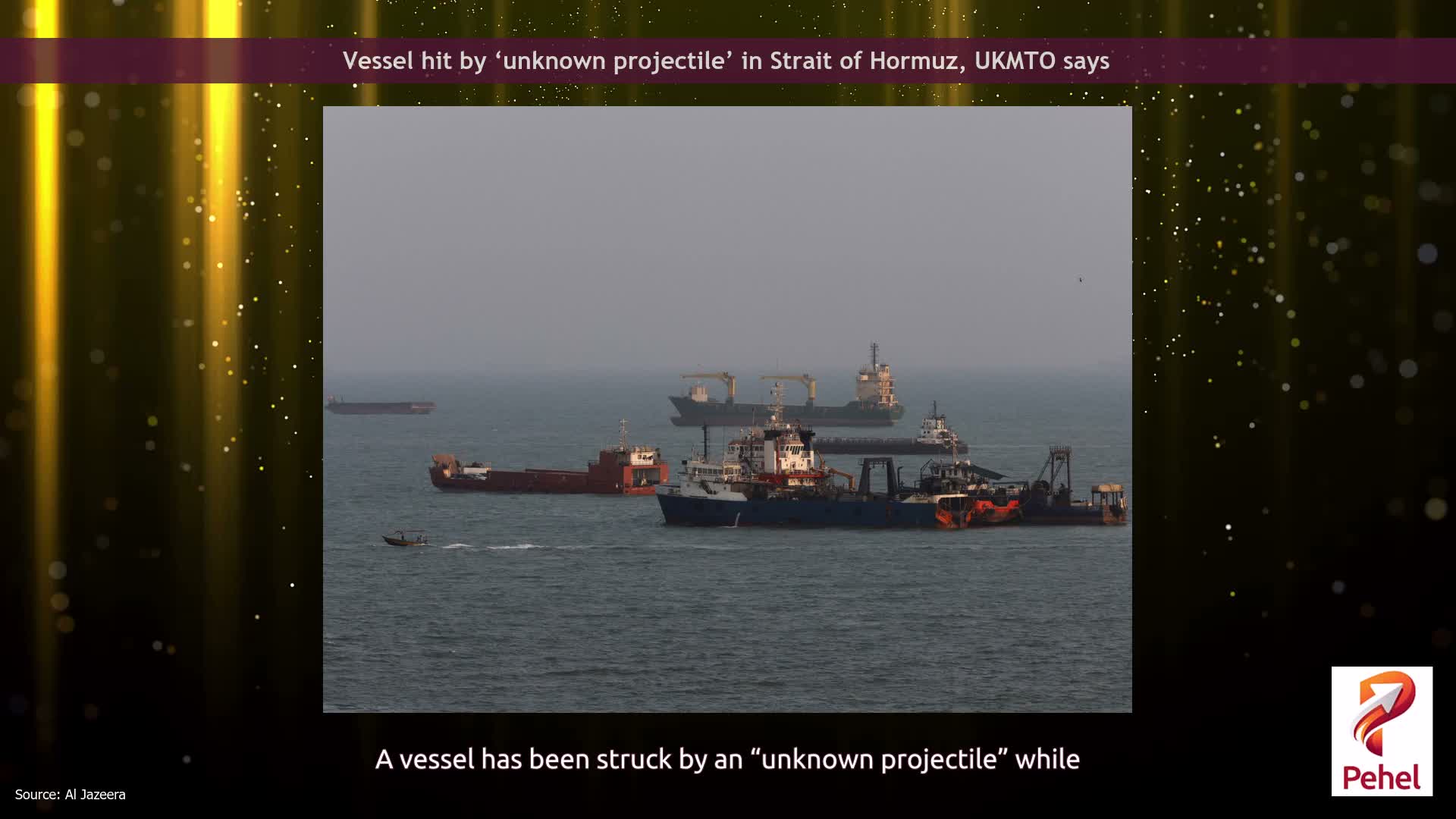
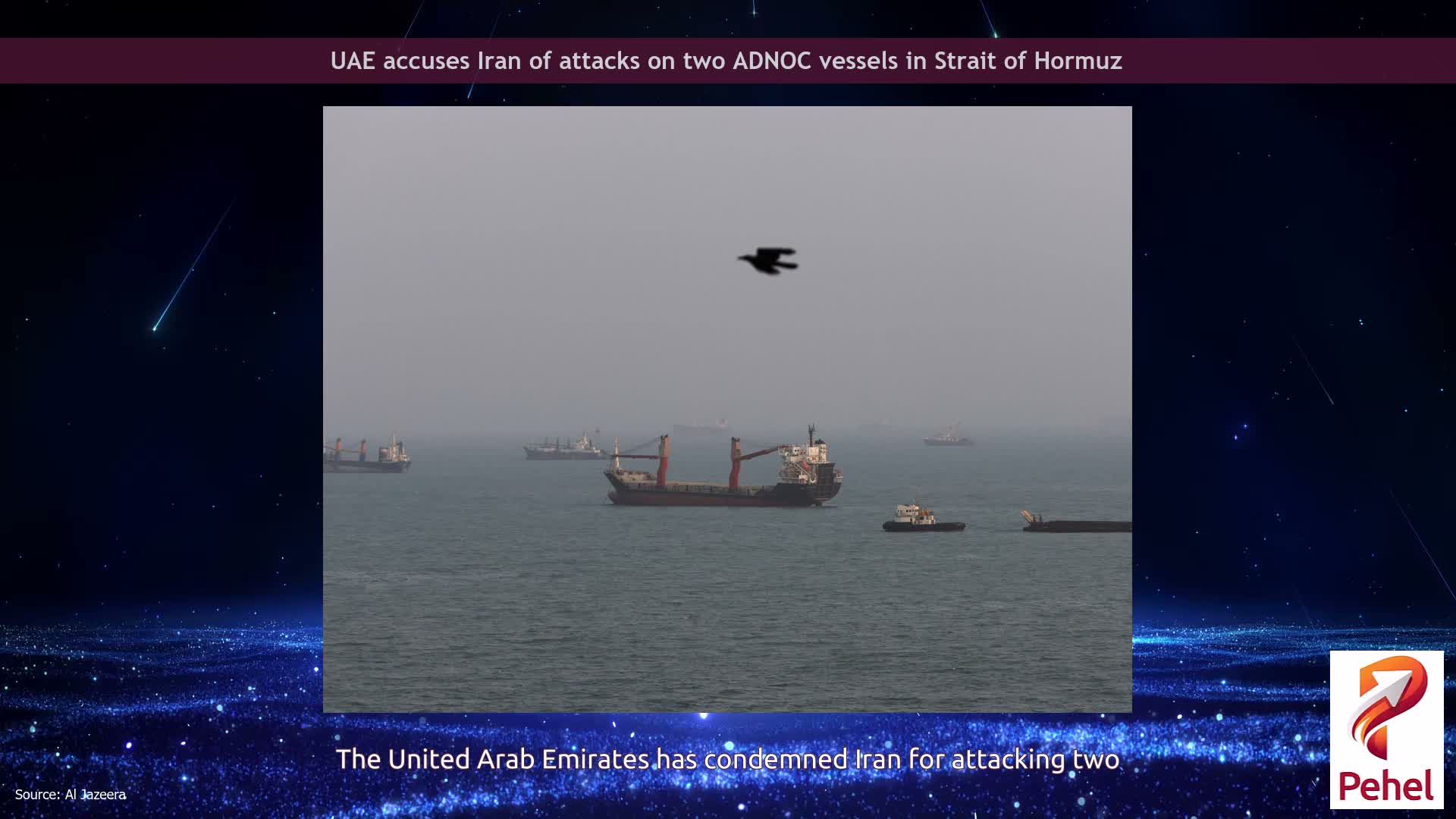
Meanwhile the UAE's foreign ministry reported a tanker affiliated with Adnoc, its state-owned oil company, was hit in the Strait of Hormuz. South Korea also reported an explosion on one of its ships anchored just off the UAE.
The UAE authorities also reported air defences had engaged 12 ballistic missiles, three cruise missiles and four drones. Local officials said one strike caused a large fire and three injuries at its key oil port of Fujairah.
The UAE called the attacks a "dangerous escalation" and said it reserved the right to respond. Iranian state TV has quoted an unnamed military official as saying that Iran had "no plans to target the UAE".
The benchmark Brent crude oil price passed $115 a barrel shortly after the reports that Fujairah had come under attack, up more than 5% on the day.
Fujairah lies on the east coast of the UAE, beyond the Strait of Hormuz. A pipeline from the oilfields of Abu Dhabi runs to Fujairah, allowing limited amounts of crude to be loaded on to tankers and shipped to world markets despite the strait being effectively blockaded.
Neighbouring Qatar condemned the attack on the tanker affiliated with Adnoc and called for the strait's "unconditional reopening".
In Oman, two people were injured when a residential building was targeted in Bukha, along the coastline of the Strait of Hormuz, state media reported on Monday.
On Sunday, Trump said the US would start helping stranded vessels out of the shipping lane as part of "Project Freedom". An estimated 20,000 seafarers on 2,000 ships have been stuck since the US-Iran war began in February.
The president said the US had been asked by countries "from all over the World" to help free up their ships which were "locked up in the Strait of Hormuz" and were "merely neutral and innocent bystanders!".
There has been growing concern over dwindling supplies and the effects on sailors' physical and mental health.
But Trump did not say how they would be able to sail away - he only threatened to use force "if, in any way, this Humanitarian process is interfered with".