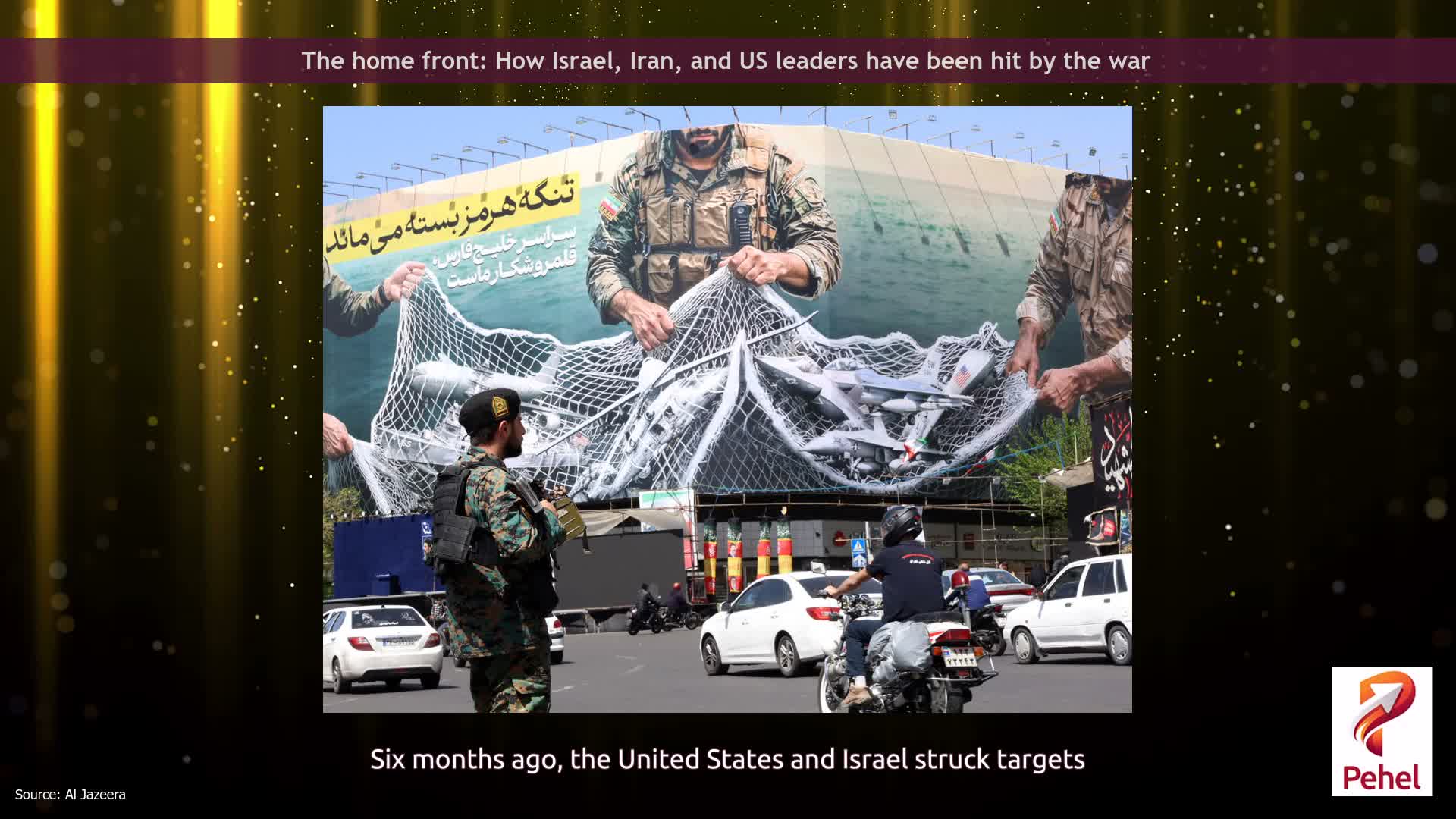
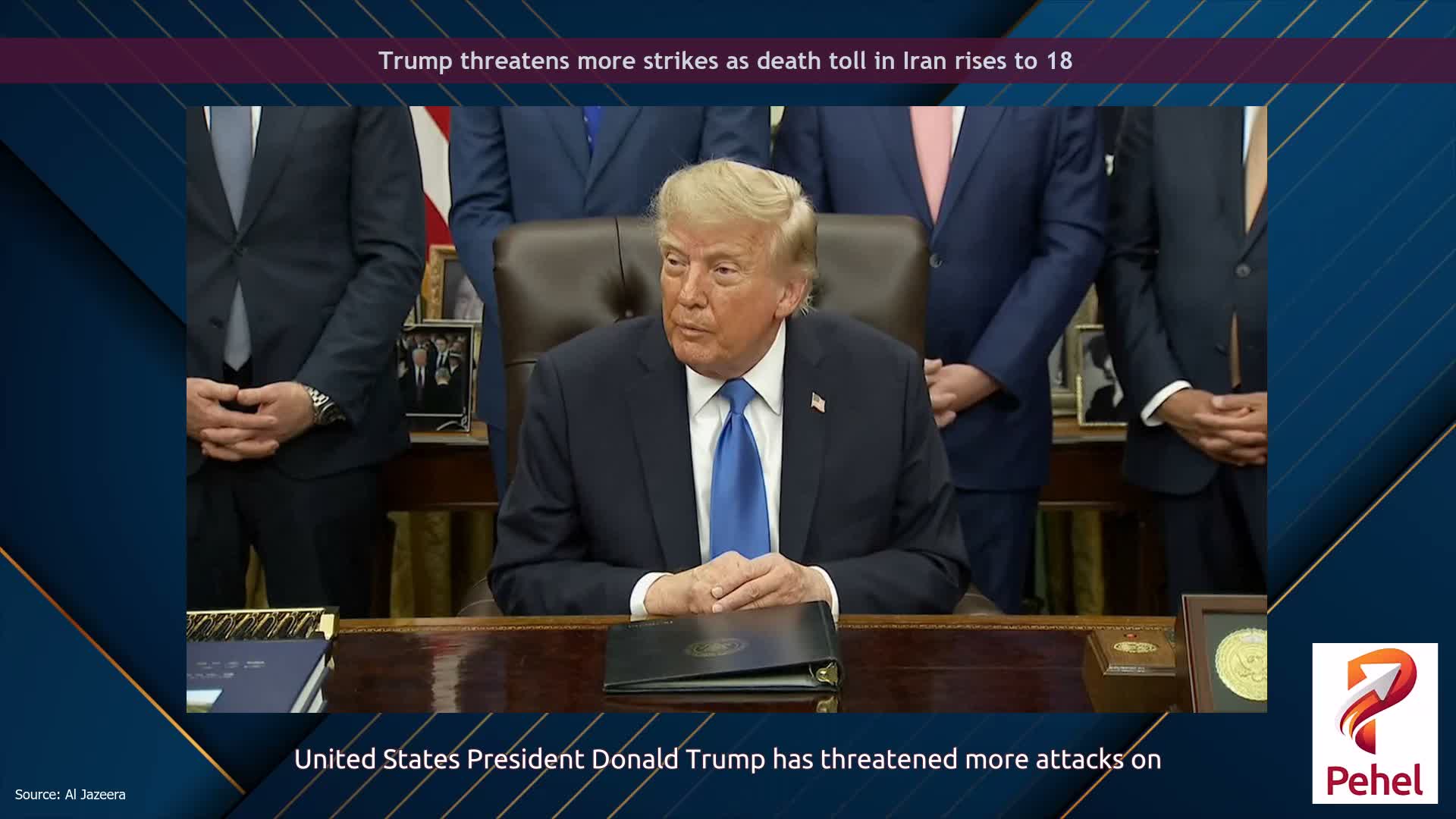
Fresh US strikes triggered air defences in Tehran on Wednesday after President Donald Trump warned he was “ not finished ” with a war on Iran that has already cost his nation $37.5 billion.
After the foes’ fighting over the strategic Strait of Hormuz led to the collapse of a preliminary deal , the Middle East war has expanded to include the region’s other key chokepoint for global oil supplies.
The US military said its latest attacks hit targets such as “military logistics infrastructure” while Iranian state media reported strikes around the country, including Bushehr, which hosts a nuclear power plant.
“News sources reported minutes ago that air defence activity was heard in the west, east and northeast of Tehran,” state TV posted on Telegram.
As the war nears the five-month mark and November legislative elections approach, Trump has faced intense political pressure to end the conflict, which is unpopular even with segments of his base.
Critics have pointed to the cost of the war that Pentagon Chief Pete Hegseth said on uesday had soared to $37.5 billion , defending a request for tens of billions in additional funding for the military.
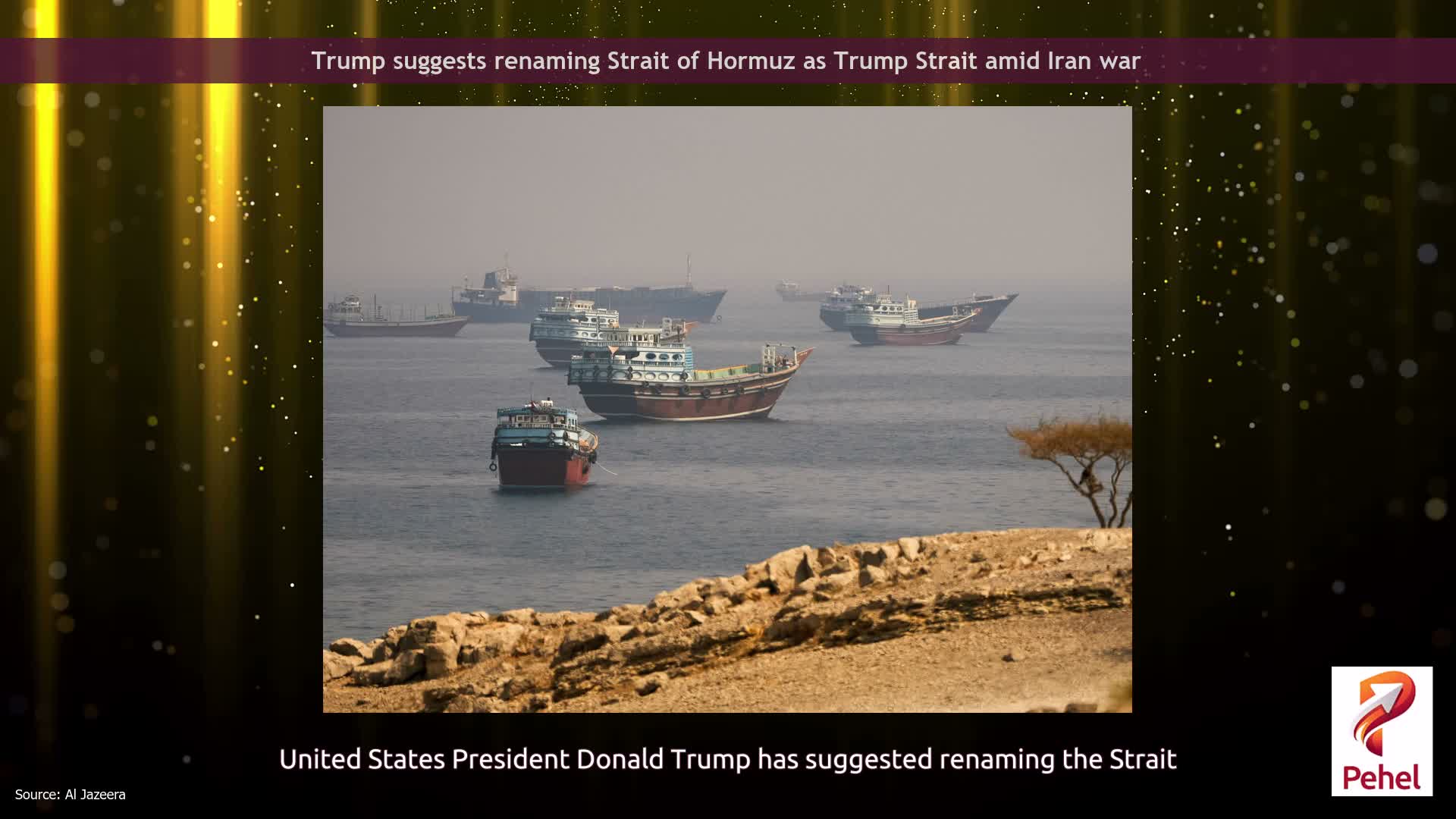
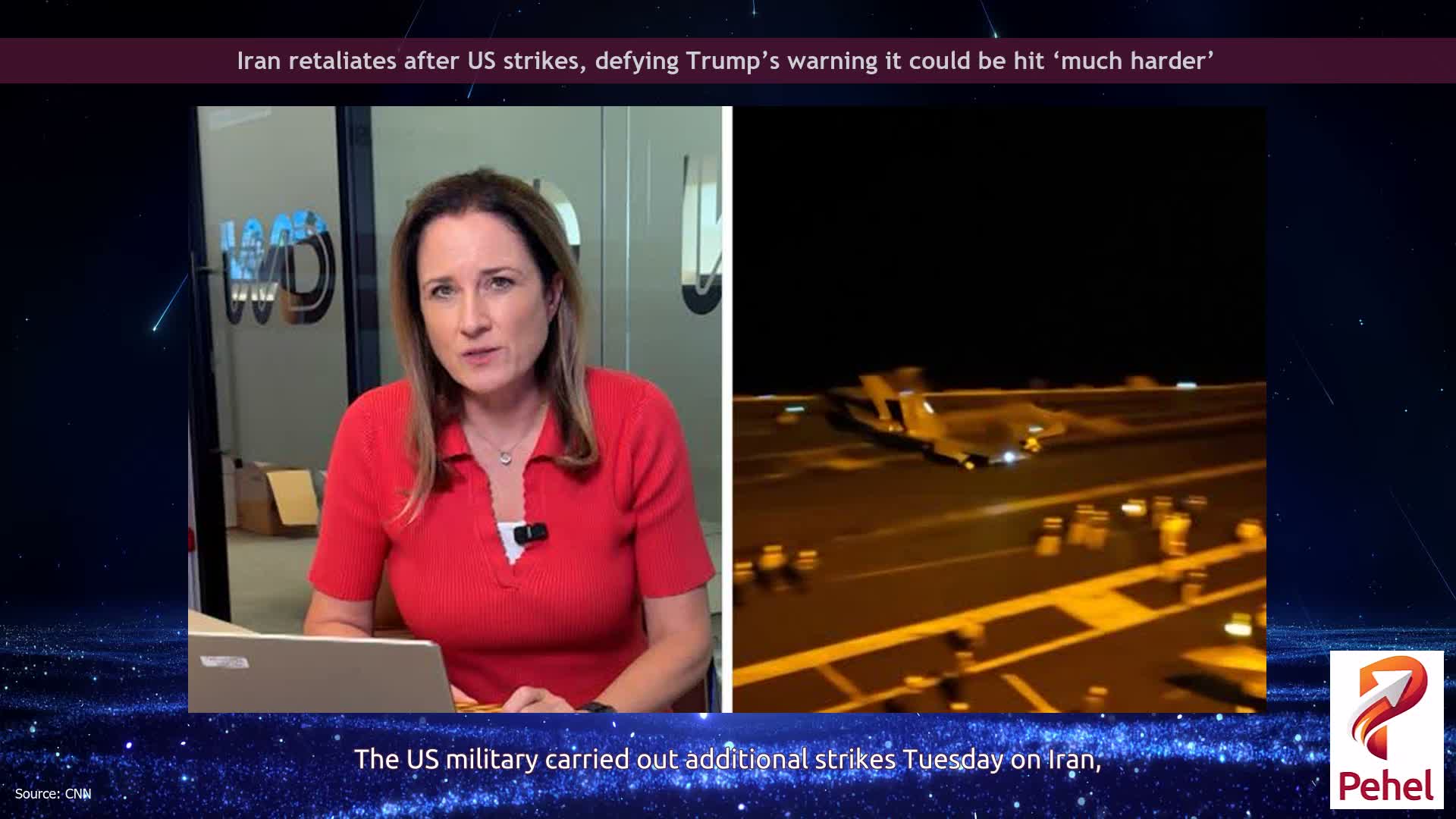
The US military said on Tuesday it had launched an eleventh consecutive night of strikes against Iran, saying it targeted military sites to further degrade Iran’s ability to threaten commercial shipping in the Strait of Hormuz.
Trump said on Tuesday that the next US target could be an underground complex known as Pickaxe Mountain, a subterranean nuclear site near Natanz where Western intelligence suspects Iran is building an undeclared enrichment facility.
Iran threatened reprisals, with the Khatam Al-Anbiya military command saying it would “consider it as an expansion of war in the region” if such an attack were carried out, threatening strikes on “all the interests of America, the allies and supporters”, state-run broadcaster IRIB reported.
The warning came as Tehran broadened its offensive against US-allied Gulf states after its Houthi allies threatened to blockade Saudi ports.
Two weeks after fighting resumed between the decades-old foes, Trump said Iran would need more than 20 years to recover from the damage inflicted in the Middle East war.
“If we left right now, it would take Iran 20, 25 years to rebuild,” he said. “We’re not finished at all … we’re not leaving right now.
Kuwait’s army said on Wednesday its air defences were engaging with drone attacks from Iran, the latest round of Tehran’s reprisals.
US ally Bahrain said on Tuesday it intercepted Iranian attacks as sirens sounded repeatedly, while Kuwait and Jordan said they had intercepted drone and missile strikes.
The Iranian army had said it targeted US assets in Kuwait and Bahrain, including air defence systems, radar installations and administrative buildings.
“With this radar sweep, the enemy should prepare for even more decisive and powerful waves of drone and missile attacks,” the Guards said in a statement carried by state news agency IRNA .
Trump said he would “take care of” Yemen’s Houthi rebels if they followed through on a threat on Monday to blockade Saudi Arabia’s ports.
“If something like that happens, we take care of it,” Trump said. “We’ve done that with the Houthis before, and we haven’t heard from them in a while since we did what we did originally.”
Saudi Arabia strongly condemned the threat from what it called the “terrorist Houthi militia”.
It remains unclear how the Houthis would enforce such a blockade.
But maritime intelligence provider Vanguard Tech said a Singapore-flagged tanker and a Liberia-flagged tanker both “reversed course” in the Red Sea after loading crude at the Saudi port of Yanbu.
If the Houthis make good on the threat, they could endanger Riyadh’s ability to bypass the Strait of Hormuz for some oil exports, with major repercussions for the global economy.
The Revolutionary Guards said on Tuesday that two tankers attempting to transit the strait “were hit by explosions, resulting in massive fires that brought them to a standstill”.
The UK Maritime Trade Operations agency earlier reported that an “unknown projectile” struck a tanker off the coast of Oman.
Despite the fighting, Iranian foreign ministry spokesman Esmaeil Baqaei said diplomatic exchanges with Washington through mediators were continuing.
With Pakistan leading mediation efforts, Prime Minister Shehbaz Sharif also called for restraint during a meeting with Iran’s Interior Minister Eskandar Momeni on Tuesday. He urged all sides to “refrain from actions that could further destabilise the region”, the PM’s Office said.