The list of demands from Iran can’t have surprised the White House.
Hardliners have been repeating the mantra on a daily basis: the limited agreement in the works with Oman on the Strait of Hormuz is not the same as reopening the vital waterway in the way Washington wants.
For that, they say, “America must correct its behavior.”
Tehran has now spelled out what means, laying out a series of conditions that appear to go beyond the memorandum of understanding which was agreed in June but later suspended amid US strikes on Iran, Iranian retaliation across the Middle East and a resurgence of attacks on shipping.
On Saturday, Mohammad Bagher Zolghadr, a highly influential figure in the Revolutionary Guards, reeled off a maximalist set of demands.
That Iran is issuing such demands underlines the perception that Tehran believes it has the upper hand. CNN has reported on dwindling US munitions - something angrily denied by President Trump - and suggestions that his top general is looking for an “off-ramp” in the conflict.
It is also likely that Iran has taken notice of how many times Trump has threatened major strikes before not following through on the threat.
Zolghadr demanded the US lift its naval blockade and withdraw its military forces from around Iran.
The US must also pay damages caused to Iran by the wars this year and in June last year (which was principally conducted by Israel), he said. And the US must lift sanctions and release, unconditionally, Iranian assets frozen abroad.
The implication of Zolghadr’s statement was that these conditions must be fulfilled before or in tandem with concessions on the strait, which would be at odds with the formula set out in the memorandum of understanding.
That held that sanctions would be fully removed once a final deal regarding Iran’s nuclear program was reached and envisaged a phased release of assets, in which the two sides “will mutually agree on the procedures related to the release of these funds.”
Iran’s apparent new strategy, though, is not without risk.
The fresh demands “narrows the options for the Trump administration,” according to the former Supreme Allied Commander of NATO, James Stavridis.
“Iran is overplaying its hand and it appears the hardliners are in control. The likelihood of a deal in the immediate term is declining,” Stavridis posted on X Sunday.
The Trump administration has not responded to the latest Iranian conditions.
“What we’re really working through now is how you can actually set up a traffic scheme so that the ships that pass can pass through safely,” US Vice President JD Vance told Fox News on Saturday.
But the current situation smacks of stalemate.
Iranian officials, whether perceived as moderates or hardliners, are saying that renewed negotiations with the US are not in prospect.
“As long as the United States has not addressed its violations of the memorandum of understanding and remedied those breaches, we see no possibility of restarting negotiations,” Foreign Minister Abbas Araghchi said Sunday.
“We currently have no negotiations with America. Yes, there is an exchange of messages through intermediaries,” he added.
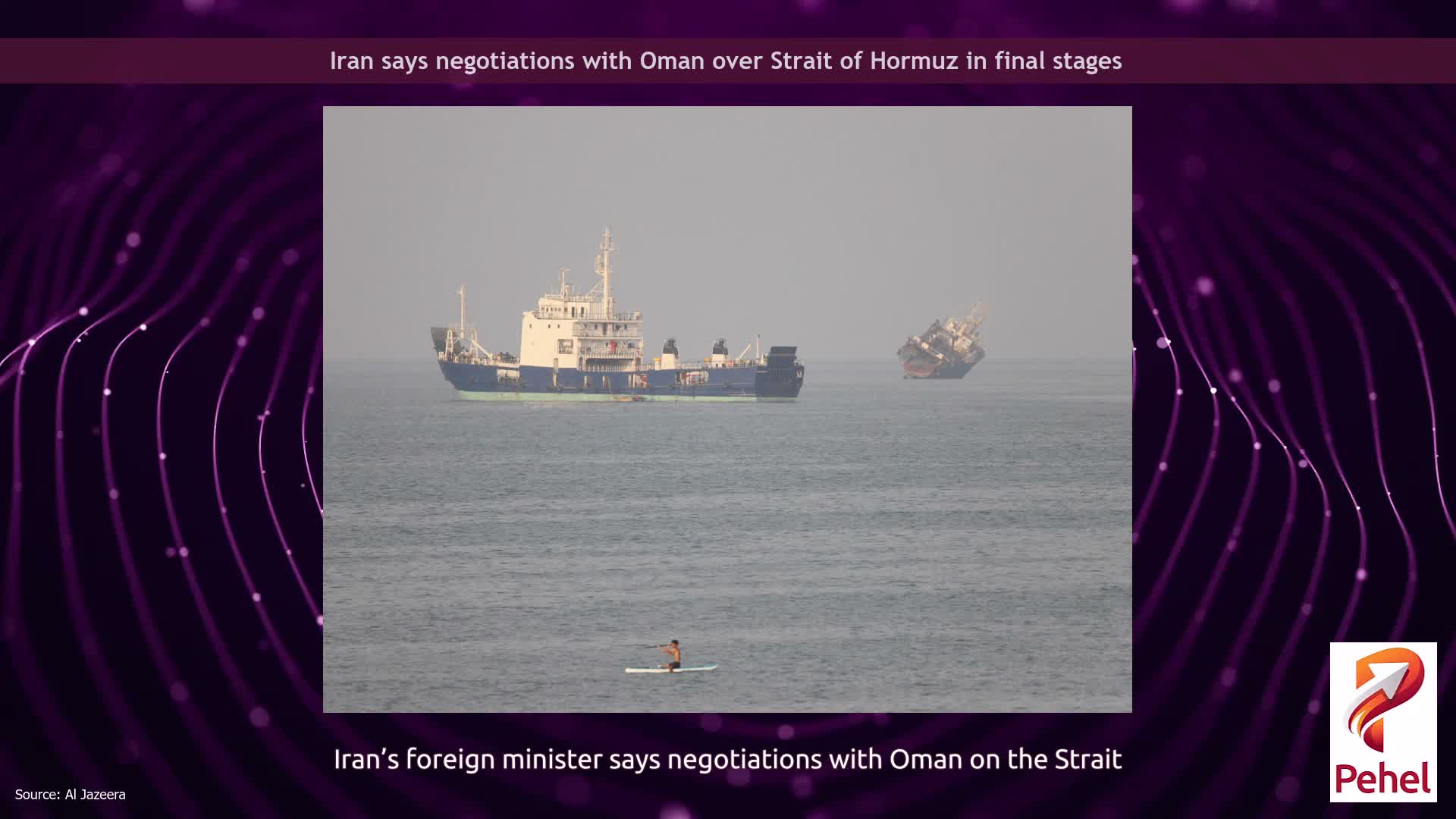
Araghchi referred to the more limited and temporary arrangement for Hormuz being negotiated with Oman, which borders its southern shoreline.
“I can say we are in the final stages, and the old routes that existed will be replaced with new routes,” he said, referring to how the thin traffic traveling through the strait is currently split between Iranian and Omani paths.
“This, of course, does not mean the opening of the Strait of Hormuz,” Araghchi told reporters in Tehran, which was “subject to the fulfillment of a series of other conditions.”
Other Iranian officials have indicated that an agreement with Oman would continue to give Iran considerable influence in the strait, which it did not enjoy before the war but which has become a red line as important as the nuclear issue for Tehran.
Deputy Foreign Minister Kazem Gharibabadi said last week the arrangement reflects a new strategy for exercising “effective sovereignty” over the strait, while stressing that Iran does not intend to routinely close the waterway in peacetime.
Iran’s Foreign Ministry spokesman Esmaeil Baghaei cautioned last week that there could be a deal with Oman “provided that certain third parties do not obstruct the process” in a far from cryptic reference to the US.
Trump’s top general is ‘looking for an off-ramp’ from Iran war
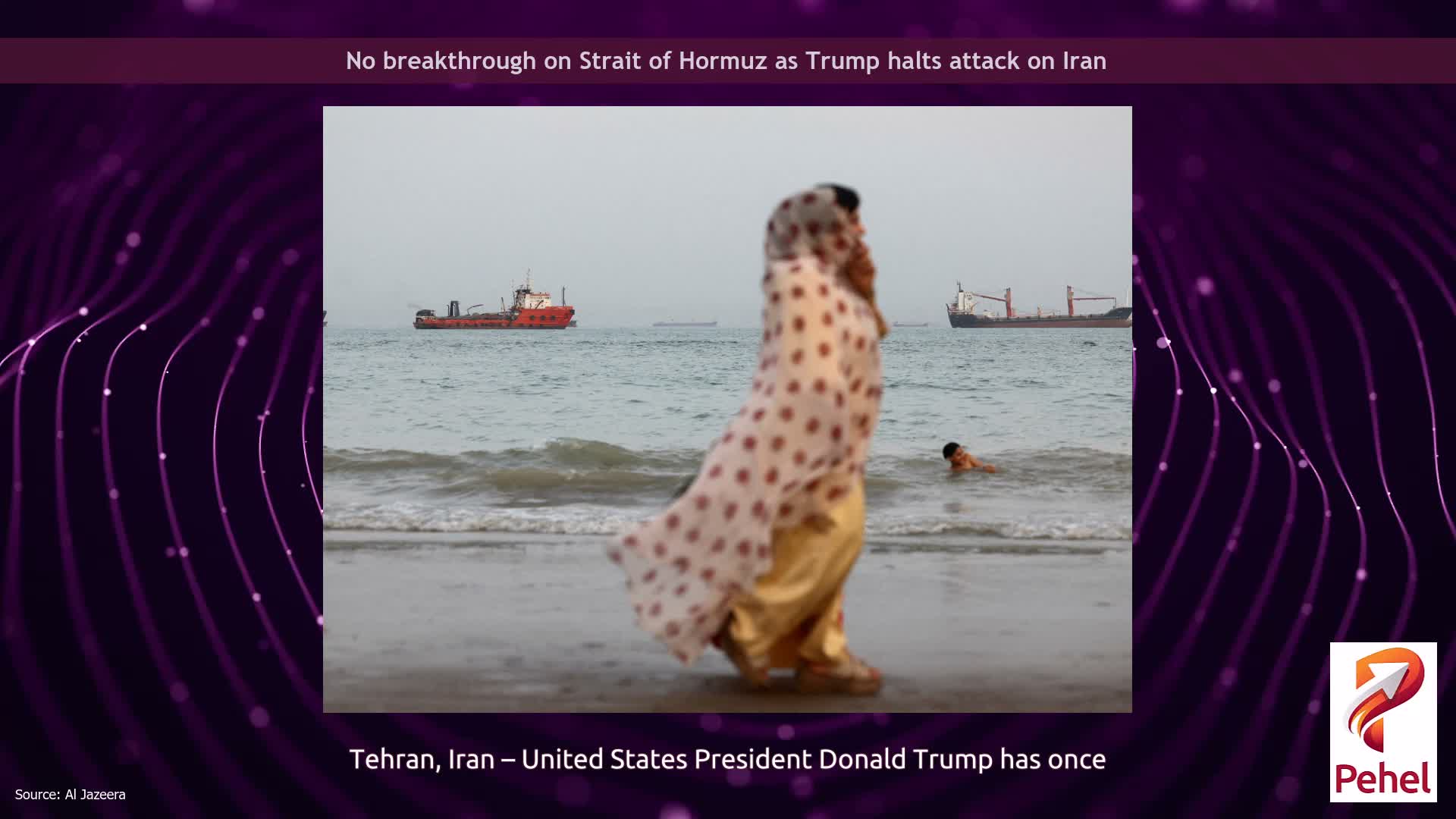
Amidst the uncertainty – and sporadic attacks on ships passing through the Strait – traffic remains very limited. An average of about a dozen vessels a day have transited in the past week, according to shipping data.
That’s about one-tenth of the normal pre-war traffic.
Already into its sixth month, the conflict between the US and Iran shows no sign of resolution - but has instead evolved into an unpredictable cycle of escalation and pause.