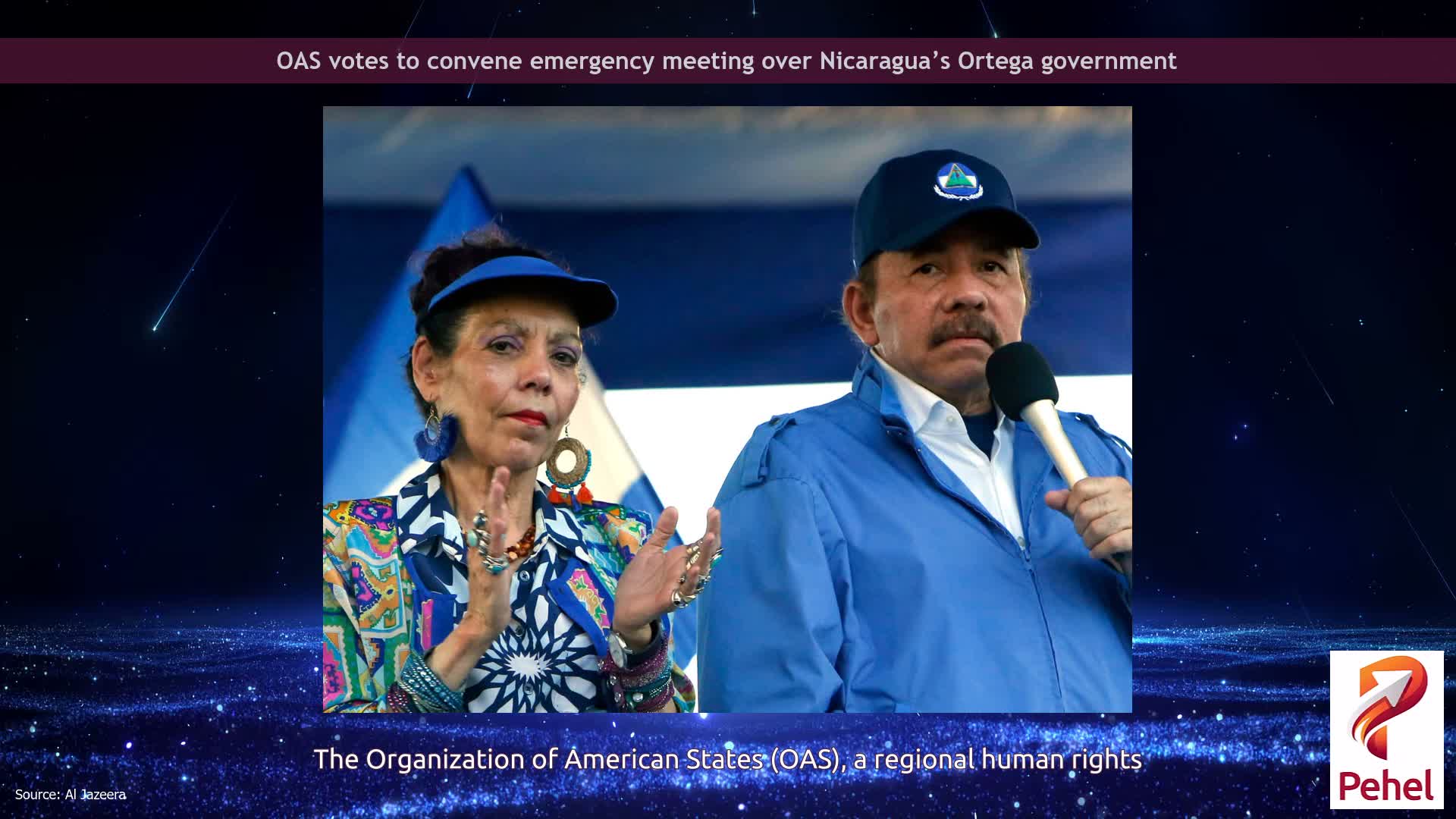
Nicaraguan President Daniel Ortega, who has been in power since 2007, has proposed extending the presidential term by another year.
The government-controlled National Assembly is expected to approve the extension in September.
It is part of a proposed constitutional reform which also includes plans to bar members of the opposition deemed by the government to be "traitors" or "coup plotters" from running for office.
The 80-year-old's rule has become increasingly authoritarian, with political opponents jailed, sent into exile and stripped of their citizenship.
During Ortega's 19 years in power, there have been several changes to the presidential term already.
In 2014, the country's National Assembly scrapped presidential term limits and in 2024 it extended the term from five to six years.
The legislative body also approved Ortega's plan to name his wife, Rosario Murillo, as "co-president".
It thereby paved the way for her to assume as president should Ortega, who is believed to be in frail health, be declared "permanently absent".
Presidential elections were last held in Nicaragua in November 2021.
The one-sided contest was won by Ortega following a brutal crackdown on the opposition.
Any rival potential candidates with a chance to garner a significant number of votes were detained and disqualified from standing for office or forced into exile. Dozens of other opposition members were also arrested.
Only a small handful of little-known candidates, who were unlikely to get much support, were allowed to stand.
United Nations human rights chief Volker Türk has warned that government repression has deepened further since then, with the rule of law steadily eroded and the persecution of political dissidents escalating.
Few Nicaraguans have dared to speak out in public against Ortega and Murillo since more than 300 people were killed when the security forces quashed anti-government protests in 2018.
Dissidents living in exile have also been targeted with many stripped of their citizenship by the Ortega government, their homes they left behind in Nicaragua seized and sold.