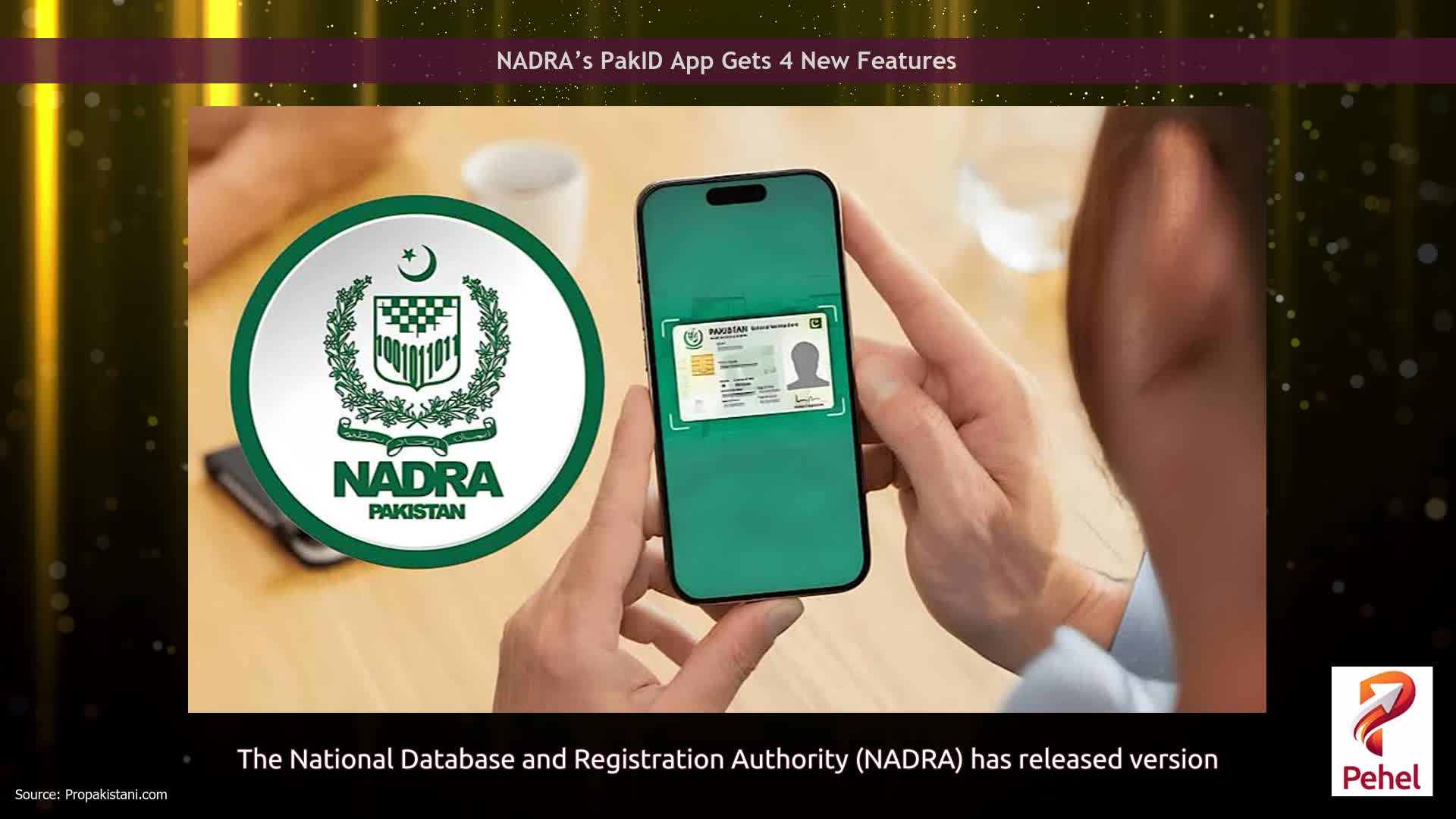
The National Database and Registration Authority (NADRA) has introduced a new chipless National Identity Card built around a secure QR code.
The card has been manufactured in Pakistan by the National Security Printing Company (NSPC), Karachi, in accordance with NADRA’s technical and security requirements. By replacing the imported microchip, the new design removes dependence on a foreign-sourced chip while improving secure digital verification.
The Federal Government approved issuance of the new card on 23 February 2026. It replaces the microchip with a secure QR code that can be read and verified on a smartphone through the Pak Identity (PakID) mobile application.
The QR code will contain relevant cardholder information and the cardholder’s photograph. This will allow institutions to capture names, addresses and other required identity information more easily and consistently in their computerized systems, while reducing data-entry errors.
The new card will also display the family number and specific symbols identifying persons with disabilities, senior citizens, organ donors and citizens of the State of Azad Jammu and Kashmir. The cardholder’s name and address will appear in both Urdu and English. Its visible and covert security features have also been updated to meet current requirements and align with domestic manufacturing capabilities.
The chip-based Smart National Identity Card was introduced approximately 14 years ago. In practice, however, its chip-enabled functions could not be used as intended because chip readers and the supporting infrastructure were not available.
The new QR code-based card addresses this constraint by allowing verification through an ordinary smartphone or through appropriate software connected to a camera. Telecom operators, banks, hospitals, Pakistan Railways, police and other authorized institutions will also be provided with software to read and verify the QR code on the card.
The new card is being introduced in phases. In the first phase, starting on 14 August 2026, the QR code-based card will replace the standard National Identity Card only.
From January 2027, it will also be issued for all categories of national identity cards, including the National Identity Card for Overseas Pakistanis (NICOP) and Juvenile Cards. In the final phase, the Pakistan Origin Card (POC) will also transition to the chipless, QR code-based format.
All types of identity cards already issued will remain valid until their respective expiry dates.
Get the latest news and stories wherever you prefer.
Add ProPakistani to Preferred Sources and see more of our stories in Google Search and Top Stories.
Shares