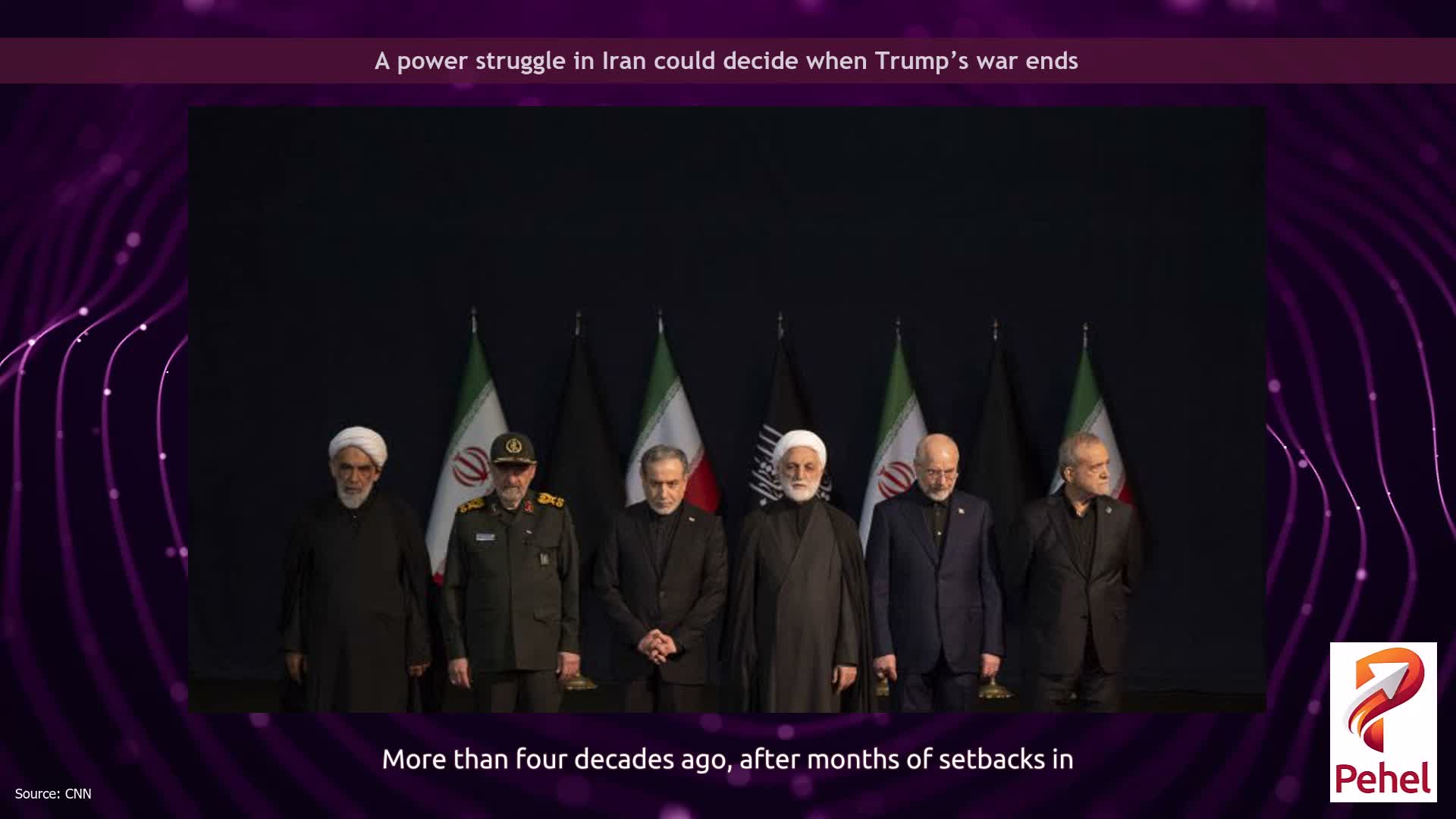
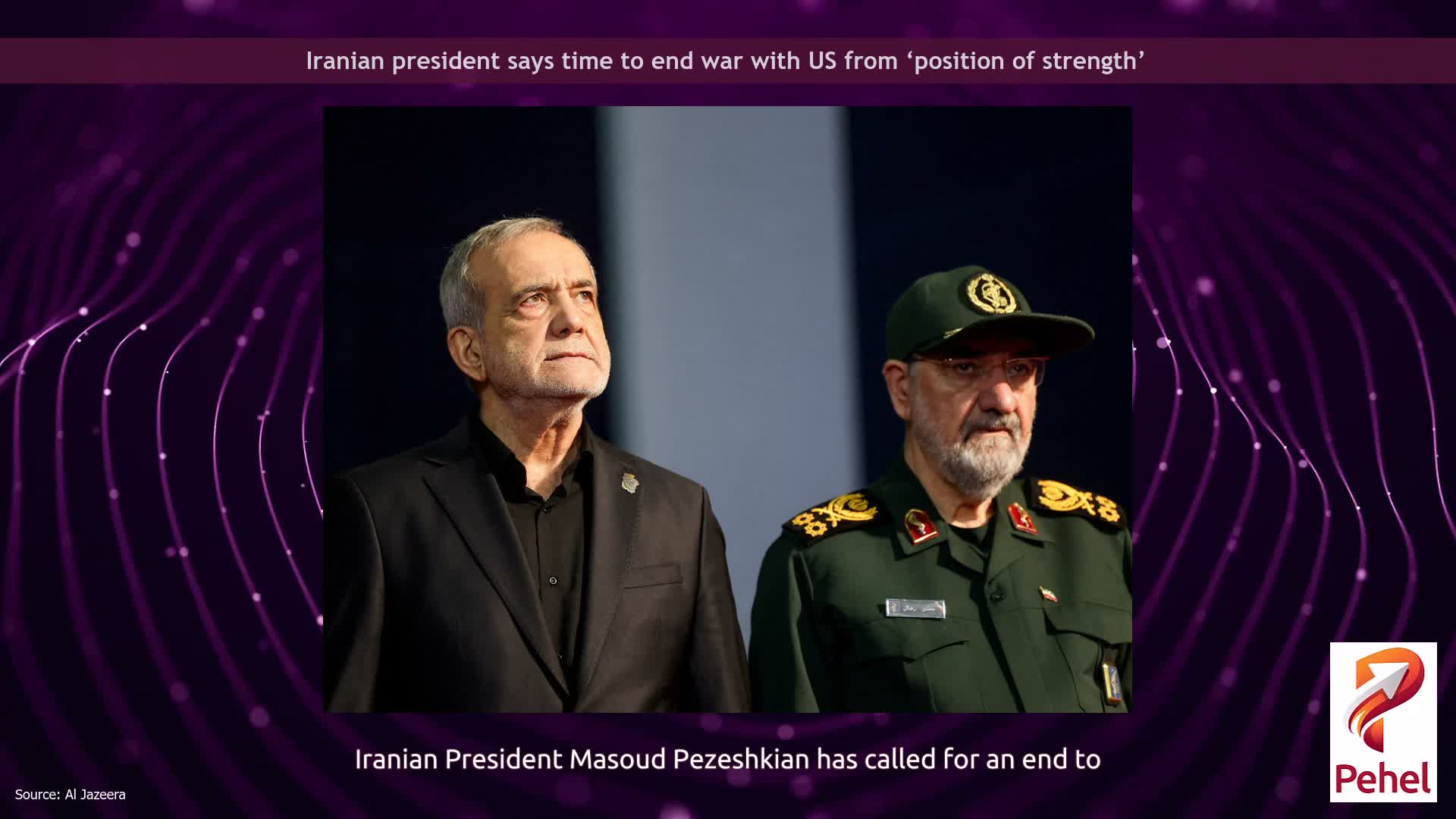
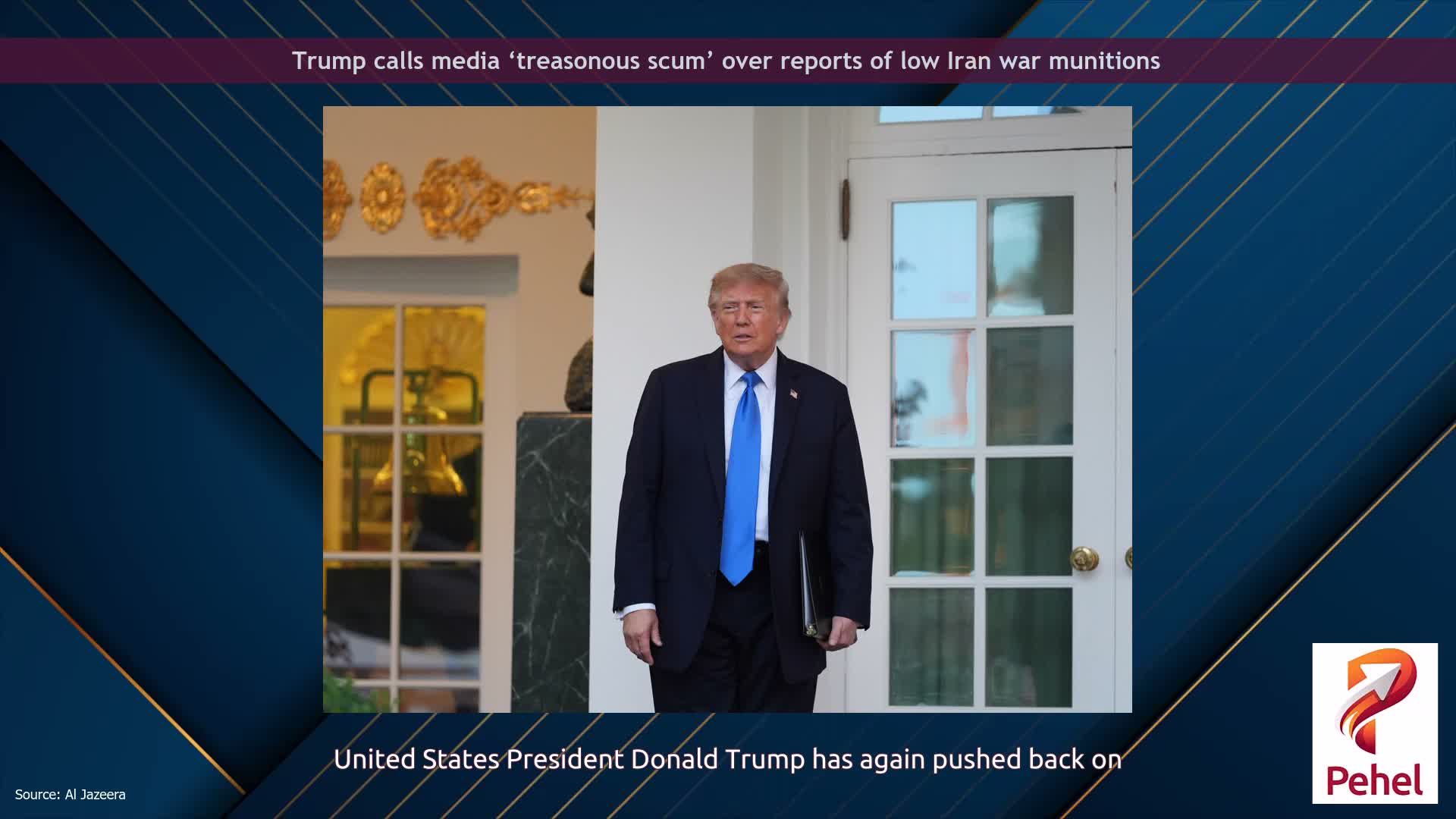
US President Donald Trump has boasted that his war in Iran has led to a “very rational,” “very different,” and “much more reasonable” leadership in Tehran. But the elevation of six hardliners to top security positions this week suggests the Islamic Republic’s new command may be neither moderate nor inclined to compromise.
The men now rising through the security establishment have spent their careers confronting enemies abroad and suppressing dissent at home.
The announcement of the senior appointments, purportedly made by Supreme Leader Mojtaba Khamenei on Monday, followed the naming of a new national security chief, Mohsen Rezaie, a day earlier.
Experts say the changes mark a shift in approach compared to the more cautious tone under Mojtaba’s father, Ali Khamenei, who was supreme leader until assassinated by Israel at the start of the war.
It is both more aggressive toward external enemies and more vigilant toward internal dissent.
There are two parallel priorities, says Hamidreza Azizi at the Clingendael Institute, a think tank in the Netherlands: preparing the state for a more confrontational external environment and further securitizing the domestic sphere.
“The emphasis on offensive operations, unified command, and faster decision-making suggests that the leadership wants to move from Ali Khamenei’s traditionally more cautious approach to deterrence toward what could be described as offensive deterrence,” Azizi told CNN.
Iran’s new supreme leader is nowhere to be seen. That might be helping the regime to survive
Most of the appointees have a background in intelligence, according to Saeid Golkar, associate professor of political science at the University of Tennessee at Chattanooga.
“The picture we are seeing is the Islamic Republic moving toward a security-dominated bureaucratic regime,” he told CNN.
The reshuffle reinforces the regime’s “current maximalist and hardline positions,” according to the Institute for the Study of War, a Washington-based think tank, “including absolute Iranian control of the Strait of Hormuz, the removal of US troops from the region, and the development of Iran’s nuclear program.”
Rezaie has long called for resistance against the United States while acknowledging a place for negotiation.
In March he warned that “if the United States strikes Iran’s electricity infrastructure, this time the equation will not be ‘an eye for an eye’; rather, it will be a head, hands, and feet for an eye.”
And last month he claimed: “The United States has been trapped, it has fallen into the trap of Iran, but we will not let it go.”
Rezaie belongs to a faction of the Islamic Revolutionary Guards Corps (IRGC) that believes “the only way to get concessions from the US is the continuation of fighting, exerting pressure on the US and a steady dose of pain on Donald Trump,” said Sina Azodi, assistant professor of Middle East politics at George Washington University.
His elevation feeds into the overall Iranian strategy of prolonging the conflict with the US and ensuring that Trump’s allies face defeat in the midterm elections, Azodi told CNN.
“The current leadership in Tehran is far more risk-taking,” according to Vali Nasr, author of “Iran’s Grand Strategy.”
That leadership believes that Iran’s “weak” response to the killing by the US in 2020 of Qasem Soleimani, the leader of Iran’s elite Quds Force, was one reason Trump escalated pressure in his second term, according to Nasr.
Soleimani was targeted by a US missile in Baghdad at the end of the first Trump term. Iran did not retaliate directly, despite furious rhetoric.
This new group of leaders is more willing to use “Iran’s own military capabilities directly, and challenge adversaries without the same level of restraint,” says Israeli analyst and Iran-watcher Danny Citrinowicz.
“This shift should be especially concerning when it comes to the nuclear issue. A significant number of voices inside Iran believe that Ali Khamenei’s strategy of maintaining a strategic ‘limbo’ – avoiding both escalation and resolution, ultimately weakened Iran more than it protected it,” Citrinowicz posted on X.
One of the new appointments brings back a veteran intelligence figure as the head of the Basij volunteer militia, which is under the Guards’ control and was heavily involved in the brutal suppression of protests in January.
Hossein Taeb – a close ally of Mojtaba Khamenei – “was a particularly controversial and divisive figure during his tenure as head of IRGC Intelligence, closely associated with the hardline security apparatus’s repression of dissent,” wrote Sina Toossi , senior fellow at the Center for International Policy, on X.
The United States sanctioned Taeb in 2010 for his involvement in suppressing protests the previous year after a presidential election widely thought to have been rigged.
His new mandate “calls for strengthening the Basij’s ‘public intelligence network,’ exploiting modern technologies, and expanding neighborhood organization” of the militia, Toossi said.
This amounts to “an attempt to make intelligence and internal security much more granular: pushing collection, detection and early warning deeper into neighborhoods, local social networks and mosques,” according to Babak Vahdad, an independent researcher.
That is significant “after a war in which penetration, covert networks, sabotage and intelligence failures became one of the Islamic Republic’s most serious vulnerabilities,” he added.
In part, the appointments could be an effort by Khamenei – who has not been seen or heard from directly since being chosen as supreme leader in March – “to instal allies in influential positions in case growing economic pressures prompt another public uprising,” according to Golkar.
Trump grows angry over reports on depleted munitions — believing it weakens him in Iran negotiations
Given his long absence from public view, analysts are unsure whether Khamanei is indeed the architect of the new set-up.
But the combination of Taeb, Rezaei, Ahmad Vahidi – now commander of the IRGC – and other security veterans “indicates a leadership increasingly relying on experienced intelligence and military figures to consolidate the system after the war,” Azizi told CNN.
“It is not a complete break with Ali Khamenei’s approach, but it does represent a harder and more explicitly confrontational version of it.”
CNN’s Aida Karimi contributed to this article.