The man who might testify against ousted Venezuelan President Nicolás Maduro is known as “el Pollo,” or “the Chicken.” His wanted poster from the United States government lists his height as five-foot-three. His weight, 130 pounds. His hair, “bald.”
The nickname belies his resume: former General Hugo Carvajal Barrios was once Venezuela’s head of military intelligence, the equivalent of J. Edgar Hoover for the Hugo Chávez regime. In 2025, he pleaded guilty in federal court to drug trafficking and narcoterrorism charges.
Now, as Maduro awaits trial on federal narco-terrorism charges in a Brooklyn jail, a letter Carvajal sent to US President Donald Trump in December may signal that the ex-spy chief wants to become something other than a defendant: an informant against his own president.
The letter, a copy of which CNN obtained from his lawyer and was first published in the Dallas Express , told US President Donald Trump that Carvajal wished to “atone” for his past misdeeds, “so that the United States can protect itself from the dangers I witnessed for so many years.”
His letter alleges a multilayered conspiracy, including that Maduro had worked to rig elections in the United States (Carvajal did not specify which elections) and conspired with brutal Venezuelan gang Tren de Aragua to flood the US with criminals, drugs and spies – claims that align neatly with some of the charges Maduro now faces in court .
Could Carvajal’s claims – and his offer to cooperate – have found purchase in the US government? The letter hasn’t been publicly addressed by the US Department of Justice, but Carvajal would make a significant star witness for the prosecution, with deep insider knowledge of the inner workings of the Venezuelan state.
US special forces soldier arrested after allegedly winning $400,000 on Maduro raid
A scheduled sentencing hearing for Carvajal was postponed last week, and a new date has not been set – a possible “indication, though not a confirmation” that Carvajal is cutting a deal, according to New York attorney Renato Stabile. He said that it would be “highly unusual” for Carvajal’s sentencing to go ahead if he is cooperating with US authorities.
Stabile, an expert in this department, represented former Honduran President Juan Orlando Hernández, who was freed on December 1, 2025 from a 45-year prison sentence for narcotrafficking after Trump pardoned him. Carvajal sent his letter to Trump the next day.
Carvajal also doesn’t currently appear in the US Bureau of Prisons inmate database, though he remains in federal custody – another potential sign of cooperation, according to Stabile.
Carvajal’s lawyer has declined to comment on the content of the letter or his client’s case . The Justice Department did not respond to CNN’s request for comment.
Carvajal was part of Venezuela’s old guard, close to the late President Hugo Chávez since their days in the army. The military intelligence agency he ran, DCGIM, is notorious for its alleged torture and detention of regime opponents.
In 2019, he broke with Maduro, announced his support for opposition leader Juan Guaidó and fled to Spain. Part of a wave of dissident departures, Carvajal’s defection was akin to a dam breaking, then-US Senator Marco Rubio said at the time.
In exile, Carvajal began making grandiose denunciations of Maduro on his personal blog (now taken down) and on social media. In an interview soon after offering his support to Guaidó, he told The New York Times that Maduro’s inner circle was involved in drug trafficking and terrorism. (Maduro and the Venezuelan government have consistently denied these claims.)
But he was also in the crosshairs of the US government and had been for some time. In 2008, the Bush administration had sanctioned him for “materially assisting the narcotics trafficking activities” of FARC, a Colombian left-wing militant group.
The Justice Department filed charges against him in federal court in April 2019, accusing him of attempting to ship 5.6 tons of cocaine to the United States in 2006 and providing FARC with automatic weapons and explosives. In Spain, Carvajal lived in hiding for several years, even getting plastic surgery to conceal his appearance, until Spanish authorities extradited him to the United States in 2023.
He’s been in jail ever since.
In 2020, a year after Carvajal was first indicted, Maduro and over a dozen other Venezuelan officials were added to a superseding indictment to face similar charges alongside the former military intelligence chief.
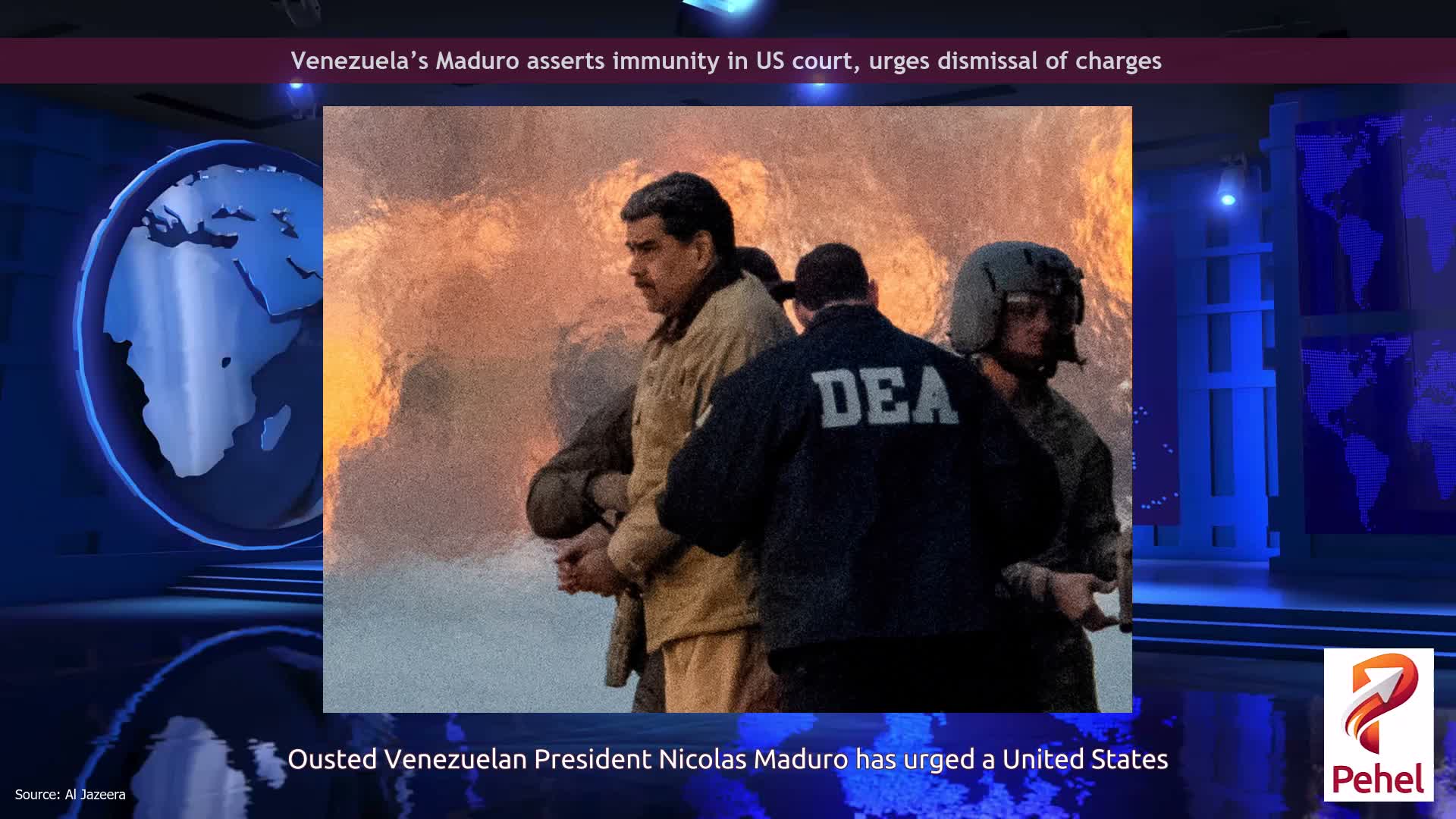
Six years later, after months of military buildup in the Caribbean, the United States launched an unprecedented military operation in Venezuela, bombing Caracas and capturing Maduro and his wife, Cilia Flores, from the Presidential Palace.
Carvajal’s name was absent from the top of the January indictment unsealed on the morning Maduro arrived shackled in New York with Flores. But there was a new allegation that closely echoed Carvajal’s claim that Maduro had worked with Tren de Aragua to send drugs to the US.
What to know about Diosdado Cabello, the powerful Venezuelan minister who may be in jeopardy next
It’s not clear whether Trump actually read Carvajal’s letter – his attorney Robert Feitel told CNN he didn’t know, and the White House did not address CNN’s questions about the letter in its response to an inquiry.
Instead, an administration spokesperson stated that “Nicolás Maduro orchestrated many crimes against the United States, including sending drugs and terrorists to our country to kill Americans.”
“Fortunately, President Trump’s Department of Justice arrested Maduro for his numerous evil and illegal actions,” the statement continued, “and he is now awaiting justice in the Southern District of New York .”
In the letter, Carvajal says as much, alleging that Maduro had aimed to use drugs as a weapon against the United States. He maintains that what began under Chávez evolved into a structure nicknamed the Cartel de los Soles, led by Maduro and other high-ranking officials.
CNN has reached out to Maduro’s lawyer and the Venezuelan government for comment but has not received a response. Maduro has repeatedly denied the allegations that he is involved in drug trafficking.
Experts and former government officials say that the “cartel” is not a formally organized criminal organization like those in Colombia or Mexico, but rather a decentralized network of Venezuelan groups within the military linked to drug trafficking.
“The drugs that reached your cities through new routes were not accidents of corruption nor just the work of independent traffickers,” Carvajal claimed. “They were deliberate policies coordinated by the Venezuelan regime against the United States.”
So far, neither Carvajal’s defense team nor the US Department of Justice has publicly confirmed whether the former intelligence official is cooperating with prosecutors.
But most persuasive among the clues that Carvajal could become a key witness is his own written offer to assist the US.
“I fully support President Trump’s policy toward Venezuela, because it is a measure of self-defense and is based on the truth,” Carvajal wrote in his letter. “I am willing to provide additional details regarding these matters to the United States government.”
CNN’s Mauricio Torres, Alfredo Meza, Laura Weffer, and Max Feliu contributed reporting.