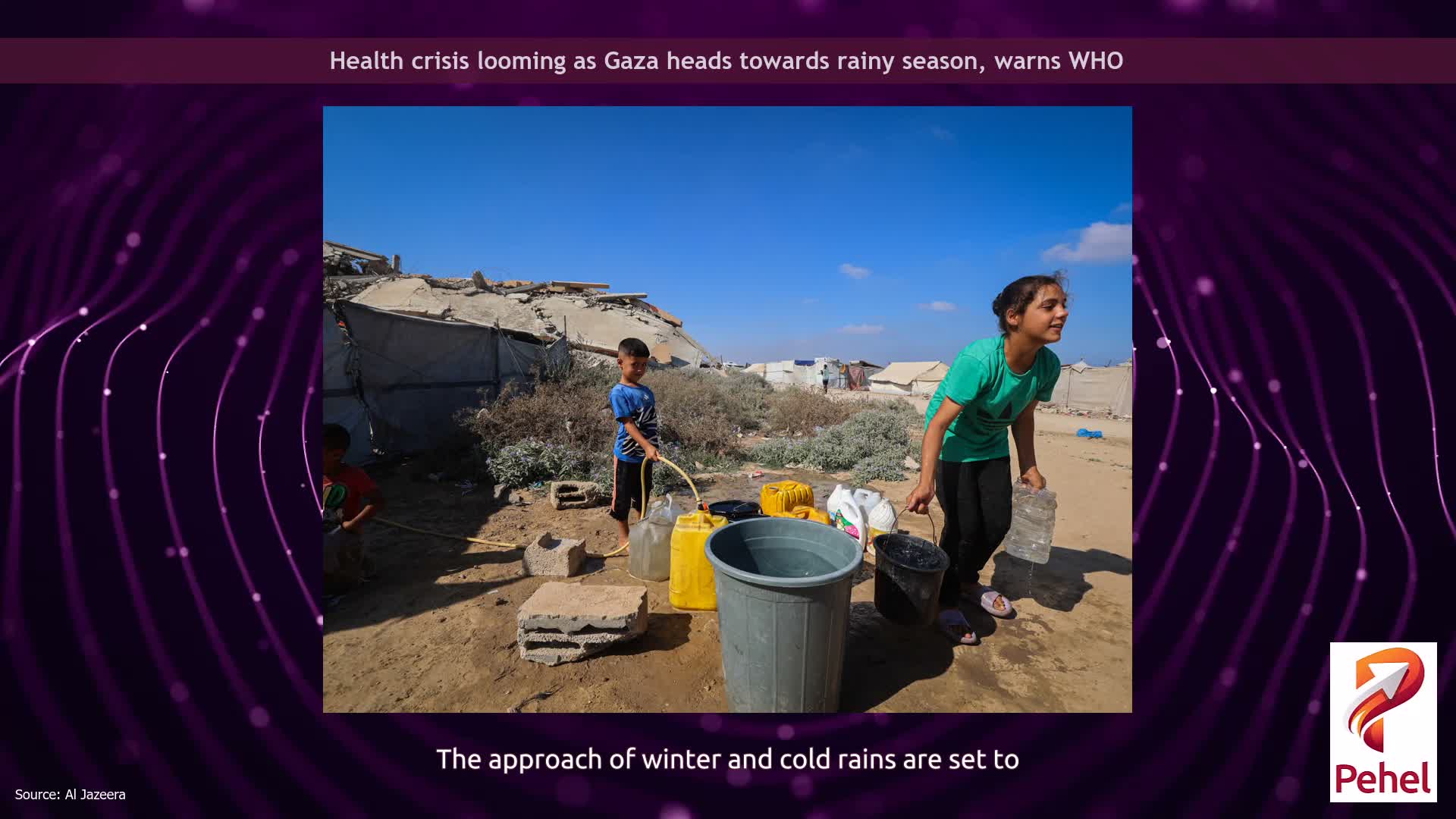
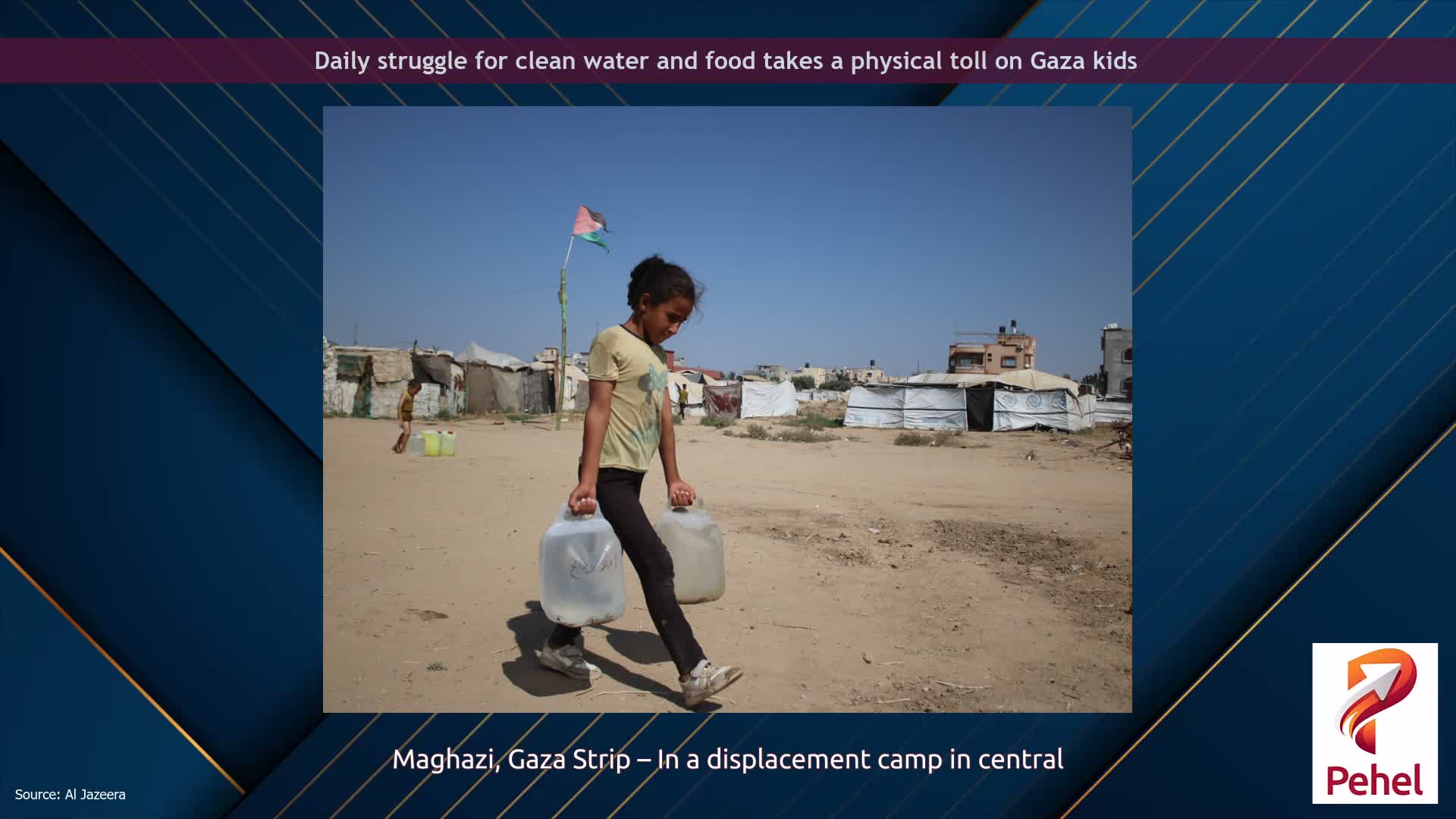
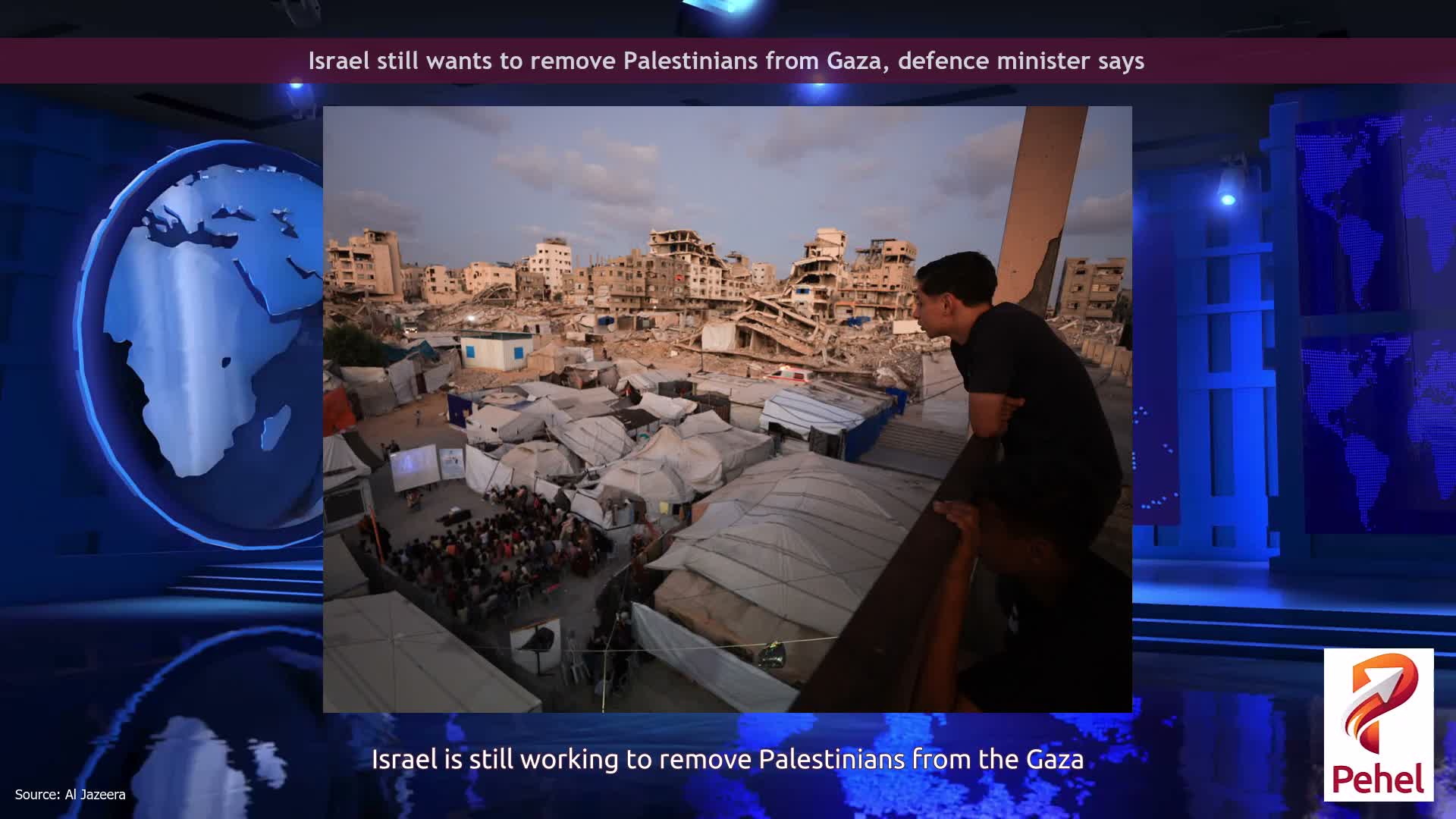
Gaza City, Gaza Strip – In a partially destroyed building in western Gaza City, Faten Nabhan sat, surrounded by her six school-age children, taking a brief rest after a morning spent filling water containers from the trucks that visit the camp.
Faten, 35, tries to fill her children’s time with enjoyable or educational activities during their summer holidays, but she finds herself at a loss for where to even begin.
For the third consecutive year, ever since the beginning of Israel’s genocidal war on Gaza in October 2023, the summer holiday for children in the Palestinian enclave is nothing like it once was.
After Israel killed more than 73,000 people – including thousands of children – damaged or destroyed the majority of the enclave’s buildings, and displaced most of the population, Palestinians in Gaza are focused on survival.
Instead of looking forward to the summer camps, trips and games that once “defined” summer in Gaza, children begin their days by performing essential tasks: collecting water from trucks and distribution points, bringing food from communal kitchens and gathering firewood to light fires.
“This is my children’s routine every day… this is all they do,” the mother said.
She added that her children, like other children in Gaza, have few means of self-expression, recreation, or psychological release during the summer.
“No activities, no camps, no drawing, no colours, nothing at all. All I can do is have them memorise a few parts of the Quran. That’s as much as I can manage,” she added.
“We have ideas… summer is a time for unleashing energy and developing children’s skills, but the resources simply don’t exist,” she said. “There are no resources, no supplies at all… no toys, no notebooks, no crayons… not even paper and a pen.”
Faten has to figure out how to keep her children occupied by herself – her husband Raafat was killed in an Israeli air strike that hit their home in the Jabalia refugee camp near Gaza City in October 2024.
“I can barely manage to feed my children and provide their basic needs,” she said.
Faten explained that her children have had to carry a burden disproportionate to their age: they take turns fetching water, gathering firewood, and helping their mother in the absence of their father.
“I feel deep sorrow that they’re spending their childhood this way. This is a time for play, not a time for responsibility,” she added.
But the alternatives are simply not there.
Faten said that there are no community or institutional initiatives aimed at providing psychological support to children in the displacement camps during the school summer holidays.
“Our children live in a forgotten corner of the world,” she said. Every day I read loss and sorrow in their eyes. Even play, the simplest of their needs, is missing.”
The problems Faten describes are part and parcel of a wider crisis documented by international organisations focused on children’s welfare.
An assessment published by UNICEF in May found that young children in Gaza lack “safe and stimulating environments essential for early development”, while older children suffer from “prolonged learning disruptions with limited prospects for recovery without targeted intervention” and a decline in social and psychological development opportunities.
Speaking in February, UNICEF’s chief of communications in Palestine, Jonathan Crickx, said that play was vital to children in Gaza, and “not a luxury”.
“Play is how children reclaim what war stole from them,” Crickx said.
Asmaa Saleh is also living displaced in Gaza with her five children. The 41-year-old has spent the war travelling from place to place to find safety while still trying to educate her children, who range in age from eight to 17.
That determination to maintain education has played a large part in how she has structured the summer holidays.
She ensures that all of the children are memorising verses from the Quran, and has been able to get spots for two of her children at a summer camp organised by a local charity – but only once a week.
Still, even that one day is an occasion for the children, and one that makes them feel fortunate compared to the kids around them.
“On camp day, they wake up early with unusual excitement, rushing to shower, style their hair, and get dressed… sometimes even skipping breakfast entirely out of eagerness to make it to camp on time,” Asmaa says with a smile. “But on the rest of the week’s days, that same enthusiasm never appears, and the days pass by in monotony.”
For those six days, it is the same old routine: waking up, eating, and helping their mother with daily tasks in the tent, including washing, cooking, kneading dough and fetching water.
Asmaa, who previously worked for UNICEF as a case manager, says that it is clear what one day at summer camp means to her children.
“Organised group activities during the vacation build intelligence, emotional development, cooperation, and bonding, while prolonged confinement in the tent, with no outlet, builds up tension that sometimes turns into aggression and fighting among the siblings themselves,” she said.
She gave a vivid example from within her own home: her third daughter, who doesn’t attend the summer camp like her sisters.
Asmaa said that the younger daughter often shows signs of tension and friction with her siblings, while the elder daughters, in particular, return from their camp days “fresh and happy”.
For the mother, it’s just more evidence of the importance of play and education, which are among the most fundamental rights of the child enshrined in international conventions.
“Today, our children in Gaza are deprived of these very rights, at the exact time they’re supposed to be exercising them in their simplest forms,” Asmaa said.
She’s now trying to make sure she has activities for all her children, even those not attending summer camp.
She recently received a box of crayons and some drawing paper from a charitable organisation, and now sits with her children in the middle of the day to draw and colour.
“I try to do anything to make use of their summer time,” Asmaa said. “And I keep going, because I can feel the psychological shift that even one hour of organised play and drawing with them creates.”