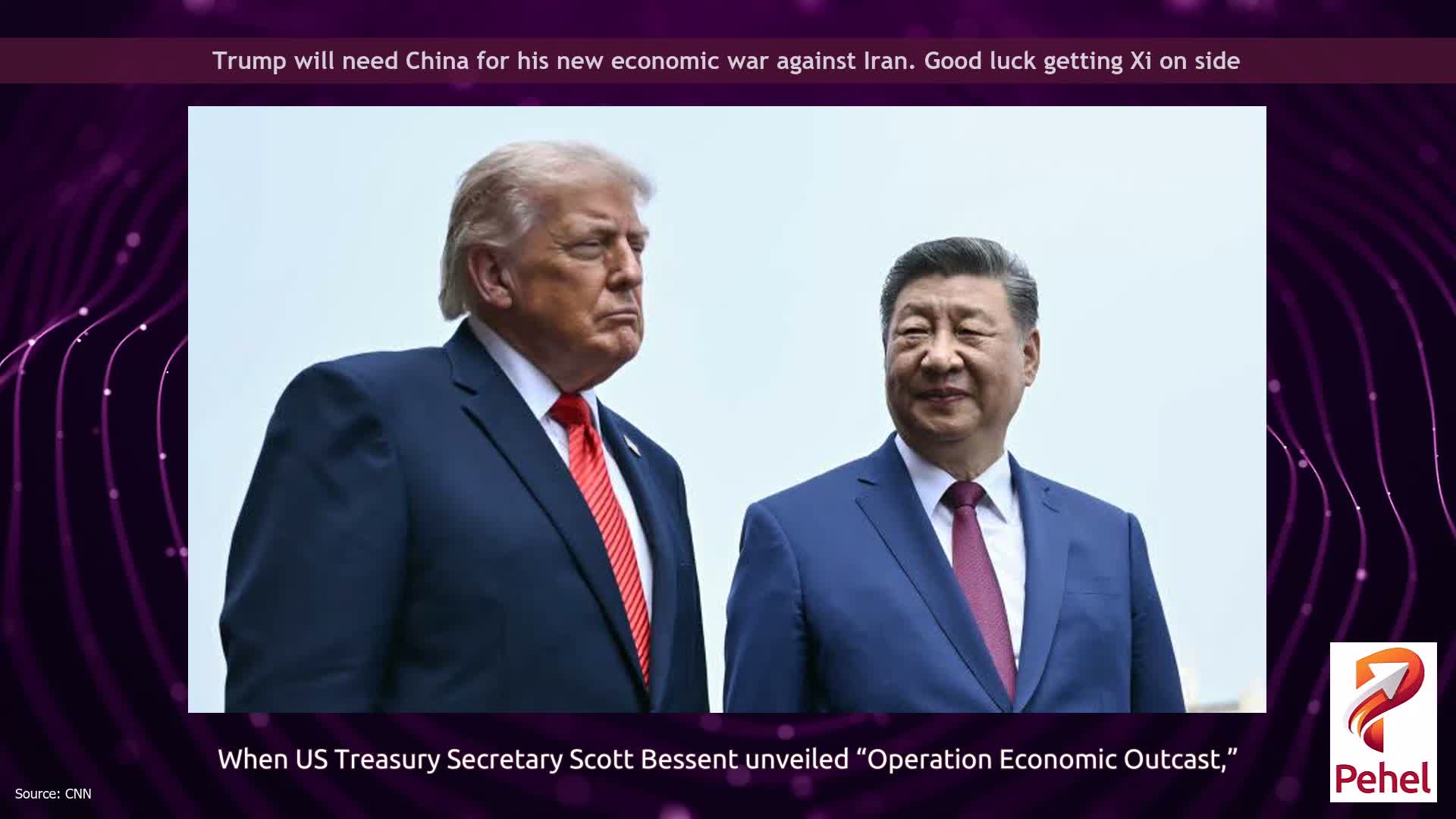
The road to Chinese leader Xi Jinping’s expected visit to the United States next month is shaping up to be rockier than Beijing would have hoped.
Weeks ahead of the state visit, the world’s two largest economies have revived a tit-for-tat exchange of sanctions, with Beijing unveiling multiple measures against US firms or interests in what it said was retaliation for “erroneous” American moves.
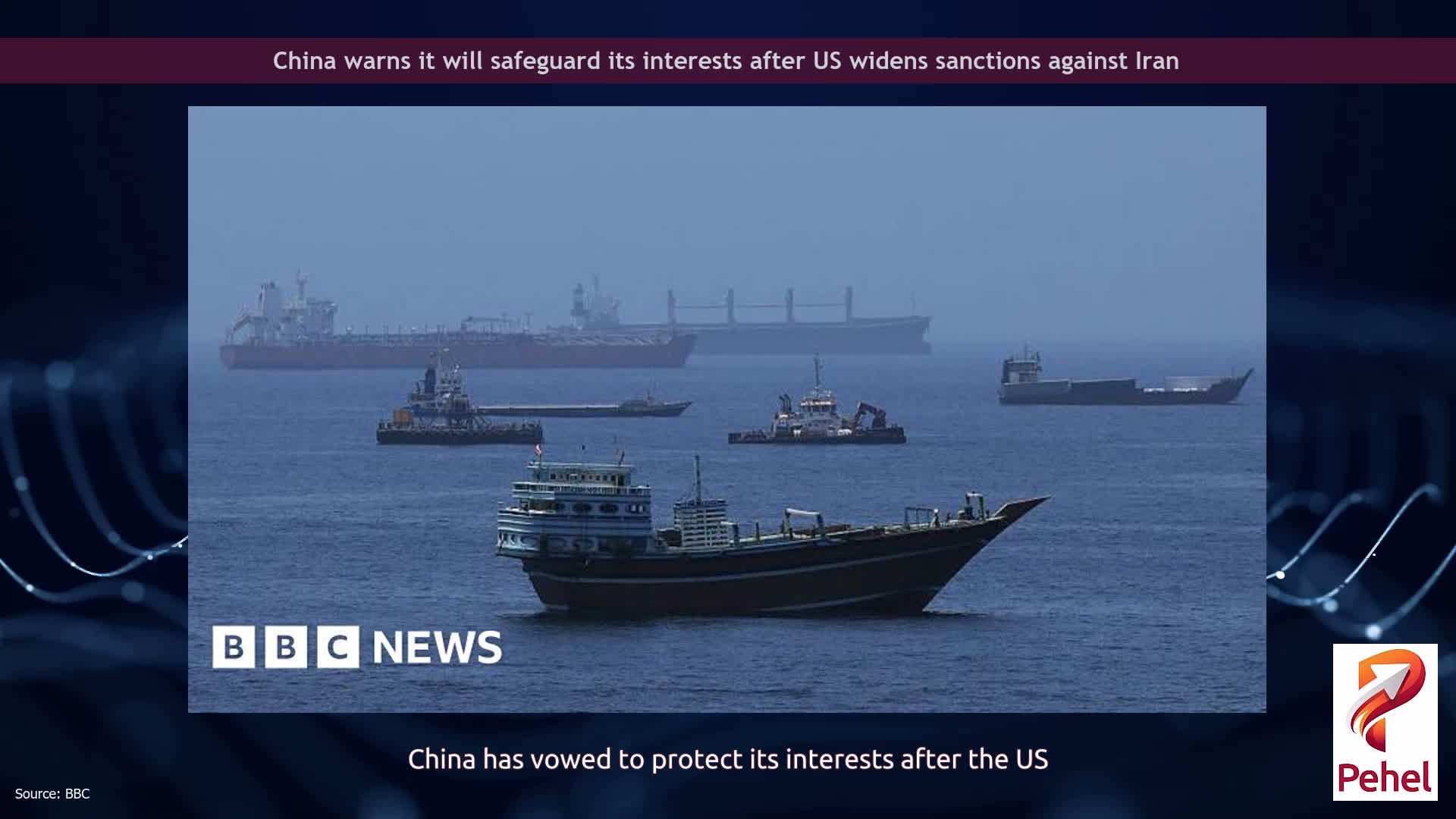
The US has banned imports of new humanoid robots (largely produced in China); sanctioned Chinese shipping operators alleged to be handling Iranian fuel; placed more than 40 Chinese firms on an entity list for alleged human rights violations; and added two top civilian universities to a Pentagon blacklist. It’s also threatened to sanction Chinese AI firms.
That left Beijing with “no choice but to take necessary countermeasures,” its Commerce Ministry said Wednesday as it unveiled a package that sanctioned seven US firms; upped controls on the export of drones and their tech to the US; and launched an investigation into certain office equipment running foreign software.
A separate measure also suspends a fast-track for US factories to certify goods like electrical appliances for the Chinese market. The ministry said it was specifically retaliating against the recent US entity listing of Chinese firms, as well as the robotics and previous tech-related bans issued by the US Federal Communications Commission.
The tit-for-tat brings up echoes of last year, when the rivals were locked in a blistering trade war. It also raises the question of whether a new period of escalation – if it spirals further – could push Beijing to put Xi’s upcoming trip on ice.
So far, China’s bevy of measures – which its own spokesperson described as “restrained” – suggests its leaders hope to keep things on track for the September summit. That’s especially as the meeting is seen as a chance for Xi and Trump to discuss what is emerging as their fiercest area of rivalry: AI.
“China values the hard-won stability of China-US economic and trade relations and hopes the United States will work with China in the same direction,” a commerce ministry spokesperson said Wednesday – while also threatening “further countermeasures” if not.
Observers and people close to policy circles in China say that Beijing strongly values preserving the high-level lines of communication with Trump, who’s seen as relatively China-friendly compared with many more hawkish members of his cabinet.
“China has incentives to preserve diplomatic space and avoid an uncontrolled action–reaction cycle before the (expected) summit,” said Sun Chenghao, a senior fellow at Tsinghua University’s Center for International Security and Strategy in Beijing.
But “restraint should therefore not be mistaken for acceptance,” he added.
Where things go next may well depend on what steps the US takes around Chinese-developed AI, a hot-button issue for Beijing.
In the space of 18 months, China has gone from lagging far behind the US to hosting multiple AI models that are nipping at the heels of Silicon Valley’s champions and gaining major traction among users globally.
Trump officials, as well as major AI firms, have accused Chinese companies of “distilling” cutting-edge US models, with Washington threatening to issue sanctions on the grounds of IP theft. Beijing has disputed the allegations and called on the US to “abandon its hegemonic mindset.”
Any such sanctions could be read as an effort to actively disrupt the global rise of a major Chinese sector – and evoke the bitter taste for Beijing of the first Trump administration’s global campaign against Chinese tech titan Huawei.
“If the US is going to ban Chinese models on the grounds of national security, it will not affect just American companies (using the tech),” said George Chen, the Hong Kong-based chair of digital practice at The Asia Group consultancy.
“You’re basically talking about the US trying to ban Chinese AI models for business practice in the whole world, and you’re talking about a trillion-dollar market … China is not going to take this lightly.”
Beijing has an arsenal of economic tools it uses to apply economic pressure, including launching investigations and blacklisting companies or individuals , both of which it employed in its Wednesday measures. But in terms of sanctions, Beijing has yet to directly target an American tech giant.
China’s ultimate trump card remains its chokehold on the global supply of processed rare earths . Those strategically critical goods continue to be a source of friction with the US despite agreements reached on their trade last year. US Treasury Secretary Scott Bessent last week told Fox Business that rare earths are “not flowing as freely as they could.”
Tsinghua’s Sun said that if Washington expands restrictions to major Chinese AI companies, imposes broader controls on commercially important sectors, or continues adding measures in rapid succession, Beijing may “conclude that limited responses are failing to generate deterrence … (and) could move toward instruments with greater economic consequences.”
The September summit is seen as a chance for the leaders to manage frictions over AI, and the two sides are understood to be preparing for a dialogue to be held ahead of that meeting on the rapidly developing tech.
It’s also a chance to extend a trade truce they reached last October and cement what both sides have called an era of “constructive strategic stability,” following a visit from Trump to Beijing in May.
One mismatch driving current frictions may be how both sides view that term.
For Washington, this appears as to be seen as an understanding that the two sides will continue to communicate and manage tensions. For Beijing, it’s interpreted more as an agreement not to “over-extend” the use of national security-based restrictions, such as through more tech export controls or import bans, observers say.
Neither side, however, is under any illusion about the nature of the enduring competition.
“Both China and the US are realistic, they want to make the other country as little of a threat to themselves as possible – and they will both prepare for a worst-case scenario,” said Shen Dingli, a Shanghai-based international relations scholar.
And both know that communication and aiming for that constructive strategic stability can make competition less damaging and “slow the acceleration of the downward spiral” in their ties, he said.
With more than a month to go until Trump meets Xi, any change in the tone of the US-China relationship could influence not just whether the trip goes ahead, but also its scope.
Even if Washington crosses a perceived red line for Beijing ahead of the trip, postponement may not be automatic, according to Sun at Tsinghua.
That’s as both sides appear to now regard leader-level diplomacy “as a mechanism for containing crises rather than as a reward for good relations,” he said.
“The more probable consequence is therefore not cancellation but a narrower summit agenda … and (a focus on) preventing accumulated disputes from triggering a renewed downward spiral.”