The United States has announced another round of early-morning strikes on Iran, as the two sides continue to exchange attacks over questions of control in the Strait of Hormuz.
On Sunday, US Central Command, which oversees military operations in the Middle East region, indicated that the latest fusillade was designed to weaken Iran’s attack capabilities.
It also underscored President Donald Trump’s role in authorising the attacks.
“At 5 p.m. ET today [21:00 GMT], U.S. Central Command forces began launching more strikes against Iran to continue degrading their ability to attack civilian mariners and commercial ships freely transiting the Strait of Hormuz,” the command said in a brief statement.
“The Commander in Chief has directed the strikes to hold Iranian forces accountable.”
Iranian state media reported explosions in areas near the Strait of Hormuz, including Sirik, Qeshm Island, Jask, and the area west of Bandar Abbas.
The governorate of Hormozgan province, which borders the strait, said that no civilian casualties have been reported so far.
Sunday’s attacks are the latest round of a new escalation in the fighting between the US and Iran, which began on July 7.
Three rounds of attacks occurred in the last week alone, including on Saturday night, when US Central Command said it struck roughly 140 Iranian military targets.
The targets reportedly included Iranian sites for drones, missiles, ammunition, surveillance and naval operations.
Iran has responded with counterattacks against US military installations across the Middle East, including sites in Jordan, Bahrain, Kuwait, Qatar and Oman.
The exchange of fire has deepened questions about a memorandum of understanding (MOU) the US and Iran signed last month, bringing all hostilities to an “immediate and permanent” halt.
The memorandum was meant to be a springboard to future negotiations between the two sides as they attempted to wind down a war that the US and Israel started on February 28.
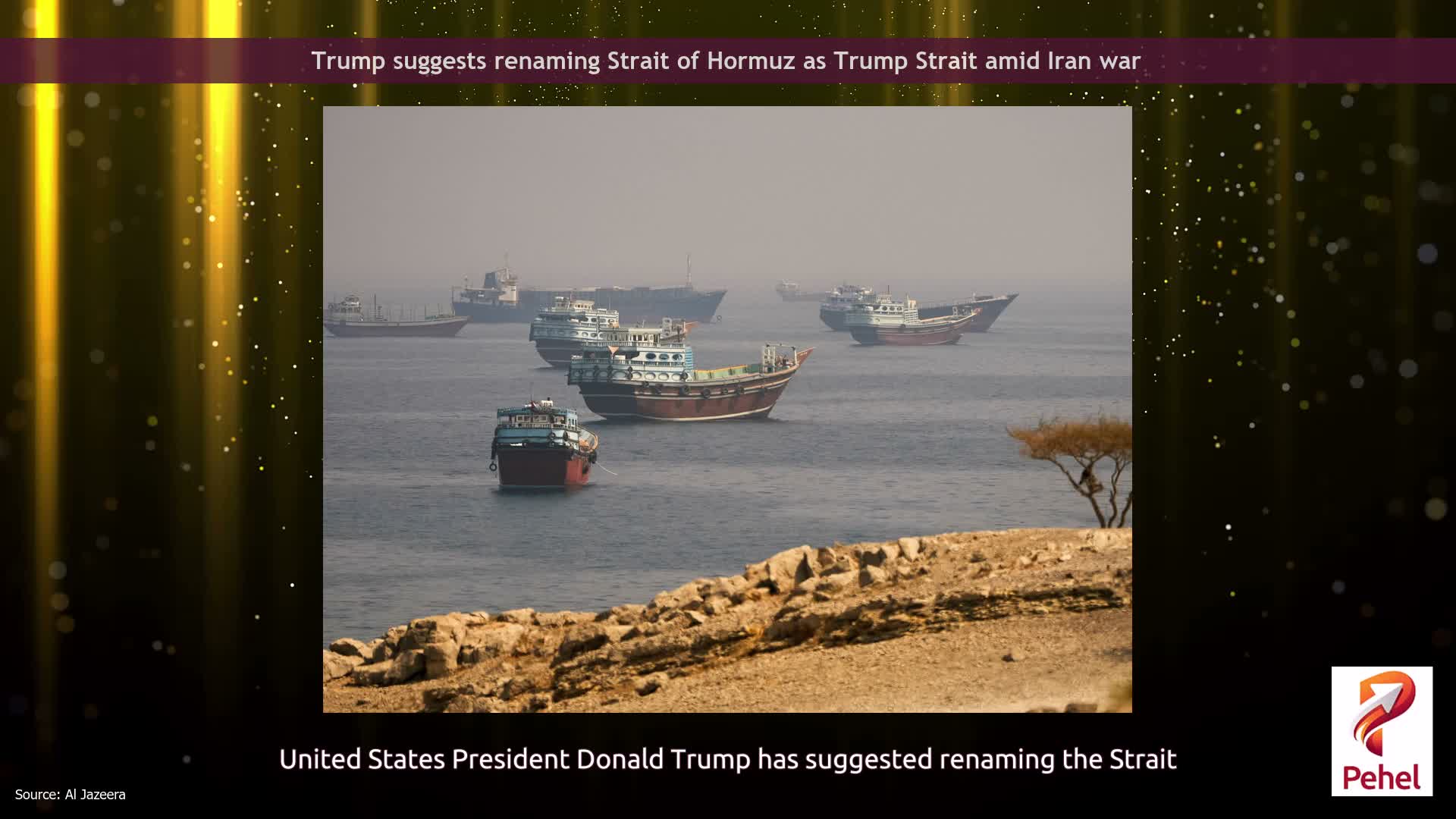
But a key sticking point proved to be the Strait of Hormuz, a key maritime artery through which nearly 20 percent of the world’s oil and natural gas flowed before the war.
Since the start of the war in February, fuel prices worldwide have shot up, as Iran has restricted trade through the waterway.
Under the 14 points of the memorandum, Iran was meant to make its “best efforts” to allow commercial traffic through the Strait of Hormuz for 60 days, with no fees.
The memorandum also laid out a plan for Iran to “conduct dialogue” with the other country that borders the strait, Oman, to “define future administration and maritime services” in the waterway.
In recent weeks, however, Iran has fired drones at various container ships and tankers passing through the strait, claiming in some cases that the vessels ignored warnings about unapproved routes.
It considers the matter a question of sovereignty, since the Strait of Hormuz falls within its territorial waters.
The Trump administration has indicated that it sees those drone strikes as a violation of the memorandum, and it has responded with military force – first over the course of two days in late June, and four times over the last week, including Sunday.
US Central Command, for instance, pointed to an attack on the Cyprus-registered ship M/V GFS Galaxy as a reason for Saturday’s intense attacks. Though the drone attacks have been largely non-lethal, the strike on the Galaxy reportedly left a crew member missing.
Iran said on Saturday it has once again shut the Strait of Hormuz to traffic. The US has maintained it remains open.
“Iran does not control the strait. Traffic is flowing,” US Central Command wrote early on Sunday.
In a social media post on Friday, Trump wrote that he considers the ceasefire inked in the memorandum to be “over”. Still, in the same message, he indicated that talks between the two sides would continue.
Before the latest round of US attacks on Sunday, United Nations Secretary-General Antonio Guterres urged both sides “to exercise maximum restraint” and “avoid further escalatory action”.
He and UN spokesperson Stephane Dujarric encouraged the negotiations to continue and for navigation to be restored in the Hormuz Strait. Some 6,000 seafarers continue to be stuck in the waterway because of the conflict, according to UN estimates.
Faced with fears that the latest tit-for-tat attacks could reignite the regional war, Iranian Ministry of Foreign Affairs spokesperson Esmaeil Baghaei posted a response calling on countries in the region to end their support for the US military.
He addressed his message to Dujarric, the UN spokesperson.
“You should urge the countries in question to immediately cease allowing the United States to use their territories as launchpads for aggression against Iran,” Baghaei wrote.
“It is far from responsible to blame Iran for defending its sovereignty while failing to hold the aggressors accountable for their egregious violation of international law.”
He argued that US military bases in the Middle East were legitimate targets, given Iran’s “inherent right to self-defence under international law”.