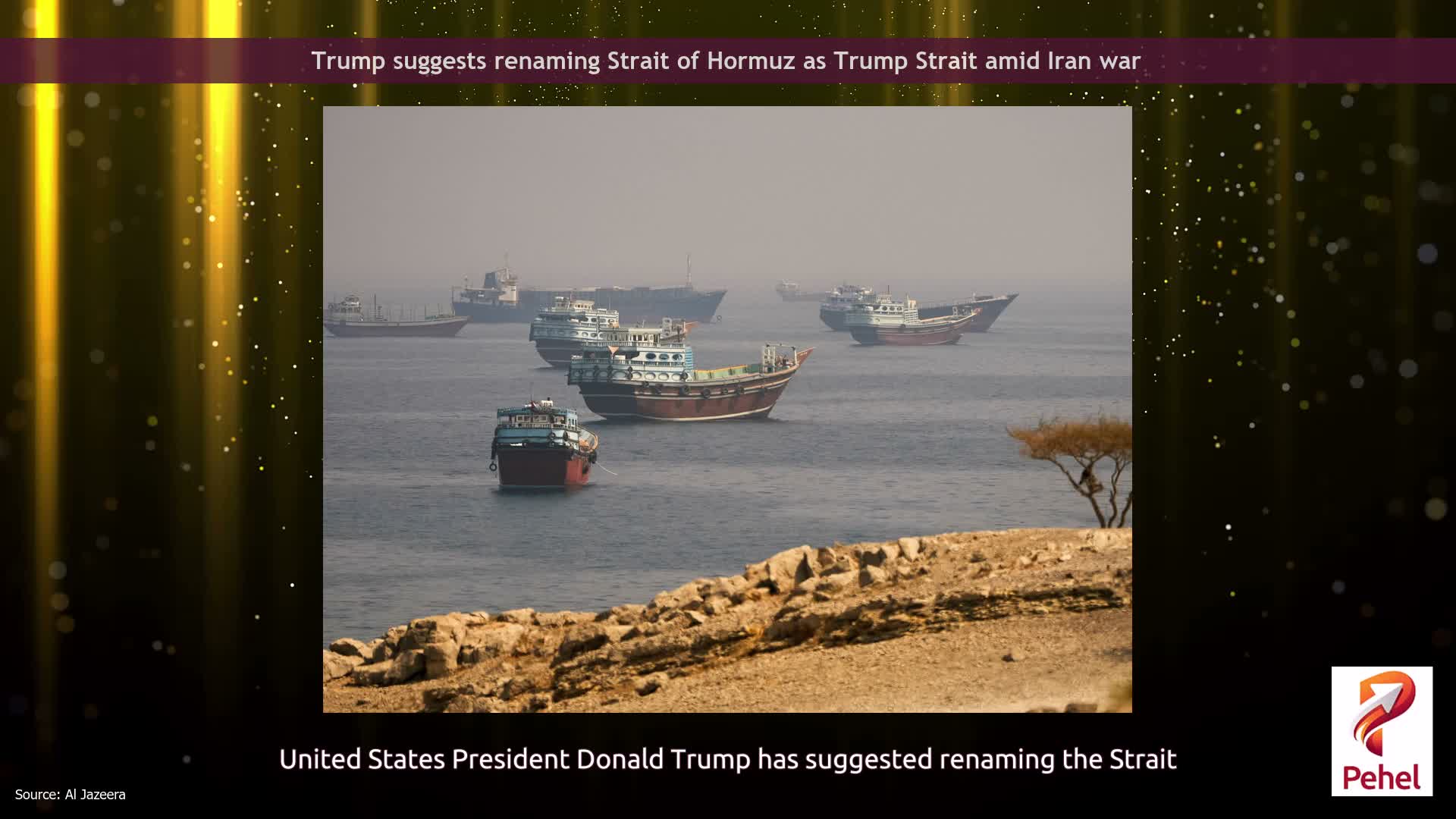
United States President Donald Trump has said the US will restart its naval blockade of Iran and “become the guardian” of the Strait of Hormuz, amid the ongoing escalation with Iran that threatens to derail efforts towards a more lasting peace.
Trump made the comments in an interview with Fox News and in a post on Truth Social on Monday, shortly after the US and Iran traded their latest round of attacks . Iran said it again struck US military sites in Bahrain, Kuwait, Oman and Jordan, while US forces have been primarily targeting port cities along Iran’s coast.
“We are reinstating the THE IRANIAN BLOCKADE, so named because it is only stopping Iran’s ships or customers from entering or leaving,” Trump said on Truth Social.
“The U.S.A. will be, from this point forward, known as ‘THE GUARDIAN OF THE HORMUZ STRAIT,’ but as such, and as a matter of FAIRNESS, will be reimbursed, at the rate of 20% on all cargo shipped, for any and all costs necessary to do the job of providing safety and security to this very volatile section of the World,” he added.
“The process and formation will begin immediately,” he said.
Trump had previously threatened to maintain US influence over the strait, through which 20 percent of oil and gas exports to the world normally transits, and to potentially charge tolls if ceasefire negotiations break down.
The latest flurry of attacks threatens to scuttle those negotiations. They began last month after both sides signed an initial memorandum of understanding (MoU) agreeing to end the fighting, lift the US naval blockade and open the Strait of Hormuz to shipping.
The US relaunching its naval blockade represents another key provision of the initial agreement dissolving.
More intractable issues, including the future of Iran’s nuclear programme, its access to frozen assets and future administration of the strait, were meant to be negotiated over 60 days following the initial signing of the MoU.
Iran has repeatedly rejected the prospect of the US taking control of the strait. On Monday, a spokesperson for the Khatam al-Anbiya Central Headquarters, Iran’s joint military command, warned Washington and any of its allies against moving forward with such a plan.
“As previously warned, we will not, under any circumstances, allow the US to interfere in the management of the Strait of Hormuz,” the spokesperson said.
“Iran’s Armed Forces will respond forcefully to any disruption to the passage of commercial vessels and oil tankers by the invading US military outside Iran’s designated shipping route and without authorisation from Iran’s armed forces.
“Regional leaders are warned that any cooperation with the US or logistical support for its invading military will be regarded as an act of war against Iran’s sovereignty and national security,” the command said.
Despite ongoing fighting, both sides have indicated a desire not to return to full-fledged war. The US and Israel launched the current war against Iran on February 28, but fighting had largely been paused since April, when a preliminary agreement was reached.
The current fighting is largely rooted in disagreement over language in the MoU signed in June.
Some officials in Iran have maintained that the agreement allows Tehran to still assert control of passage through the strait, even as it pledges to ensure the safety of that passage.
Iranian officials have maintained that attacks on ships that do not comply are therefore justified, with Iranian forces repeatedly targeting vessels using the southern side of the strait close to the Omani coast.
The Trump administration has maintained that the agreement should open the strait to all traffic, at least during the 60 days of negotiations, and warned that the Iranian attacks are a violation of the MoU.
Speaking to Al Jazeera, Dimitris Maniatis, a maritime security analyst, said there has been a “drastic decline” in the number of commercial vessels passing through the strait since the latest attacks.
That came after a “tremendous increase” in traffic when the MoU was signed in June.