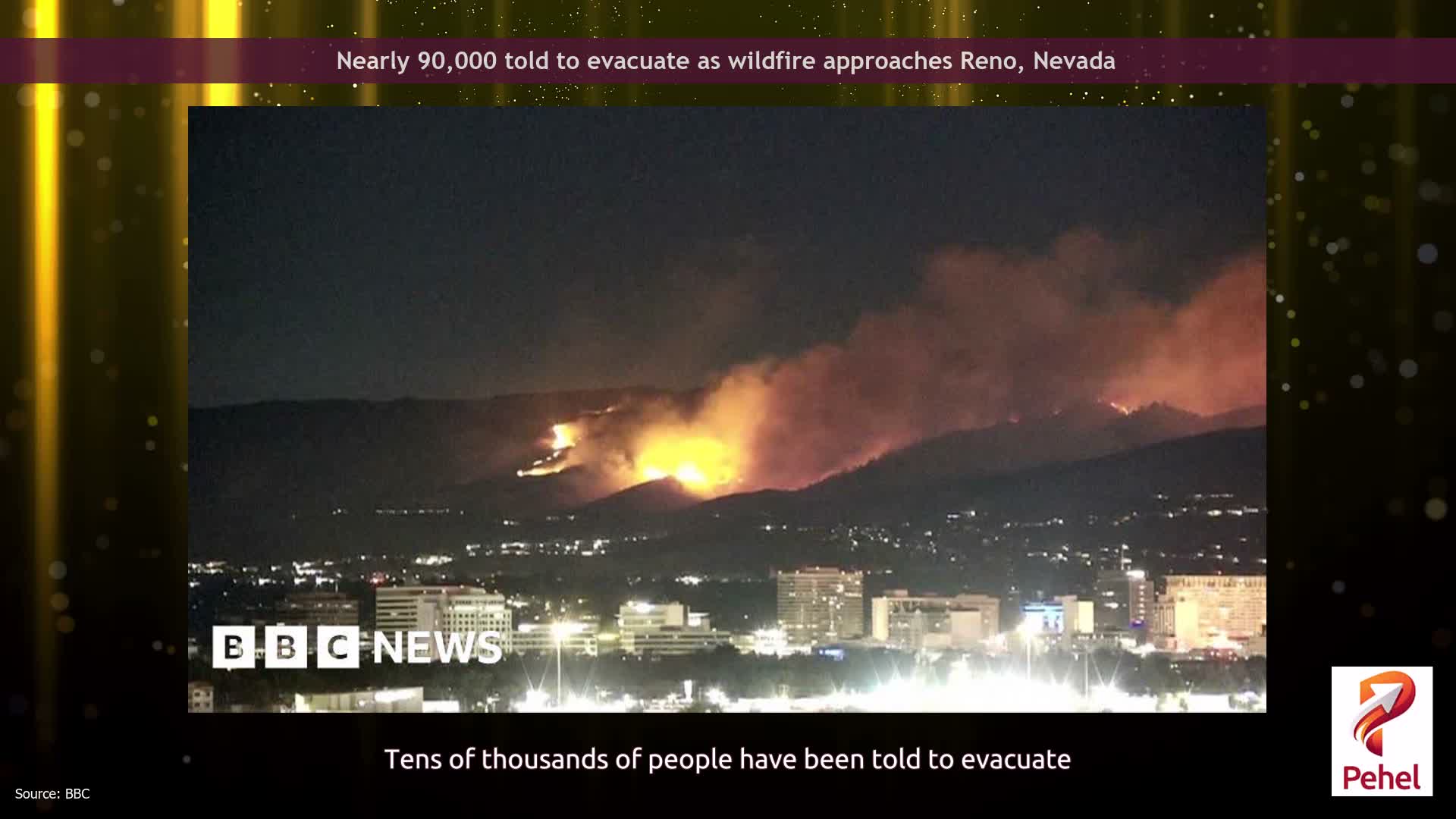
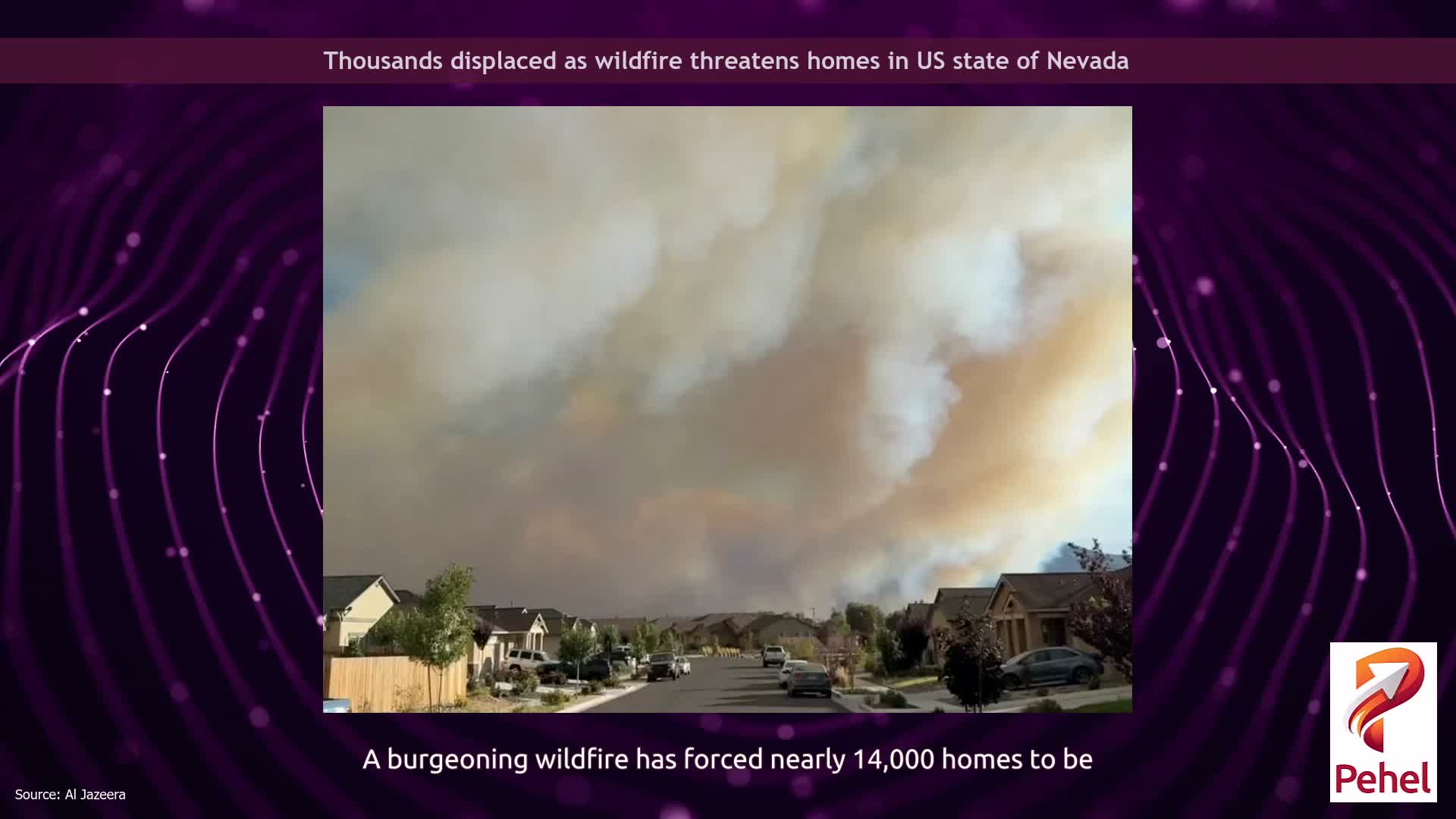
A state of emergency has been declared after thousands of people were forced to flee their homes as a fast-moving wildfire in a remote part of western Canada spread rapidly, doubling in size since it was first detected on Friday.
The Bald Range fire now occupies more than 39 sq miles (103 sq km) across the Summerland, Peachland and other districts of British Columbia, according to the BC Wildfire Service.
British Columbia Premier David Eby told a news conference on Saturday that one fire official had likened the fire to "a bomb going off".
The flames were so high that they had created their own weather systems, which creates lightning, Eby said.
"Homes have been lost, and properties have been destroyed. Some people became trapped as conditions changed very quickly, and needed to be rescued," the premier said.
A state of emergency allows the provincial government access to special powers including travel restrictions and supply protections to prevent price gouging, and extra resources to coordinate rescue work.
Summerland has a population of about 12,000 people, according to the 2021 census, and Peachland is home to about 6,500 residents.
The Bald Range wildfires triggered the largest evacuation event this summer and more than 20,000 people across British Columbia have evacuated their homes, officials say.
"A lot of farms have been affected. We don't know how many structures have been lost. They're still busy fighting the fire," Summerland Mayor Doug Holmes told Reuters.
"We have to brace ourselves for the worst."
Hundreds of residents living in Summerland care facilities, including senior housing, were being relocated to safer areas, according to Interior Health, a publicly funded health authority in BC.
It was not yet clear how many structures had been destroyed in the blaze.
The nearby districts of Okanagan, Peachland, and Okanagan-Similkameen also issued evacuation orders, as well as evacuation alerts in some areas.
In Okanagan, there are a lot of horses that residents have been struggling to evacuate, Canadian broadcaster CBC reported.
Those unable to relocate their animals left their gates open in the hope the animals would find their own way to safety, local residents told CBC.
Some owners also painted markings on their animals to make them easier to identify later, according to the outlet.
Hundreds of wildfires have raged across Canada this summer, with nearly 200 burning in Ontario in July, sending air quality in Toronto to one of the worst levels in the world for a few days.
Smoke from those Canadian wildfires drifted down into parts of the US, including Minnesota and New York, leading US President Donald Trump to threaten new tariffs on the US's northern neighbour.