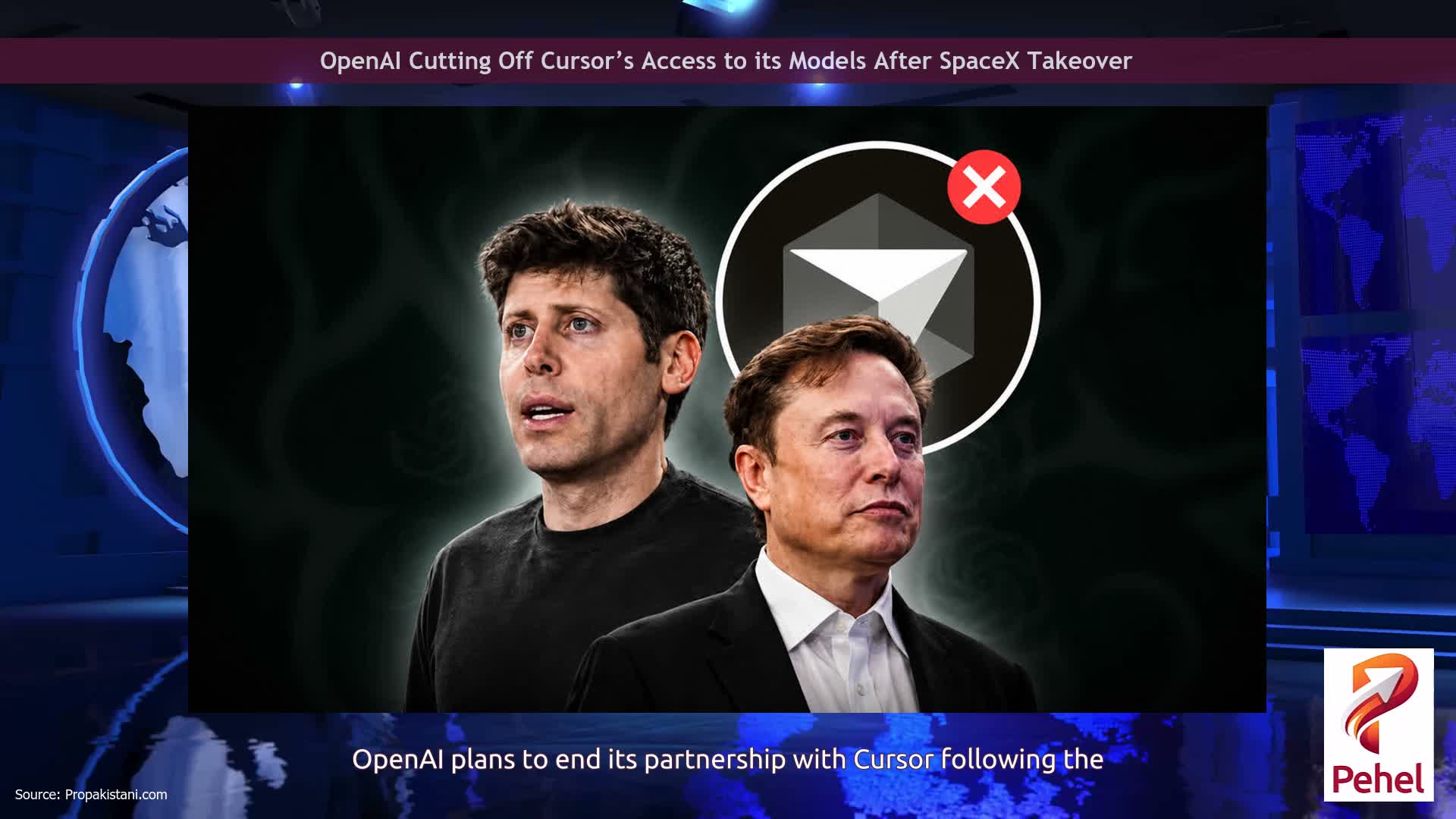
SpaceX has agreed to acquire AI coding startup Cursor in a $60 billion stock deal, just a few days after the space company’s historic IPO and less than two months after announcing a tie-up between the two .
The deal is meant to help SpaceX’s AI division — built around Elon Musk’s AI company xAI, which SpaceX merged with earlier this year — catch up to the major AI labs. Despite being a centerpiece of its IPO promises, SpaceX’s AI division has been in the midst of a restructuring after running into repeated controversies, like allowing users to generate non-consensual deepfakes of women and children.
SpaceX said Tuesday that the acquisition is likely to close in the third quarter of this year.
Before SpaceX came knocking, Cursor was on track to close a $2 billion funding round from the likes of Andreessen Horowitz, Thrive, and Nvidia that would have valued the AI coding startup at $50 billion, TechCrunch has reported .
Musk’s company announced a curious deal in April ahead of its IPO: it would either buy Cursor for $60 billion in stock, or pay a $10 billion break-up fee if the deal fell through.
Cursor was growing fast when this deal was first announced. But one source told TechCrunch at the time that the $2 billion it was planning to raise wasn’t going to be enough to help it break even. That’s despite the startup previously raising $900 million in a Series C in June 2025, and another $2.3 billion in late 2025.
Founded in 2022 as Anysphere, Cursor has been on a meteoric rise as AI-powered coding took off over the last two years. It went through OpenAI’s startup accelerator in 2024 before raising enough money to wind up with a price tag of around $29 billion before the SpaceX deal was announced.
Signs of SpaceX’s interest in Cursor appeared earlier this year when xAI hired two of the startup’s senior engineering leaders. Then, in April, Business Insider reported that xAI had decided to rent out some of its data center capacity to Cursor — a hint of the similar deals that SpaceX struck with Anthropic and Google ahead of its IPO this year. Those conversations between SpaceX and Cursor quickly evolved into the deal that is being finalized now.
The deal also happened at the same time that xAI was falling apart.
All 11 of Musk’s co-founders in xAI had left the company by the end of March, and Musk publicly admitted that xAI “was not built right [the] first time around” and that he was rebuilding it “from the foundations up.” This followed xAI’s Grok chatbot calling itself “MechaHitler” in 2025, and allowing users to generate nudes and sexual deepfakes of women and children earlier this year . SpaceX told investors in its IPO filings that behavior like this is a risk to its business, and the company currently faces a number of legal challenges as a result of these actions.
xAI’s teardown started as SpaceX started moving toward what would become the biggest IPO in history. In that process, SpaceX and its bankers pitched investors on the idea that the company faced a total addressable market of around $28 trillion. Nearly all of that — $26 trillion — was centered around the company’s AI efforts.
SpaceX told investors that it sees a potential $2.4 trillion AI infrastructure business (including its stated plans to build a satellite constellation that handles AI compute) and a $22.7 trillion opportunity in “enterprise applications.”
SpaceX is now leaning on Cursor to deliver on some of these promises. But the prospect of acquiring the startup must have seemed even easier to swallow post-IPO: Since going public last Friday, SpaceX’s stock has gone from its IPO price of $135 per share to more than $200 per share in pre-market trading as of Tuesday morning, adding nearly $1 trillion — or roughly 16 Cursors — to its valuation in the span of just a few days.