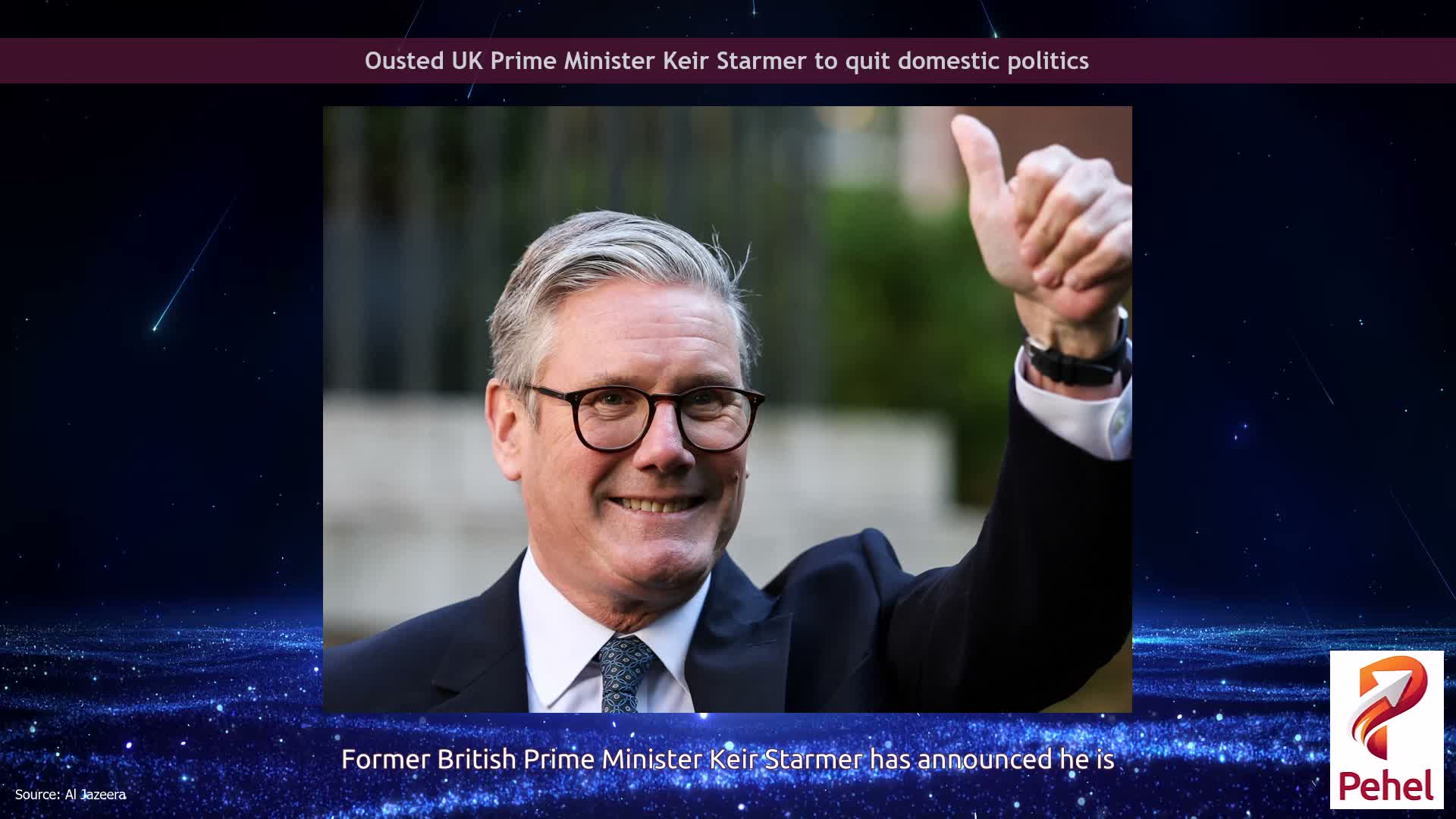
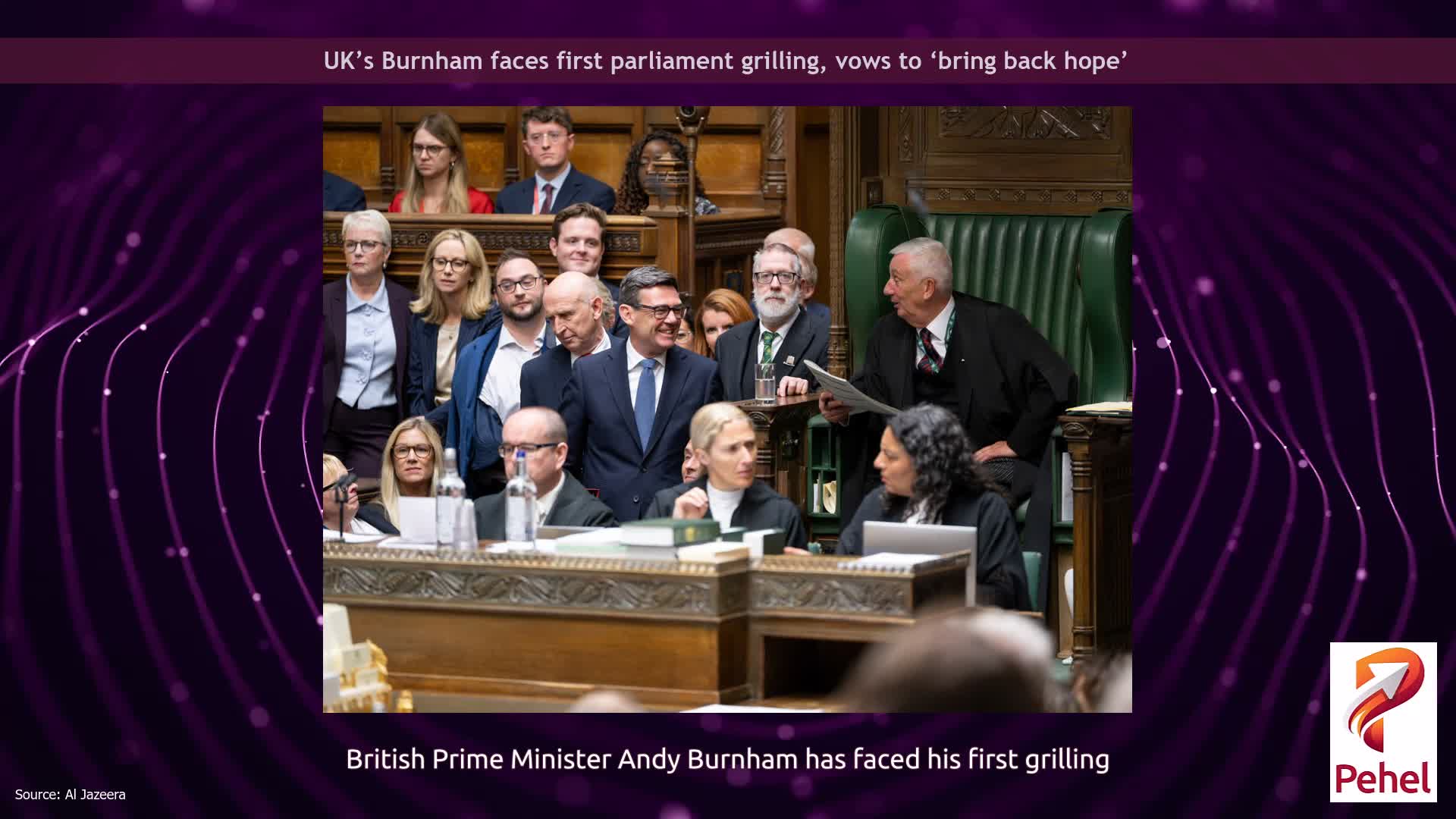
UK politician Andy Burnham could now challenge British Prime Minister Keir Starmer for the leadership of the governing Labour Party, and the country, having resoundingly won the election as the Member of Parliament for Makerfield.
Thursday’s by-election - the equivalent of a special election in the US - was triggered with the sole purpose of providing a path to 10 Downing Street for Burnham, the mayor of Greater Manchester who is widely seen as the Labour politician best placed to unseat the embattled Prime Minister.
In the early hours of Friday morning, with all votes counted, that risk paid off, and the UK government now enters a new period of uncertainty as Burnham plots his next move.
“Everyone knows that politics isn’t working. Everyone can feel that the country isn’t where it should be. Tonight could just be the turning point,” Burnham said after results were announced, adding that it was a “chance to build a new politics built on unity and hope, turning away from the path that takes us to a divided, dark politics of the kind we see in the United States.”
“This result will bring about a country that works fairly for everywhere and for everybody,” he said.
Burnham, a former cabinet minister, now re-enters parliament at a pivotal moment for his party. Since winning a landslide victory in 2024 that ushered in the first Labour government in the UK in 14 years, the center-left party under Starmer has suffered a precipitous drop in popularity. This culminated in devastating losses in local council elections in early May, with the populist right-wing Reform UK party seeing massive gains.
Growing numbers of Labour MPs called for Starmer to quit, but with Burnham unable to run as party leader – and hence prime minister – since rules and convention state that only serving MPs can do so, no one was willing or able to launch an official challenge. The leader of the party that has a working majority in parliament is automatically invited by the monarch to form a government, so would not need to call a general election.
Even former health secretary, and likely Starmer challenger, Wes Streeting wrote in his resignation letter on May 13 that any leadership race “needs the best possible field of candidates” – a reflection of a growing sentiment in the Labour Party that, given Burnham’s popularity, any leadership race without him in it would be seen as lacking legitimacy.
On May 14, Labour MP for Makerfield Josh Simons announced he would be stepping aside “so that Andy Burnham can return to his home, fight to re-enter Parliament, and if elected, drive the change our country is crying out for.” Labour’s powerful National Executive Committee, which blocked a previous attempt by Burnham to run for parliament, cleared him to stand. A route had been opened for Burnham, who’s been Mayor of Greater Manchester for the best part of a decade since leaving parliament, to challenge the prime minister.
And so, for five weeks, the Makerfield constituency, a set of small former coal-mining towns on the outskirts of Manchester, northwest England, has become the nation’s kingmaker. Politicians from around the country along with journalists from all over the world descended to witness how roughly 75,000 registered voters would decide the political future of 70 million British citizens.
Burnham faced a delicate and arduous campaign in what quickly emerged as a two-party race – but not against the Conservative Party, the official opposition in parliament. Instead, his main challenger was Robert Kenyon, a 41-year-old plumber from Reform UK, who was focused on tapping into the economic grievances, and immigration concerns, of the overwhelmingly White population of Makerfield, while repeatedly accusing Burnham of using the constituency as a “stepping stone.”
In his victory speech, Burnham said Makerfield “will never be a stepping stone to me, but instead will be my touchstone” that would stand as a “test at the heart of British politics” to “ensure that the places Westminster has neglected will now get fairness.”
Burnham’s approach, to avoid looking entitled in a race triggered specifically for him, was to mention his own leadership ambitions as little as possible during the campaign, and his own party even less. Despite being a former MP, and twice before running unsuccessfully for Labour Party leader, he sought to portray himself as an insurgent on the inside.
“Andy Burnham has managed to not let the national picture and his national ambitions dominate the by-election there,” said Patrick English, head of elections and political and social data at YouGov, a polling company. Instead, Burnham’s “outsider perspective” on central government and party politics gave him an advantage in a seat that Reform “should absolutely walk” in a general election, English said.
Deindustrialization, including the closure of the area’s coal mines in the 1980s, has created economic disparities across the region, which have now collided with the UK’s cost-of-living crisis and mounting immigration fears to create a divided and volatile political mood in Makerfield, an area which has voted Labour for over a century.
Why 0.1% of Britons could determine the prime minister’s fate
Reform’s support here has been surging. In 2016, 65% of the Makerfield electorate voted to leave the European Union, a campaign spearheaded by Reform UK leader Nigel Farage (nationwide, the majority in favor of leaving was 51.8%). In the 2024 general election, the same Reform candidate, Robert Kenyon, won 32% of the vote, and last month Farage’s party, whose policies include a plan to detain and deport all illegal migrants and ban them from the UK for life, swept almost all available council seats in the constituency in local elections. Not a single Labour councilor was elected there.
One constituent, Stephen Burrows, a former builder, told CNN ahead of the vote that immigration was a key reason he planned to vote for Reform in Makerfield, and dismissed as “total rubbish” the fact that net migration in the UK has been falling over the past three years. “They’re everywhere. Why are there riots in Scotland and Liverpool and Ireland? Because people don’t want it, but it’s been (imposed) on people,” he said, referring to recent pockets of race-related violence in the UK sparked by several high-profile crimes.
The hard-right Restore Britain party, whose leader Rupert Lowe promotes mass deportations of legal migrants if they fail to meet certain criteria, gained a huge online audience thanks to repeated reposts and endorsements by billionaire X owner Elon Musk.
This is story has been updated throughout.