The federal government has upsized its Eurobond issuance to $750 million, with an additional $250 million placed with global institutional investors, said Khurram Schehzad, adviser to the finance minister, on Monday.
Schehzad made the announcement in a post on X, saying Pakistan upsized the issuance by exercising the Green Shoe Option.
"The upsizing reflects stronger-than-expected investor demand, reinforcing confidence in Pakistan's economic outlook and market re-entry," he said.
The 3-year Eurobond, initially placed at $500 million, attracted significant global interest - enabling the government to broaden investor participation, said the adviser.
Schehzad, on April 17, announced Pakistan's return to the international capital markets after a four-year gap.
Taking to his official X handle, he said: "Pakistan has successfully returned to the international capital markets after a four-year hiatus, with the issuance of a $500m Eurobond today, at attractive terms under its Global Medium-Term Note (GMTN) Programme."
Announcing the upsizing of the Eurobond issuance, Schehzad said that it signalled strong investor demand, sustained appetite, and enhanced depth and liquidity in Pakistan's sovereign yield curve.
He asserted that the development reinforced Pakistan's re-engagement with global capital markets and confidence in the country's economic outlook.
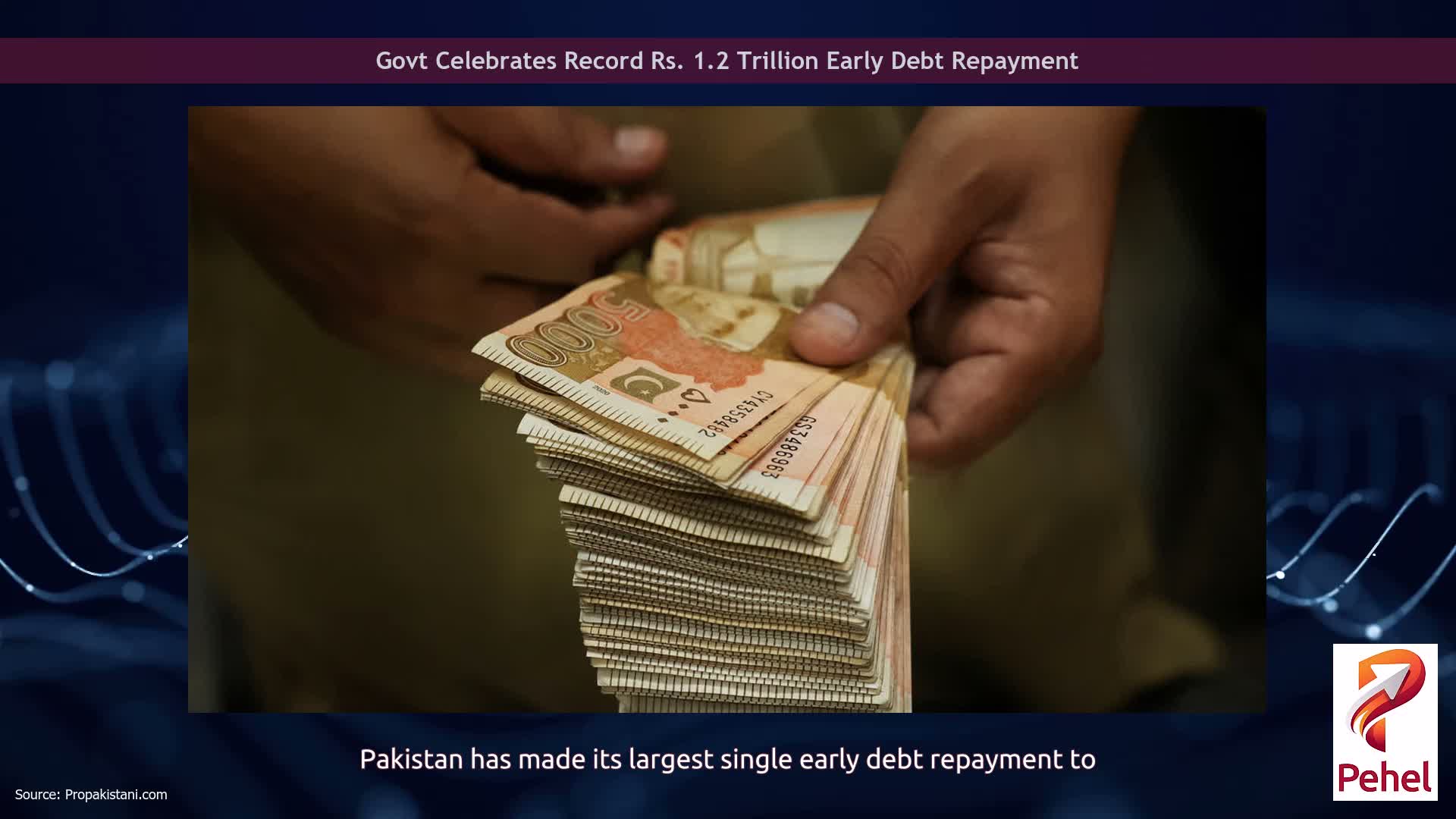
The development came around two weeks after Schehzad confirmed that Pakistan repaid $1.43 billion in external debt, including the $1.3 billion Eurobond.
In an X post on April 4, he said that debt servicing continued to be executed, "... reflecting consistency, discipline, and strengthened capacity."
The $1.43 billion repayment also included $126.125 million in coupon obligations on other Eurobond issuances, he added.
Pakistan has also returned $2 billion in debt to the United Arab Emirates (UAE) during the ongoing month.
A spokesperson for the State Bank of Pakistan (SBP) confirmed the repayment of the deposit on April 18, saying the amount was kept with the central banks as a safe deposit.