Nvidia has detailed the performance specifications of its Vera CPU, a new data center processor built for agentic AI workloads. The Elec reported that Nvidia claims Vera delivers the world’s highest instructions per clock, or IPC, for a CPU and is also 80% faster than x86 CPUs.
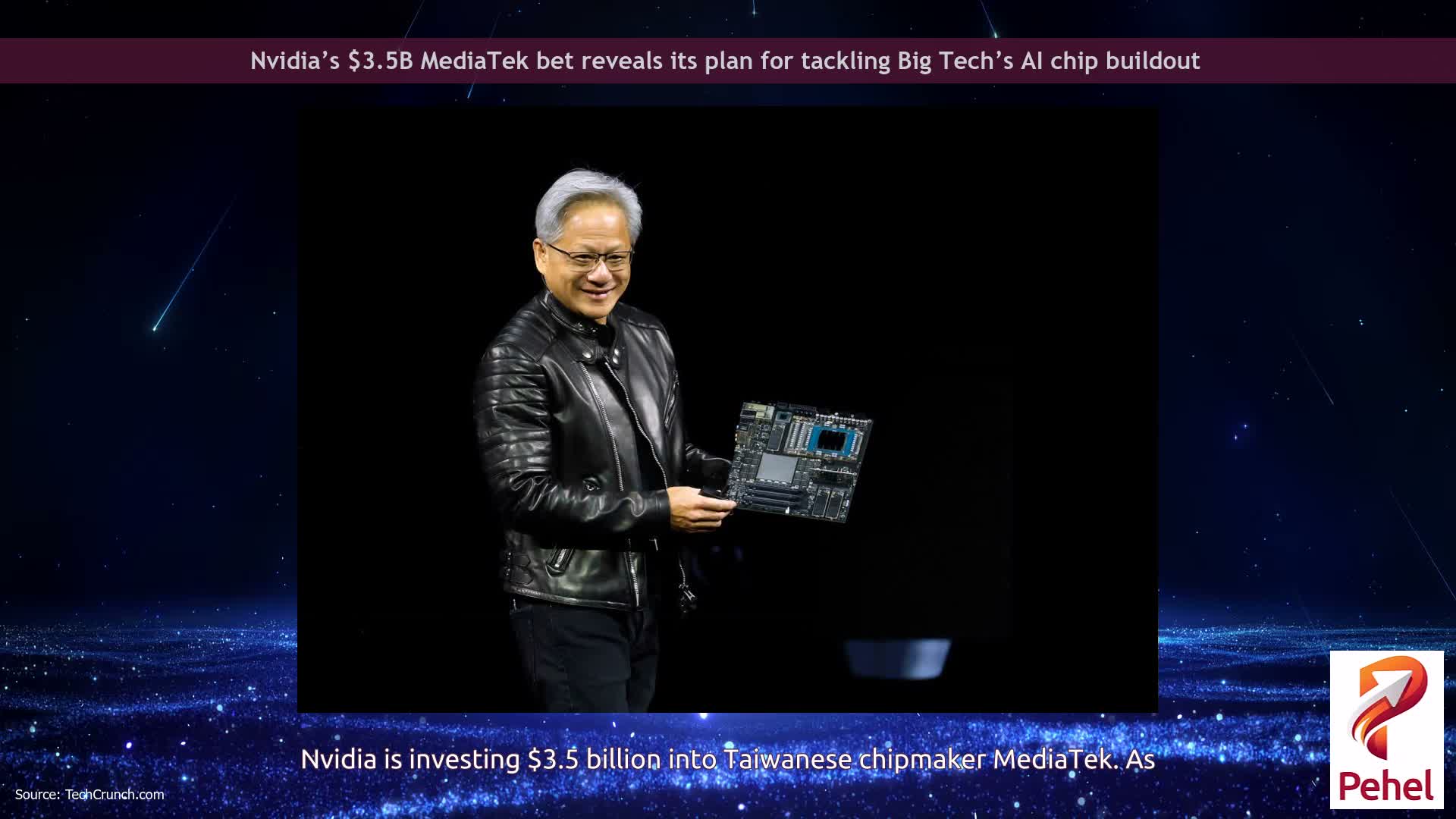
During his GTC 2026 keynote in Taipei on June 1, Nvidia Chief Executive Jensen Huang said Vera can fetch and execute 10 instructions per clock cycle. Nvidia’s own GTC Taipei update also lists Vera with 10 instructions per clock and positions it as a CPU designed for the age of AI agents.
Vera is designed for agentic AI, where AI systems call tools, run code, process data, and work through tasks with very low latency. Nvidia’s technical blog says CPUs are becoming part of the AI loop because agents increasingly depend on sandboxed code, tool execution, data retrieval, scheduling, and orchestration.
The Elec reported that Nvidia designed Vera for nanosecond-level response times rather than the slower command patterns used by human-driven computing. An agentic sandbox is a secure execution environment where AI agents can run tools, execute code such as Python or Java, and process data while keeping the system protected.
Vera integrates 88 custom Olympus cores based on Nvidia’s own architecture. Each core supports two simultaneous threads, giving the CPU a total of 176 threads. Nvidia’s product page describes these Olympus cores as built for control-heavy and latency-sensitive AI workloads.
The processor includes 2MB of L2 cache for each Olympus core and 164MB of shared L3 cache, The Elec reported. Its thermal design power ranges from 250W to 450W, while Nvidia’s technical blog also lists the configurable TDP range as 250W to 450W.
Huang said Vera delivers 1.8 times the performance of the highest-performing x86-based CPU in agentic sandbox benchmarks, The Elec reported. Nvidia’s product page similarly lists up to 1.8x faster agentic sandbox performance compared with traditional CPU infrastructure.
Nvidia has used a single compute die design for Vera instead of splitting the 88 cores across multiple chiplets. The design helps reduce latency across chiplet boundaries and keeps data moving through a large internal mesh network.
The CPU reaches 3.4TB/s of bisectional bandwidth through Nvidia’s second-generation Scalable Coherency Fabric, according to Nvidia’s product page. The Elec also reported that this gives Vera three times higher per-core bandwidth and twice the total bandwidth of conventional x86 CPUs.
Vera is also Nvidia’s first server CPU to use LPDDR5X memory. The processor offers up to 1.2TB/s of memory bandwidth and up to 1.5TB of memory capacity, Nvidia’s product page shows. The Elec reported that the memory setup also cuts maximum memory latency by 40% compared with existing x86 processors.
The Elec cited Phoronix benchmark results showing Vera as the fastest performer across agentic workloads, including code compilation, Python, Java, and database processing. SQL performance improved by up to three times compared with previous systems, the report added.
Nvidia’s own blog on the Phoronix tests also noted strong results across code compilation, file compression, video transcoding, Python, Java, and database management. The company framed these as workloads commonly used by AI factories and agentic systems.
In real-time stream processing at the New York Stock Exchange, Vera showed performance gains of up to six times, The Elec reported. NYSE handles more than 1.1 trillion messages per day, making it a high-volume environment for testing low-latency data processing.
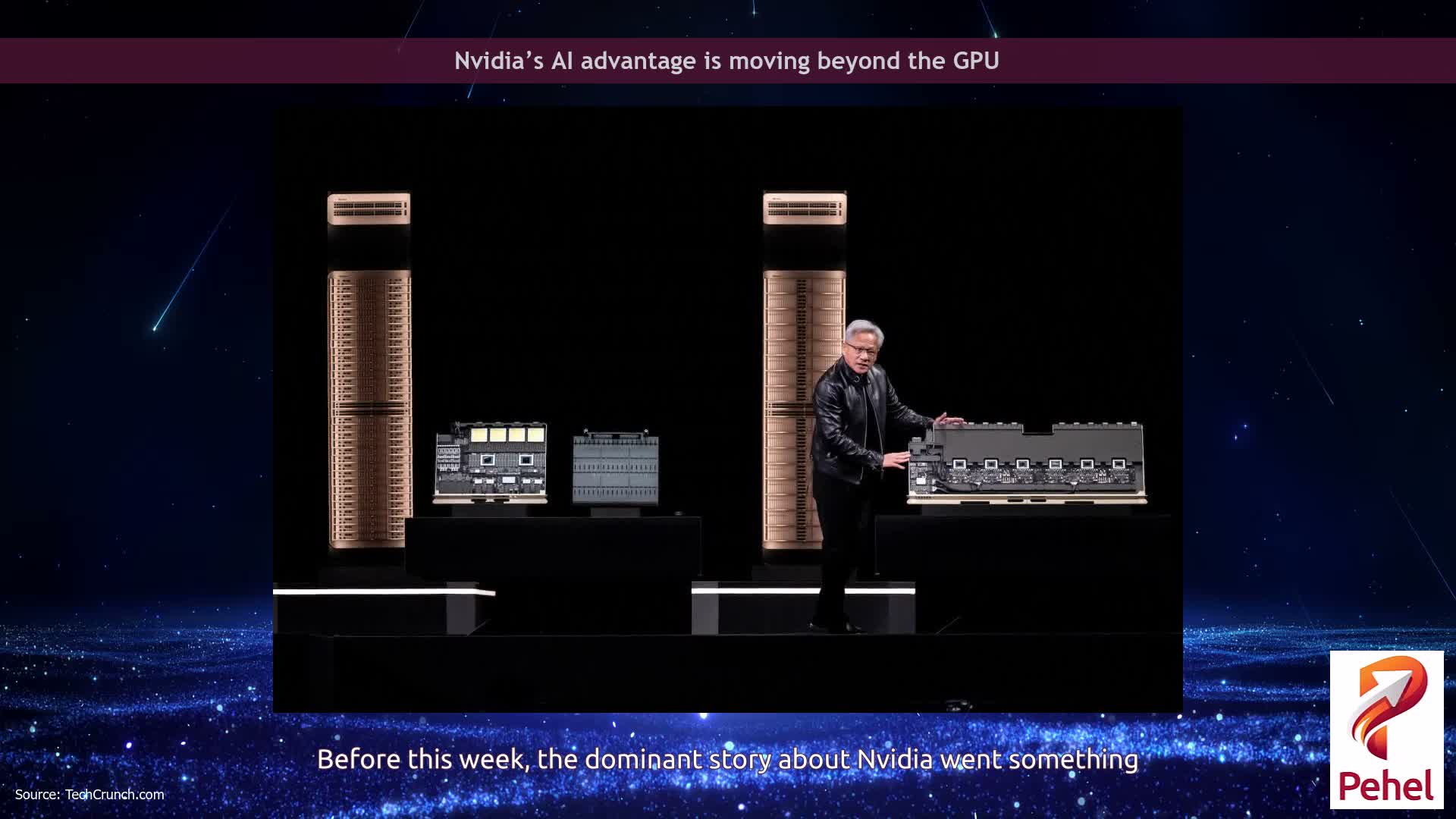
Vera will act as the main CPU in Nvidia’s next-generation Vera Rubin AI computing platform. Nvidia’s product page also lists Vera for standalone CPU systems, single-socket and dual-socket configurations, dense liquid-cooled CPU racks, and the Vera BlueField 4 STX storage platform.
Nvidia says early Vera CPU systems have already reached major AI companies and cloud providers, including Anthropic, OpenAI, Oracle Cloud Infrastructure, and SpaceX AI. The company also lists the Vera CPU Rack as a platform that can integrate up to 256 Vera CPUs and run more than 22,500 concurrent environments.
The Elec reported that AI research institutes and hyperscalers such as Anthropic, OpenAI, Oracle, ByteDance, and SpaceX AI are preparing to use Vera CPUs for AI factory deployments. Server makers, including Dell, HPE, Lenovo, and Supermicro, are also expected to produce standalone Vera server systems.
Huang said the largest consumer of future computing resources will be agentic AI, The Elec reported. Nvidia is positioning Vera as the first CPU built specifically for that era and for hyperscale environments where AI agents need fast tool execution, high memory bandwidth, and low-latency processing.
📢 For the latest Tech & Telecom news, videos and analysis join ProPakistani's WhatsApp Group now!
Follow ProPakistani on Google News & scroll through your favourite content faster!
Shares