Twelve countries, including the UK, are set to spend more than £37bn ($50bn) over the next ten years on a new long-range missile to protect Europe.
The Deep Precision Strike project has just been unveiled by Number 10 and is due to be discussed later on Wednesday at the Nato summit in the Turkish capital, Ankara.
Sir Keir Starmer is there for his final Nato summit as prime minister. He is likely to face some criticism from US President Donald Trump for failing to set out a plan for reaching 3.5% of GDP spent on defence by 2035, a target agreed by nearly all Nato members last year.
But on Wednesday the prime minister will convene around a dozen leaders to discuss the new missile programme.
Billed as one Nato's most advanced weapons, it is intended to strike targets nearly 200 miles (300km) away with pinpoint accuracy, possibly extending out to 1,250 miles.
Sir Keir said the UK-led initiative would "help bring European allies together to keep Nato safe for years to come".
But like many planned military projects in the pipeline, Deep Strike is not expected to be ready until the 2030s.
In June, US Defence Secretary Pete Hegseth announced a six-month review of the presence of US forces in Europe.
Trump has repeatedly made clear he wants Nato members to contribute more to defence spending in Europe and at last year's Nato summit, members of the alliance agreed to spend 5% of GDP on defence and security by 2035.
Sir Keir said he was "determined" to ensure the safety of the UK and its allies, adding: "We must step up to deliver a stronger, more European Nato."
The UK government has already committed £300bn by 2030 in the Defence Investment Plan.
At the summit, Sir Keir is expected to underline the threat posed by Russia to the UK and Nato.
The government said Nato had scrambled fighter jets to intercept Russian aircraft approaching allied airspace more than 700 times and that Russian military activity around UK waters had surged 30%.
Sir Keir is expected to stress that whilst Nato did not seek confrontation with Russia, it must be ready to defend every ally.
Foreign Secretary Yvette Cooper said: "With deep precision strike capability, the UK and our allies will be able to hit high value military targets and the logistical engines that drive armies, deterring any aggressor and strengthening our mutual security.
"At Ankara we are sending a clear message to [Russian] President [Vladimir] Putin; Nato is stronger, more European and ready to defend our citizens against the long-term threat posed by him and the Russian state."
Ukrainian President Volodymyr Zelensky used a speech at the summit on Tuesday to urge Ukraine's allies to deliver the air defence systems it urgently needs to protect it from escalating Russian attacks.
Ukraine has been stepping up its own long-range drone and missile attacks against Russia, hitting oil refineries and military targets there and causing significant fuel shortages and power cuts.
"Ukraine's Armed Forces have proved that the effective use of long-range systems can have game-changing impacts on the battlefield, giving the Armed Forces the ability to degrade enemy forces far behind the frontline," Number 10 said.
"Ukrainian long-range strikes, such as those on key logistics hubs, have significantly impacted Russia's ability to sustain their offensives."
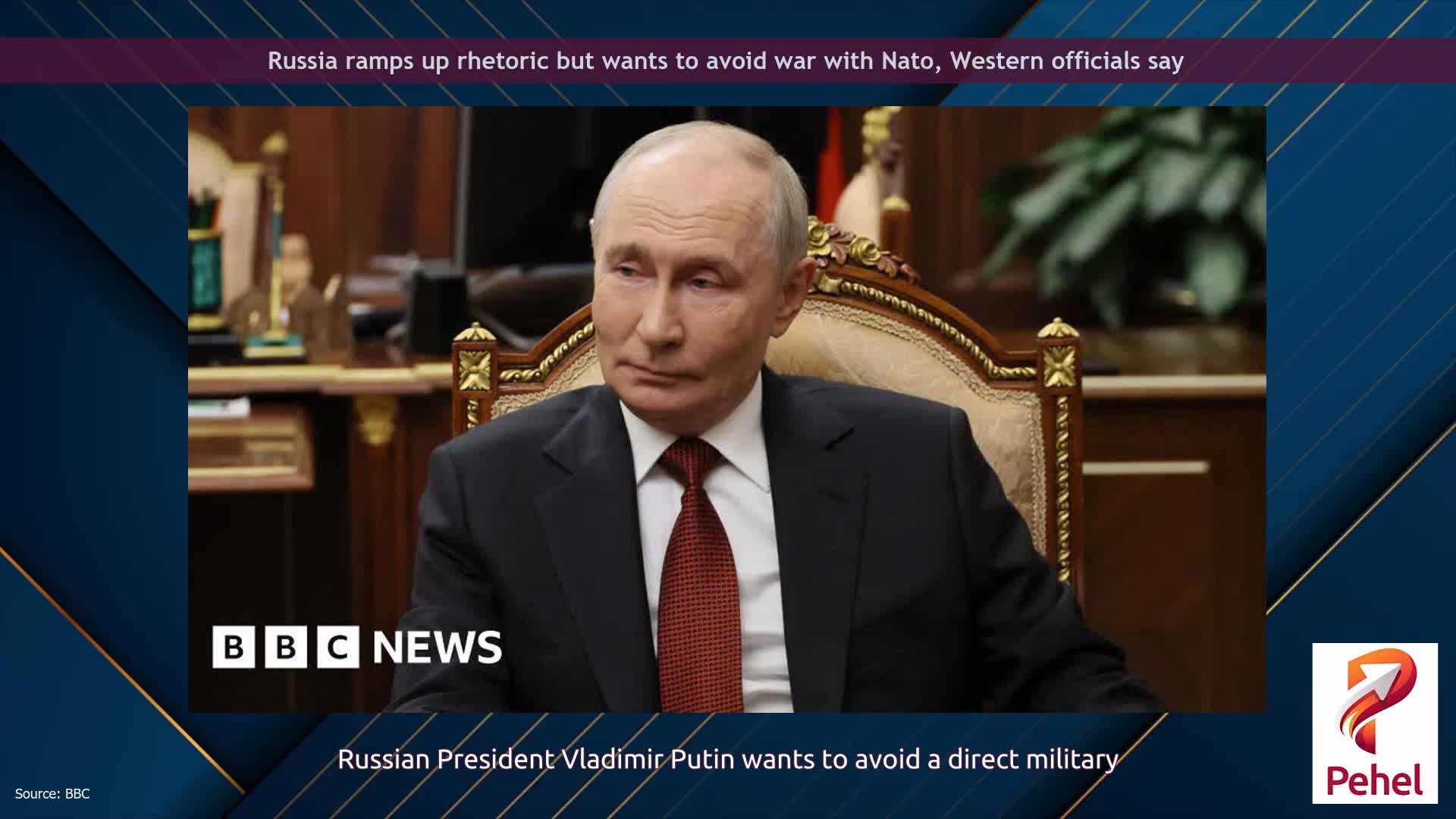
Kremlin spokesman Dmitry Peskov said on Tuesday that Russia, which invaded Ukraine in 2022, would closely monitor the summit in Ankara.
He said that no new weapons Kyiv would get from Nato could prevent Russia from pressing on with its military operation in Ukraine until its objectives were achieved.
"In the context of preparations for this summit we heard a great many statements concerning our country," Peskov told reporters.
"To our regret, these were not statements about constructive engagement and dialogue but rather statements of a confrontational nature."
"Settlement of this conflict through political and diplomatic means remains preferable" for Russia, Peskov added.