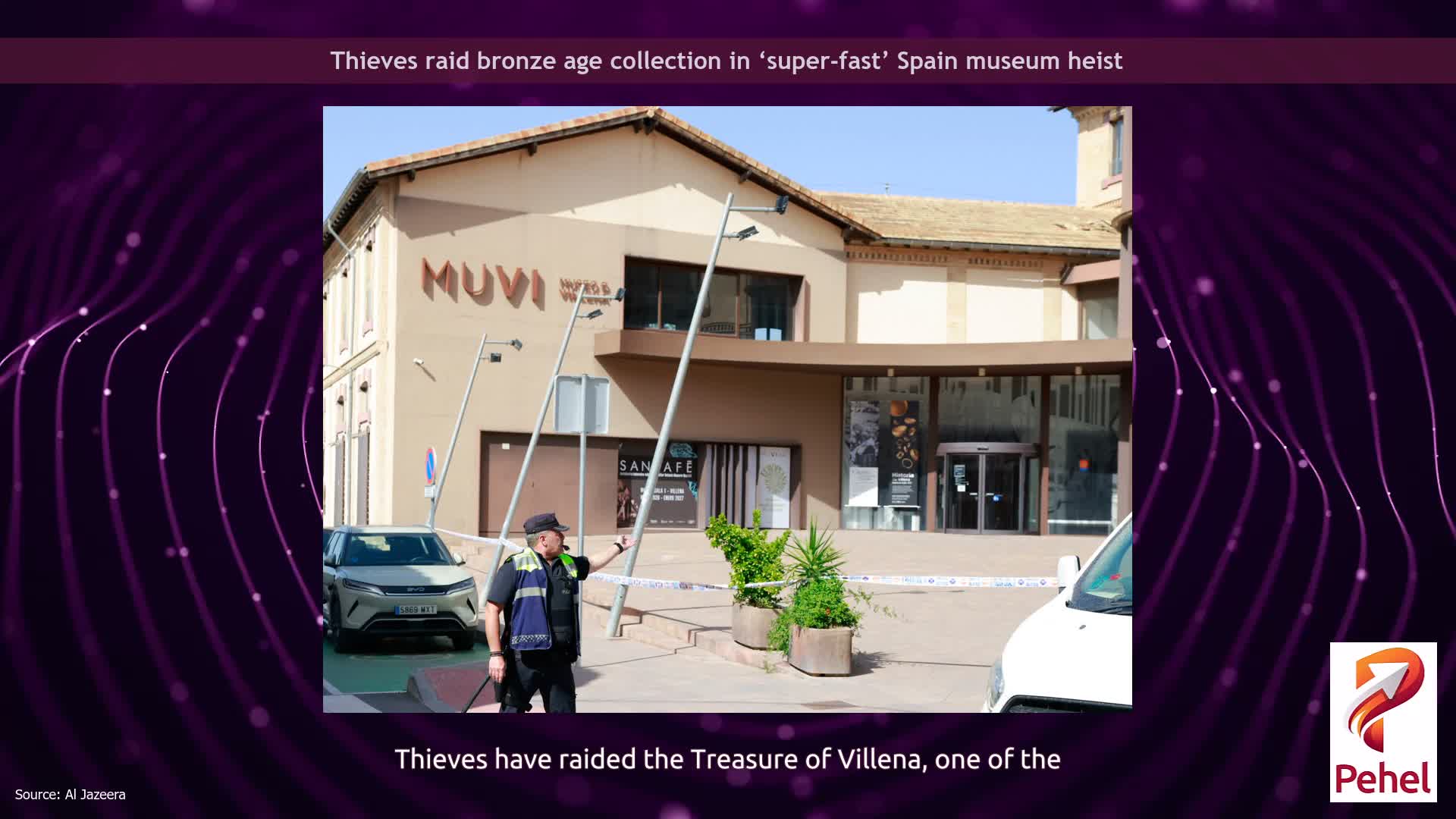
Thieves broke into the Drents Museum in the Netherlands in the early hours of the morning, pried open a door with a crowbar, triggered an explosion, and made off with some of Romania's most precious ancient treasure in January 2025.
Now the authorities have recovered the artifacts. The centrepiece of the recovery is the Cotofenesti helmet, a 2,500-year-old golden artefact from the Dacia civilisation and one of Romania's most revered national heirlooms.
Three golden bracelets were also taken in the raid. Most of the stolen items arrived at Bucharest Henri Coanda International Airport and were transported under armed guard to the National History Museum, where they were placed in a glass cabinet flanked by masked, armed officers.
The return came after 14 months of investigations, diplomatic negotiations between Romania and the Netherlands, and an ongoing criminal trial involving three suspects. The whereabouts of a third golden bracelet remain unknown, though the Drents Museum's director Robert van Langh vowed the search would continue.
Van Langh, who attended Tuesday's handover, acknowledged the weight of the moment for Romanian people in particular.
He said, "The grief, the anger and now the relief have naturally been even greater here than in the Netherlands," adding, "Romanian national heritage has returned home."
The theft had shocked the art world when it happened. Security footage captured three figures forcing their way into the museum in what appeared to be a swift and deliberate operation.
In the weeks that followed, fears grew that the helmet might have been melted down. Its fame and instantly recognisable appearance made it virtually impossible to sell on any legitimate market, but that same notoriety also made it a target.
When Dutch prosecutors unveiled the recovered items at a news conference earlier this month, it emerged that the helmet had been slightly dented during its disappearance. The recovered bracelets, however, were found to be in perfect condition.
For Romania, the return carried a significance that went well beyond the monetary value of the objects. Cornel Constantin Ilie, the National History Museum's interim director, described the artefacts as "relics of our historical memory" and said the country had lived for months with the fear that part of its past could be lost forever.