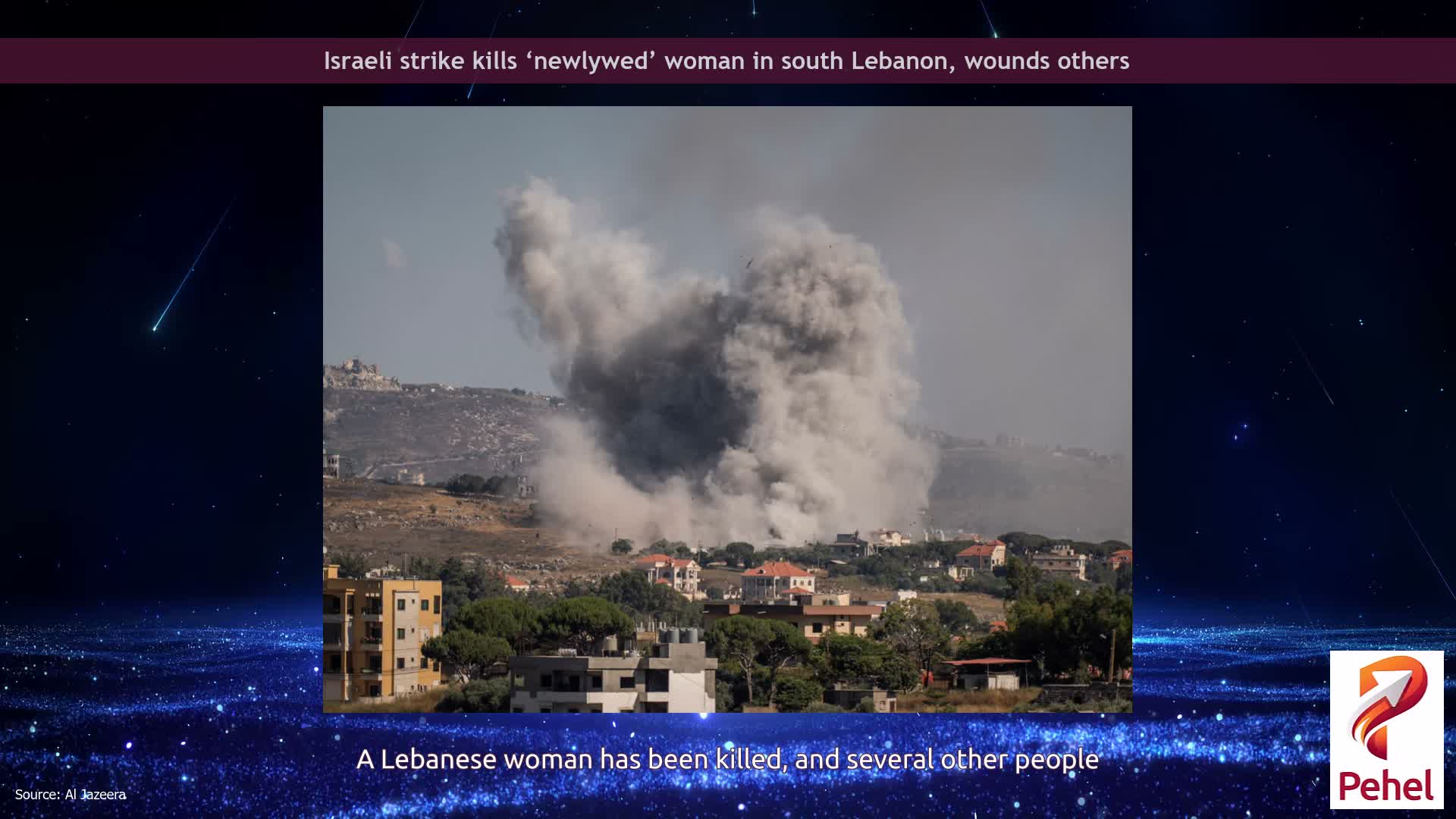
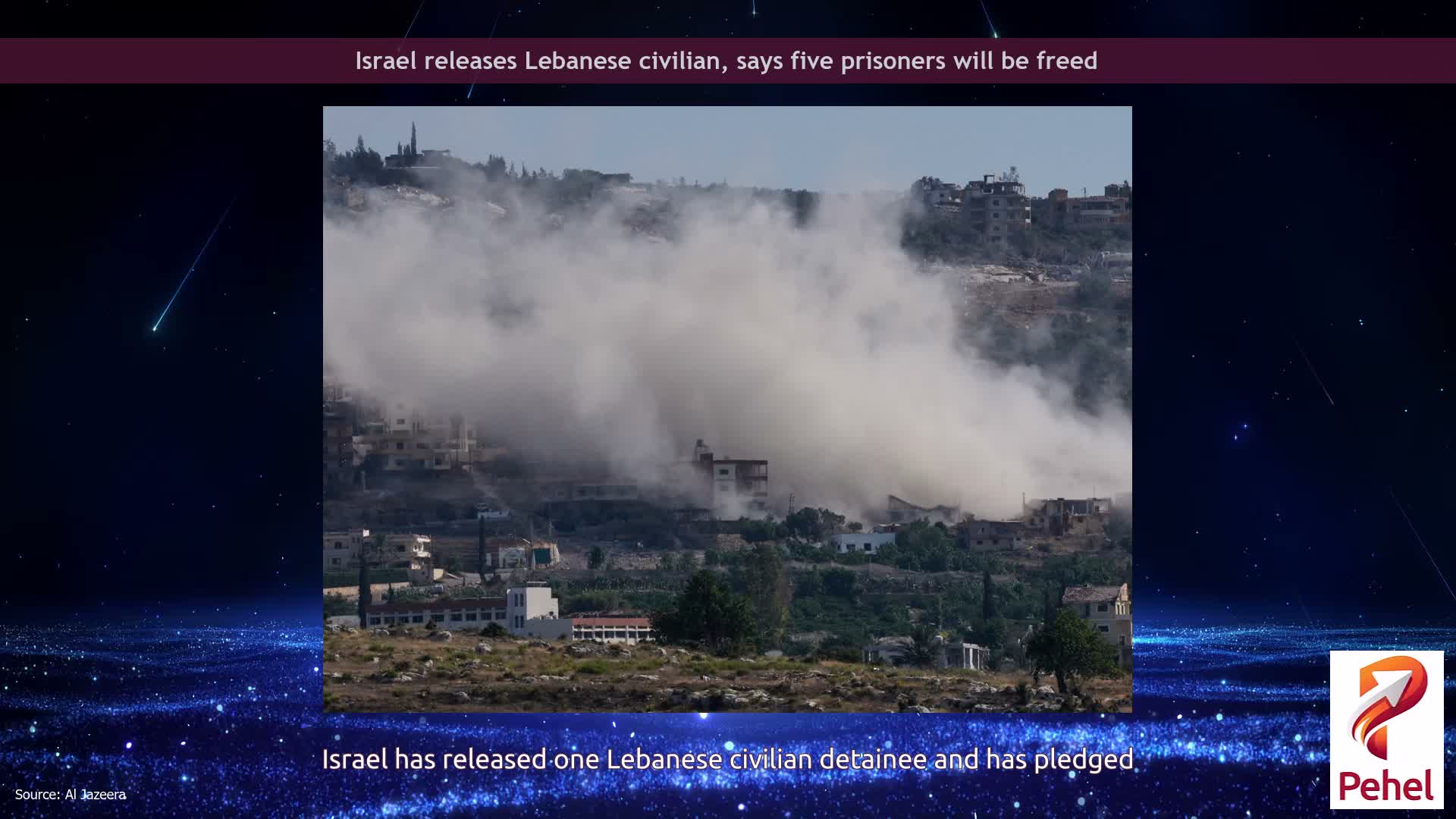
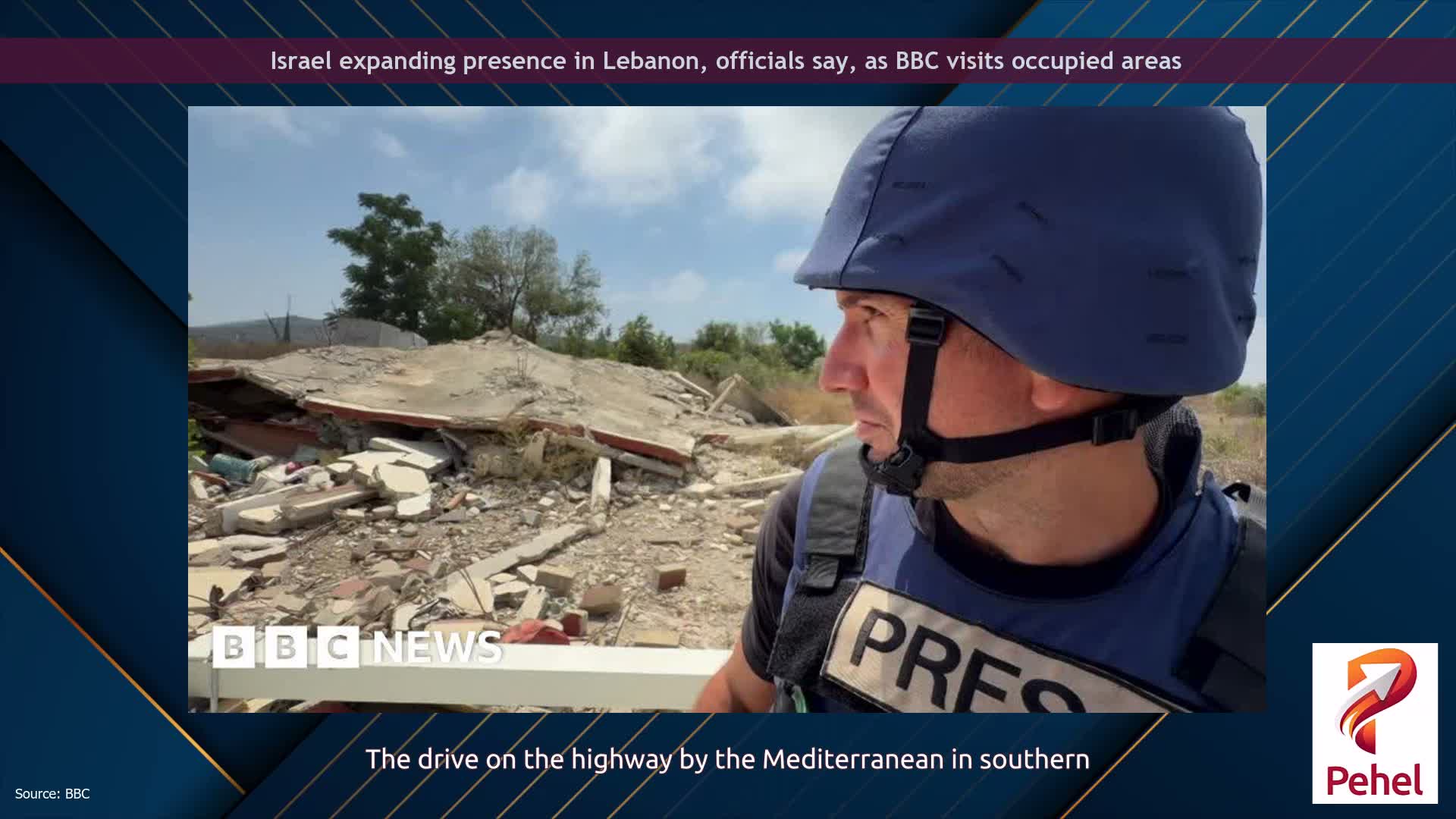
Driving south on a coastal road in southern Lebanon, the Lebanese and Hezbollah flags that line the road suddenly switch to Israeli flags. Soon, an Israeli checkpoint comes into view, where soldiers stand watch from the balconies of homes riddled with shrapnel.
And then, the landscape turns flat: Village after village, home after home, reduced to rubble.
This is what Israeli-occupied Lebanon looks like.
CNN gained rare access by joining a convoy of residents permitted to move through that occupied territory to reach their homes in three predominantly Christian villages. They have been spared the fate of the surrounding Shia Muslim villages that now resemble a wasteland.
Israel invaded southern Lebanon in March after Hezbollah, a Shia Lebanese militant group backed by Iran, resumed strikes on Israel to avenge the assassination of Iran’s Supreme Leader Ayatollah Ali Khamenei. Since then, the Israeli military has occupied a band of territory about 10 kilometers (6.2 miles) deep to establish what it calls a “security zone” to protect Israel’s northern residents from the threat of rocket attacks from Hezbollah .
Israeli Defense Minister Israel Katz vowed to destroy all homes in villages near the border. On the ground, the evidence of that is clear.
Most villages have been systematically flattened by Israeli forces, and residents of the remaining Christian villages described hearing daily controlled demolitions in neighboring communities.
According to the Lebanese Ministry of Health, more than 4,300 people have been killed by Israeli strikes since March 2, and the United Nations says more than 350,000 remain displaced since Israel’s occupation began.
As our journey continues, the road twists through apocalyptic terrain until, out of nowhere, life reappears. Buildings stand intact, cars move through the streets and children ride their bikes, as life appears to go on as normal.
But the reality is more complicated than appearances may suggest.
The villages of Rmeish, Ain Ebel and Debel have been largely spared Israel’s bombardment and demolitions, but their residents – almost all of whom are Christian – are cut off from the rest of Lebanon, unable to go in or out without joining a UN-led convoy.
Caritas, a Catholic non-profit that helps organize some of the convoys, must request permission for each resident from the Israeli military through a US-led monitoring mechanism. Approvals usually come, but the convoys are sometimes delayed or canceled, and the journey can take anywhere from a couple of hours to an entire day.
Ronnie and Rita Alam fled Rmeish with their two daughters in March, as Israeli bombardment intensified around them. They rented a home in Beirut, which strained their finances. CNN met them as Ronnie drove his wife and daughters back to Rmeish for the first time in four months. Ronnie, however, must return to work in Beirut.
“I’m happy that I’m returning to my home, but I’m unhappy because my husband won’t be with me,” Rita said, becoming emotional.
“Our family is being separated,” she said, wiping off tears. “We are four, and now we will become three.”
A ceasefire is technically in effect, but Israeli strikes continue in southern Lebanon on a daily basis. Israel insists this is allowed under the latest ceasefire agreement.
Despite the risks, Ronnie said that financially there was no real alternative to sending his family back to their village.
“Civilians have nothing to do with this. Why should they lose their homes? This destruction is a shame… and for what? For war? We don’t want war!”
Inside Ain Ebel, another of the majority Christian villages, Yorgos Mitri has gotten used to war. Even his 2-year-old son, Joe, can recognize the sound of fighter jets flying overhead, he said, and airstrikes no longer wake him at night.
Surrounding Ain Ebel are the ruins of towns and villages hit by relentless Israeli bombardment, bulldozing and controlled demolitions. Mitri chose to stay through it all, out of attachment to his home and fear he might not be able to return to it.
Like many Christians in these villages, he has no sympathy for Hezbollah, blaming the group for triggering the war that has turned the view from his home into a landscape of destruction.
“You can see the results… what did we achieve after all of this?” he said, pointing to the ravaged town of Bint Jbeil.
His anger at Hezbollah is matched by his sympathy for his civilian Shia Muslim neighbors, who have borne the brunt of Israel’s bombing and demolitions in the south.
“Nobody deserves this,” he said, looking out at the devastated landscape. “We can’t live alone. We need to live all together.”
He laments what he views as a weak and ineffective Lebanese government, which he says needs to regain control of its territory.
For now, the Lebanese government is powerless to operate in the Israeli-occupied portion of the country. Under a US-led framework agreement between Israel and Lebanon signed in June, Israel is meant to hand over tiny pockets of the territory it occupies to the Lebanese army, establishing so-called “pilot zones.” But there is little indication the plan will go ahead as intended.
It began in three villages, all Shia Muslim majority, but none had been fully occupied by Israeli forces to begin with – leading many to question whether Israel ever intended to withdraw.
CNN exclusively joined the Lebanese Armed Forces (LAF) on a patrol mission to one of them, Zawtar al-Gharbiyeh.
Lebanese soldiers deployed there are tasked with preventing armed non-state actors, like Hezbollah, from coming in; confiscating any weapons and remnants of war; and restoring state authority. The priority, according to Col. Raja Amer, the assistant to the commander of the South Litani sector, is making the area safe for displaced residents to return.
But his forces face many challenges.
The Lebanese economic crisis has gutted funding for the army. Soldiers earn an average of $500 a month, and much of their equipment is outdated or in short supply.
“Our troops are operating in a very demanding and challenging security environment,” Amer told CNN. “This is why we need more capabilities to do these missions.”
The risks include unexploded ordnance left behind by either Hezbollah or Israel and persistent Israeli airstrikes. According to the Lebanese army, 34 soldiers have been killed in 2026 alone.
As a soldier spoke about a comrade he’d lost in a previous Israeli airstrike, Israel began shelling the nearby village of Mansouri – four strikes in less than 20 minutes.
None of the soldiers reacted. For them, this was normal.
Amer said the army had recorded more than 5,000 Israeli attacks on Lebanon since the framework agreement was signed in June.
“It’s continuous and it’s everywhere… this is what the ‘ceasefire’ is from their side,” he said.
In Zawtar al-Gharbiyeh, there is no Israeli military presence. But just a couple of hundred yards away, Israeli tanks and bulldozers are visible, and the demolition of buildings continues apace. Soldiers and residents told CNN that drones fly overhead constantly, and they hear the sound of artillery shelling every day.
It hardly feels like a ceasefire to those on the ground, nor do the pilot zones appear to be paving the way for Israel to withdraw from Lebanese territory.
Lebanon’s painful history of sectarian violence always simmers beneath the surface. For three years now, many have feared that Hezbollah’s war with Israel could be the spark that lights the tinderbox.
Hezbollah draws much of its support from Shia Muslim-majority towns in southern Lebanon, which endured nearly two decades of Israeli occupation at the end of the last century, a situation compounded by a lack of economic opportunity and a sense of abandonment by the government in Beirut. Hezbollah, which is both a political party and militant group, came to be viewed by much of the Shia population as a protector against Israeli aggression and a provider of social services for a neglected community. The United States and United Kingdom have designated it as a terror group.
On the drive CNN took with the Lebanese army, Hezbollah flags and posters commemorating fighters killed in the conflict lined most roads, a sign the group still enjoys significant support.
“Hezbollah in Lebanon has a political part and a military part,” Amer said. “They are a part of this population. They were here, and the symbols stay in the place still now.”
Israeli officials say the Lebanese army is not disarming Hezbollah fast enough by conducting more aggressive searches in people’s homes. However, Lebanese law bars the army from entering private property without a judicial warrant or legal authorization, which it currently does not have.
Mindful of the country’s recent history of civil war, the Lebanese military says it is taking care to avoid fueling sectarian strife. “Doing things in violence against our own people, it will be also with other consequences,” Amer said. “We will do this slowly. We will do this in a reasonable way.”
Negotiations between Israel and Lebanon have stalled, with no sign Israel intends to withdraw its forces from occupied territory. Israel’s Defense Minister has said the military would not withdraw from Lebanon even if the United States demanded it.
With Israeli elections set for October, Prime Minister Benjamin Netanyahu will likely want to hand his base a clear victory on this front. Amer said the Lebanese army was prepared to take on more pilot zones if political negotiations bear fruit but warned the effort won’t succeed if conditions mirror the first attempt.
“We stuck to the agreement. We need the other part to stick to the agreement too and to cease fire, at the very least,” he said.
Fewer than one in 20 of Zawtar al-Gharbiyeh’s residents have returned home so far, according to the Lebanese army – a figure it hopes to see rise.
Mahmoud Darwish is one of them, having come back after the army deployed to the village. Speaking with CNN, he didn’t explicitly voice support for Hezbollah but said anyone attacked has the right to resist with force.
Darwish was displaced for five months. When he returned in July, he found his home badly damaged – rubble up to his knees, soot darkening the walls. He said the village lived off farming, and that the now destroyed olive trees in his garden had long been his livelihood.
Walking through the rubble, he placed one palm flat against a wall, then held it up – blackened.
“This is Israel and America,” he said, raising it up. “And this is Lebanon, us,” he said, raising his clean hand.
“They killed us, they killed our people, killed our loved ones, killed our friends, destroyed our homes. How do they think they’ll ever make peace with us?”
As he spoke, an Israeli airstrike thudded in the distance. Darwish barely flinched.
“No enemy will ever remove us from our land … she loves me and I love her … we are here and we will remain here.”