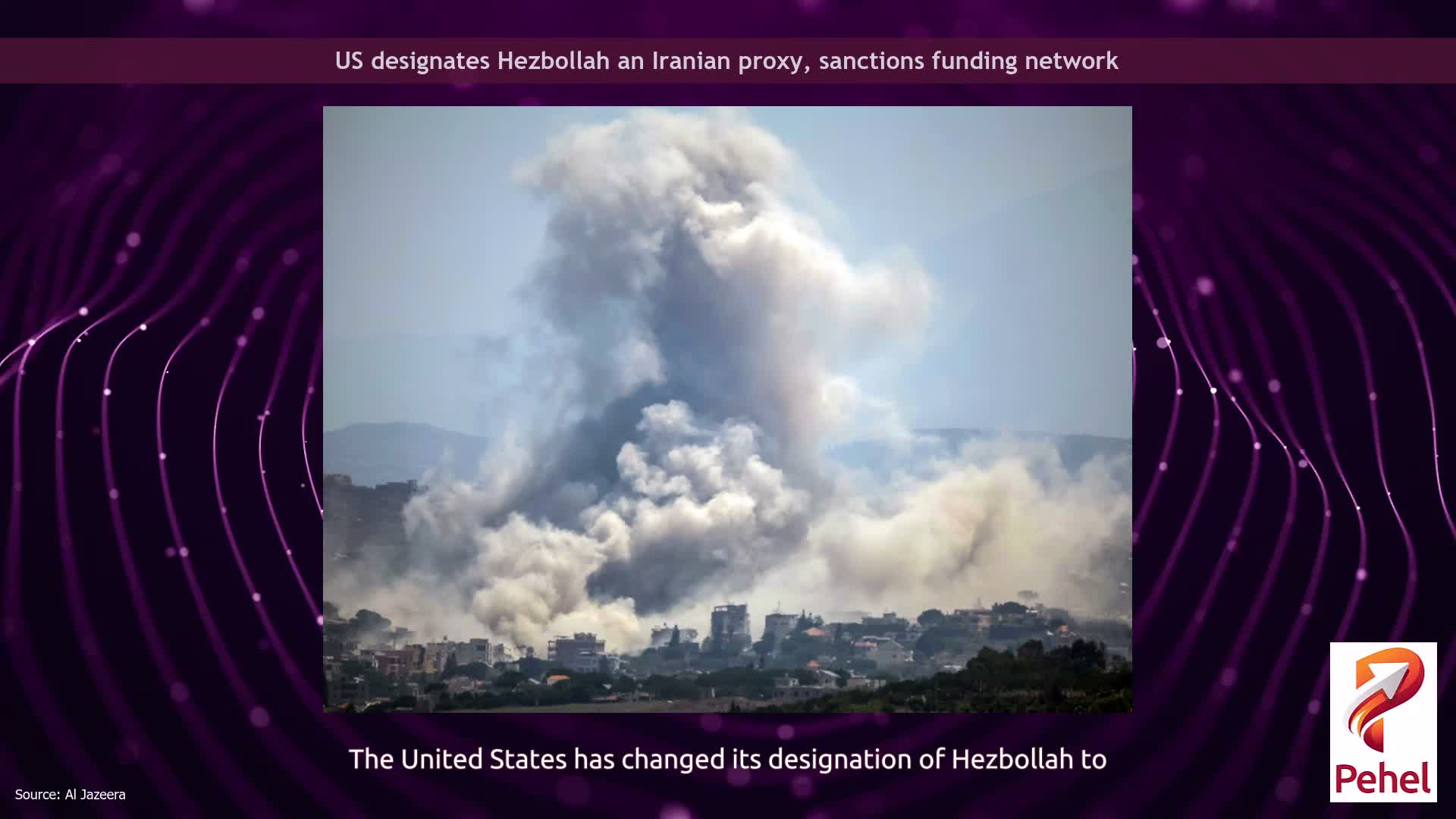
Israel has carried out strikes across southern Lebanon, despite a warning from Iran not to continue attacks in the country.
The Lebanese health ministry said eight people were killed in Tyre, where the Israeli military issued a new order for residents to leave the southern city, including its Christian quarter for the first time.
Israel and Iran paused hostilities on Monday, after an Israeli strike on Beirut targeting the Iranian-backed armed group Hezbollah triggered their first exchange of fire since a truce in April.
Iran warned that it could hit Israel again if it did not stop attacks in Lebanon. But Israel vowed to continue its campaign against Hezbollah.
The conflict is complicating President Donald Trump's efforts to strike a deal to end the war between the US, Israel and Iran.
Lebanese media reported that Israeli air and artillery strikes across southern Lebanon killed at least 13 people on Tuesday.
Two people were killed in a pre-dawn drone attack in Kfar Roummane, next to the major town of Nabatieh, according to the state-run National News Agency (NNA).
Later, the Israeli military again told residents of Tyre and its surrounding area to leave their homes immediately and move beyond the Zahrani river, about 30km (20 miles) to the north.
But for the first time, the evacuation order included the Christian quarter, in the city's north-west, where the military alleged that Hezbollah fighters were operating last week.
Many residents of the Christian quarter and other areas of Tyre fled in response to the warning, causing heavy traffic on the main roads heading north.
The Israeli military posted its order on social media minutes after reports emerged of air strikes on several buildings in Tyre's eastern al-Massaken al-Shaabiya area.
The Lebanese health ministry said at least eight people were killed and 32 were injured, but added that the figures were provisional because rescuers were still searching through rubble.
Another five people were reportedly injured in a later strike in the central al-Raml area.
There was no immediate comment from the Israeli military. However, its evacuation order said Israeli forces had been "compelled to act forcefully" in Tyre because of Hezbollah's violations of a ceasefire agreement and the group's attacks on northern Israel.
The military also said in a separate statement that troops operating in the Ramim Ridge area of northern Israel's Galiliee region had shot dead a "terrorist" who crossed the border from Lebanon and opened fire towards them.
Hezbollah said on Tuesday that its fighters had launched rockets at a new Israeli military site in the southern border town of Maroun al-Ras, and targeted Israeli troops and military vehicles further north in Qantara and Zawtar al-Sharqiyeh with attack drones.
Lebanon was drawn into the war between Israel, the US and Iran on 2 March, when Hezbollah launched rockets into Israel in retaliation for an Israeli strike that killed Iran's supreme leader.
Israel responded by launching a bombing campaign across Lebanon and invading a significant part of the country's south.
Lebanon's health ministry says at least 3,666 people have been killed there, while Israeli authorities say 30 soldiers and four civilians have been killed on both sides of the border.
The conflict continued even after the US brokered a ceasefire deal between the Israeli and Lebanese governments on 16 April.
In recent weeks, the US pressed Israel to scale back its campaign against Hezbollah to allow room for a deal with Iran, which demanded that it also cover Lebanon.
Although Israel insisted the conflicts were separate, it did agree to limit its strikes on Beirut's southern suburbs - a stronghold of Hezbollah also known as Dahieh.
Last Wednesday, Israel and Lebanon agreed to renew their ceasefire. But Hezbollah rejected the deal, demanding a full Israeli withdrawal. Israel also insisted that its military operations would continue in southern Lebanon.
On Sunday, the Israeli military carried out a strike in Dahieh on what it said was a Hezbollah command centre, killing two people, after the group fired two rockets over the border.
Iran's armed forces accused Israel of "crossing all red lines" with the Beirut strike and launched about 30 barrages of ballistic missiles towards Israel, which they said targeted Israeli airbases and the Haifa refinery. The Israeli military said the missiles were intercepted.
Israel retaliated by conducting two waves of air strikes in Iran, which it said hit air defence systems and a petrochemical complex. Two officers from the Iranian army's air defence force were killed in the strikes, according to Iran's state broadcaster IRIB.
On Monday afternoon, Iran's armed forces command announced that they had stopped military operations after delivering a "painful response" to Israel. They also pledged "more severe and crushing measures" if Israel carried out more attacks, including in Lebanon.
Israeli Prime Minister Benjamin Netanyahu said his country was holding fire "at the moment". But he stressed that the struggle against Iran and Hezbollah was "not finished" and warned that Israel would "respond with overwhelming force" to another Iranian attack.
An Israeli official said Israel had halted its strikes on Iran at the US president's request.