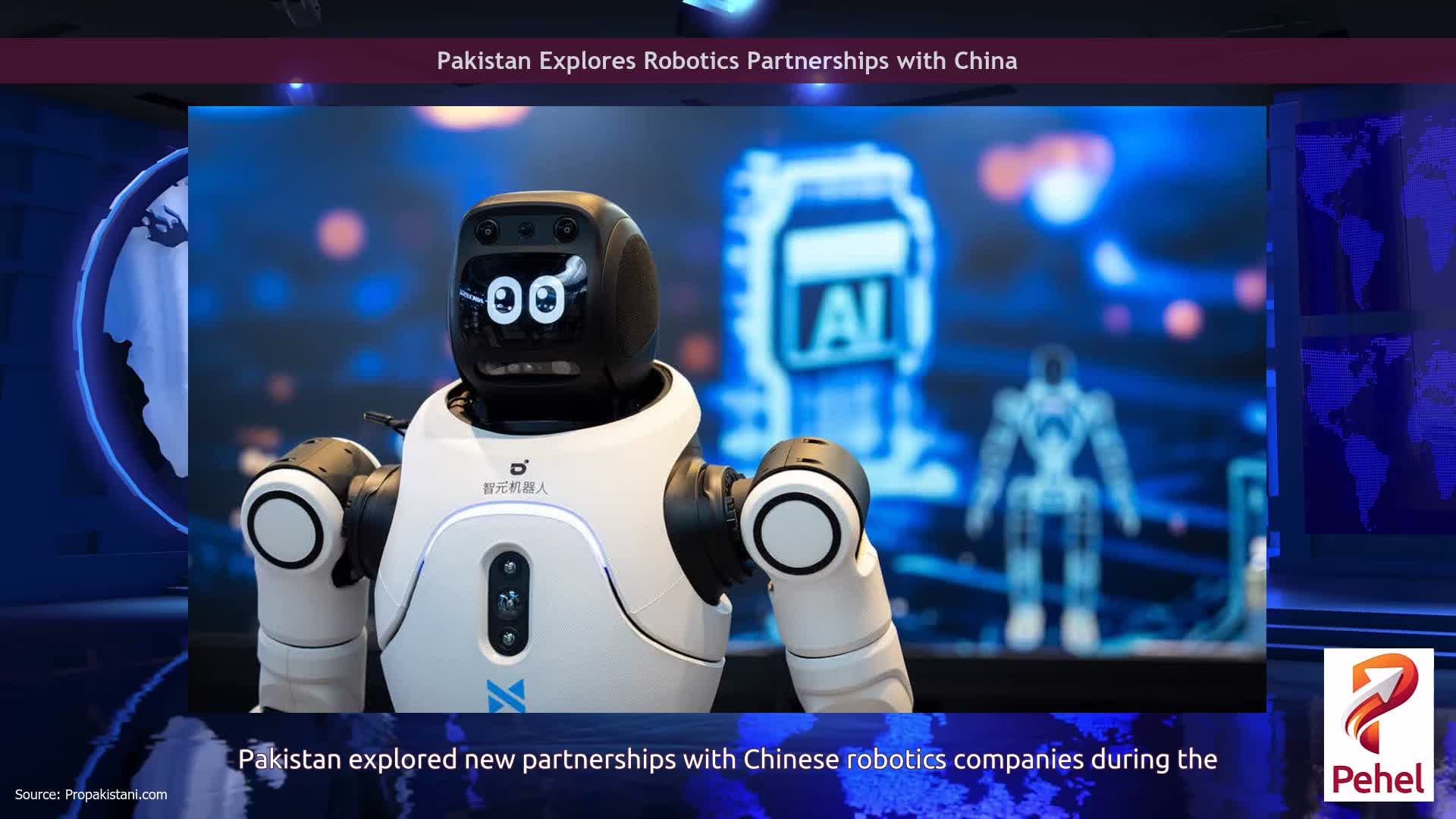
Combat robots, surveillance drones, counter-drone systems, robotic dogs, autonomous ground vehicles, industrial robots, flight simulators and AI-powered machines were among the technologies displayed at the Indus Robotics and Autonomous Systems Expo 2026 in Islamabad.
The two-day event concluded at the Pak-China Friendship Centre after bringing locally developed robots, advanced prototypes and applied research out of university laboratories and company workshops for public demonstrations.
The exhibition covered defence robotics, drone technology, industrial automation, maritime autonomous systems, agricultural technology, Physical AI, human-machine collaboration and AI-powered decision-support systems.
Among the exhibitors was the National Radio and Telecommunication Corporation, whose technology portfolio included unmanned ground and aerial vehicles, counter-drone systems, robotic dogs and logistics robots.
CubeX LMS presented the Cu-bit 4.0 Pro, a compact unmanned ground vehicle capable of autonomous navigation, obstacle avoidance, environmental sensing and robotic manipulation. The platform can also be adapted for indoor transport, remote inspection and patrol duties.
Research laboratories operating under the National Centre of Robotics and Automation showcased educational robots, autonomous mobile platforms, robotic arms, drone systems, machine vision, Edge AI and multi-robot coordination.
Other exhibits included brain-controlled robotics, autonomous service robots for healthcare and hospitality, flight simulators, maritime systems, sensors and actuators for soft robotics, robotic welding equipment and locally developed industrial automation technologies.
Prime Minister Shehbaz Sharif said some of the flight simulators displayed at the Expo had been fully manufactured and assembled in Pakistan. He also said locally produced drones had achieved more than 60% indigenisation.
The exhibition floor was only one part of the event.
Visitors also watched live RoboWars battles in which teams placed locally developed combat robots inside an arena. Students, engineers and startups competed separately in the RAS Innovation Challenge by presenting robotics, drone and autonomous-system projects before industry experts.
The two competitions offered a combined prize pool of Rs. 5 million. RoboWars winners received Rs. 2 million, while Rs. 3 million was distributed among the successful teams in the RAS Innovation Challenge.
The programme also included live drone shows and hour-long workshops where visitors could build and programme robots. A smartphone-based audience activity used live polling to explain technology concepts in an interactive format.
One of the main public attractions was the Immersive Experience Dome, which used a 360-degree digital presentation to introduce visitors to emerging technologies and Pakistan’s plans for a more technology-driven economy.
More than 25,000 registered visitors attended the Expo, including students, researchers, technology professionals, entrepreneurs and families.
The event featured 55 pavilions, including 13 startups and 42 private-sector, public-sector and defence organisations.
Beyond the demonstrations, the Expo hosted six panel discussions, three plenary sessions and four practical workshops.
Sessions covered the development of robotics startups, the global robotics industry, industrial adoption, research commercialisation, technical skills, infrastructure requirements and the role of young people in emerging technologies.
Other discussions examined cooperation between government, universities and industry, as well as the development of a national policy framework for robotics and autonomous systems.
The official programme included sessions titled Robotics in Pakistan: Past, Present and Progressive Future , From Classroom to Innovation: Building the Next Generation of Robotics Startups and Building an AI-Ready Nation: The Role of Government, Academia and Industry .
Prime Minister Shehbaz Sharif inaugurated the Expo, while Chief of Army Staff and Chief of Defence Forces Field Marshal Syed Asim Munir attended as the guest of honour.
Federal IT Minister Shaza Fatima Khawaja, government representatives, ambassadors, senior officials, academics, industry leaders and technology innovators also attended the opening ceremony.
During the event, the prime minister announced the Pakistan Venture Fund with an initial government commitment of $20 million.
He also launched the SPARK and ELEVATE programmes, which are intended to help researchers, startups and technology companies turn research and prototypes into commercial products, competitive businesses and skilled employment opportunities.
Ignite National Technology Fund organised the Expo under the Ministry of Information Technology and Telecommunication.
It held the event in collaboration with the National Centre of Robotics and Automation and the NUST College of Electrical and Mechanical Engineering.
The Expo formed part of the wider Indus AI initiative and brought together government institutions, defence organisations, universities, technology companies, startups, researchers, investors, students and professionals.
Federal IT Minister Shaza Fatima Khawaja said robotics and autonomous systems were becoming important for economic competitiveness, industrial modernisation and national resilience.
She said the event reflected the government’s focus on investing in innovation, supporting local talent and helping Pakistani researchers and entrepreneurs develop technologies capable of competing internationally.
Ignite CEO Muhammad Bilal Abbasi said bringing government, academia, industry and innovators together on one platform could improve cooperation and help locally developed technologies reach the market.
The Expo was intended to create connections between research, industry and investment while giving Pakistani innovators an opportunity to demonstrate technologies designed and developed locally.
Organisers said the partnerships, discussions and technologies presented during the event could support future research, investment, commercialisation, skills development and the wider industrial adoption of robotics and autonomous systems.
Get the latest tech news, telecom insights, and product launches wherever you prefer.
Add ProPakistani to Preferred Sources and see more of our stories in Google Search and Top Stories.
Shares