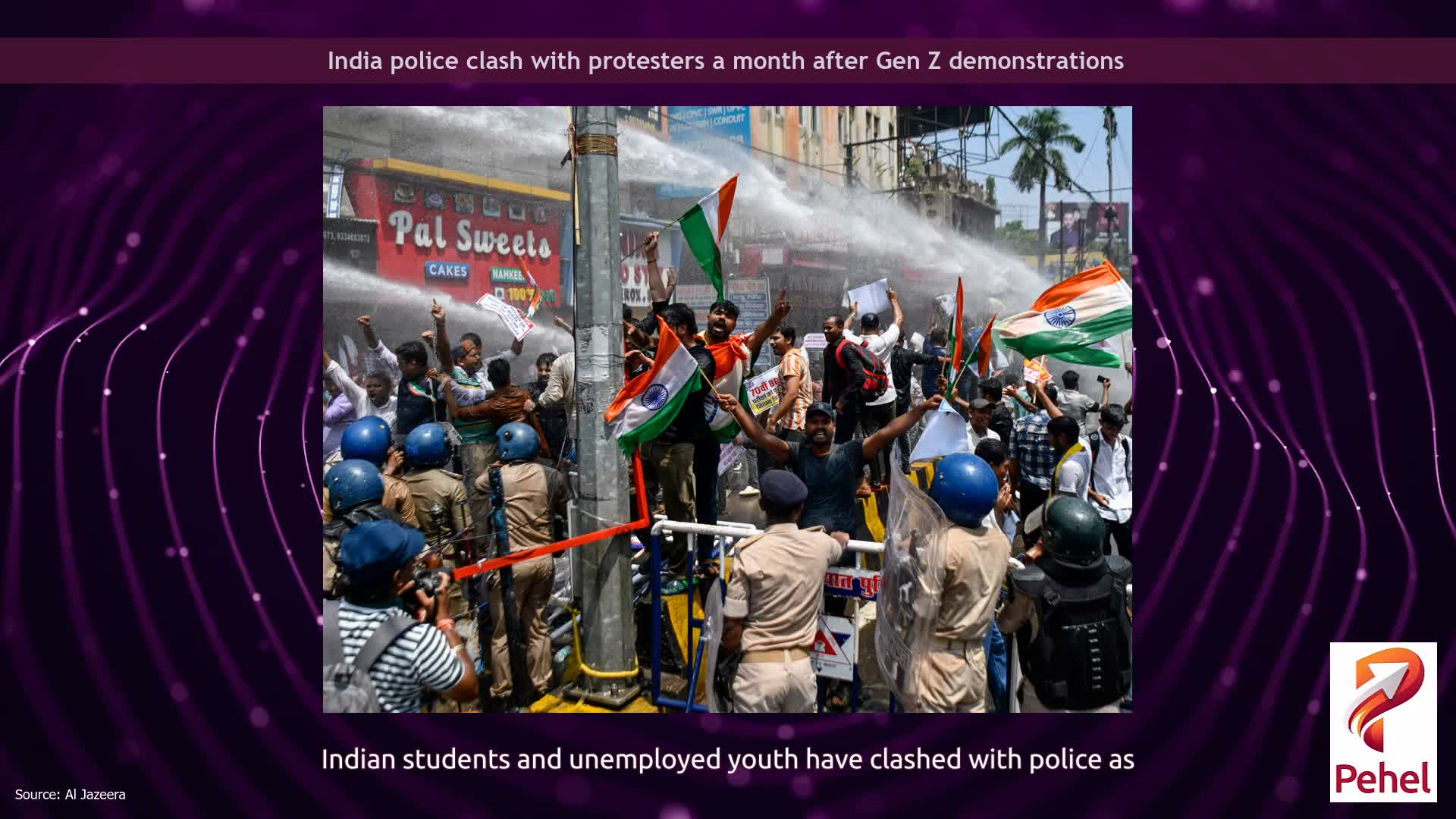
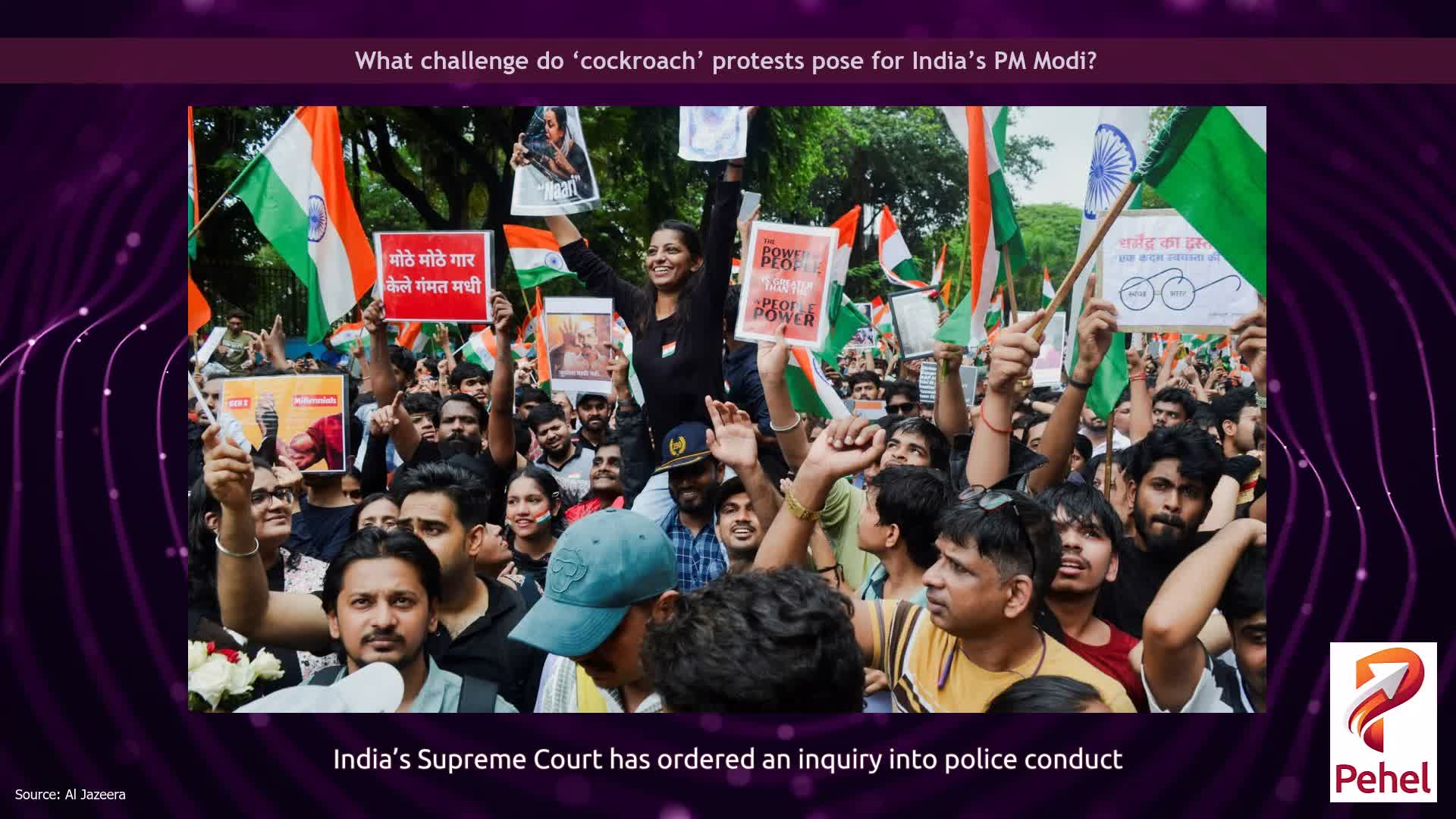
India’s youth have had enough.
After years of exam scandals, persistently high unemployment, and opportunities slipping further out of reach, simmering frustration is boiling into open anger online and on the streets – and a demand for accountability that many say they can no longer ignore.
For one Indian graduate of Boston University, watching from afar is not enough.
Abhijeet Dipke, the 30-year-old founder of the satirical Cockroach Janta Party that has gone viral across India, has said he is on his way back to New Delhi, determined to turn his generation’s wrath into action. He says he plans to lead a protest to the Jantar Mantar monument this weekend demanding the resignation of India’s education minister, Dharmendra Pradhan.
“My friends and family are scared that I could get arrested at the airport,” said Dipke in a post on Instagram this week. “But how long can I fear jail? This country belongs not just to one party, but to all of us. This is a question of our future. Our future is getting ruined.”
The spark that has lit this particular Gen Z flame is India’s high-stakes university entrance exams: make-or-break tests that millions compete in for a limited number of seats.
The system has long been mired in controversy, including exam paper leaks and technical failures, placing immense pressure on students, and a financial burden on families investing everything in their children for a promise that can often appear fragile.
Veronica Madan, 24, has twice taken India’s notoriously competitive medical school entrance exam, a test that shapes the futures of hundreds of thousands of aspiring doctors each year. She says the pressure does not begin on exam day, but months — even years — in advance.
“It comes from the feeling that we need to succeed at any cost, the fear of disappointing myself, the fear of disappointing my family,” she said.
Madan spent two years preparing, but her scores ultimately fell short of securing a place at one of the country’s top medical colleges.
“That was a very disheartening situation for me,” she said, explaining that she is now pursuing a master’s degree in forensic science. “But that rejection became my redirection.”
CNN has contacted India’s Ministry of Education and the country’s ruling Bharatiya Janata Party (BJP) for a response.
India, home to 1.4 billion people and the world’s most populous nation, has one of the youngest populations in the world, and its youth are coming of age with unprecedented momentum.
Better educated, digitally savvy, increasingly connected, and determined, this generation is redefining what ambition looks like in a rapidly changing society. Classrooms, startups, and digital platforms have become launchpads for upward mobility.
Yet optimism is also tempered by stark realities.
There are more than 360 million people between the ages of 15 and 29 in the country, according to a recent report by Azim Premji University in Bengaluru, and unemployment among this group remains stubbornly high.
Nearly 40% of graduates aged 25 and under are unemployed, and about 20% of 20–29-year-olds are without jobs, according to the report, which identified the transition from education to unemployment as a “major challenge.”
India’s Chief Justice made remarks widely taken as calling the country’s youth “cockroaches.” What followed was the satirical “Cockroach Janta Party” which now has more than 10 million Instagram followers. CNN’s Rhea Mogul reports.
Inflation continues to bite, and a growing number feel overlooked by those in power.
Enter the Cockroach Janta Party. Thanks to a blend of meme mastery and biting satire it has amassed more than 22 million followers in a single week, capturing youth anger.
AI-generated images of its virtual cockroach mascot quickly saturated social media, while also making their way onto news channels and into newspapers across the country.
Now it hopes to take its online frustration to the streets.
The Cockroach Janta Party owes its existence to remarks made by Chief Justice Surya Kant, widely taken as calling the country’s unemployed youth “cockroaches.” He later clarified he was talking about people who entered certain professions using fake degrees, but the anger was felt by many.
One of the party’s followers, Amrita Singh, said it’s the youth who actively participate in the “growth and development” of the country.
“I’m very proud and happy that this time of political party has been formed in India,” she said. “They are raising the issues of the nation which should be corrected.”
The judge’s cockroach comment also just happened to coincide with swirling anger over university exams.
Just days before Kant’s remarks, more than 2 million students who sat for India’s largest medical entrance exam were told their results would be scrapped, after allegations emerged that the paper had been leaked.
Exam-related leaks and controversies have been an issue long before the current government has come to power, with students growing increasingly frustrated at the occurrence.
“These leaks are deeply disappointing,” said the master’s student Madan. “We don’t want less competition, we want fair competition.”
In recent years, South Asia has witnessed a surge of youth-led movements challenging perceived corruption and entrenched political patronage.
In 2024, Bangladesh saw a student uprising swell into a mass movement involving tens of millions, ultimately toppling Sheikh Hasina’s autocratic government and forcing her into self-exile in neighboring India. A year later in Nepal, youth-driven activism once again reshaped the political landscape, bringing down the sitting government and clearing the path for Balendra Shah, a rapper-turned-politician, to rise to power.
India’s government, ruled by the BJP with Prime Minister Narendra Modi at the helm, has weathered a series of defining tests over the past decade. From the shock of demonetization to the yearlong farmer protests and India’s devastating second Covid-19 wave that drew global attention, his administration has faced both policy backlash and sustained public scrutiny.
Yet Modi’s political appeal has remained resilient. He has continued to secure electoral victories with commanding mandates, while the BJP has expanded its footprint, making notable inroads into historically resistant regions.
The Cockroach Janta Party’s founder, Dipke, told the Associated Press that “five years ago, nobody was ready to speak up against Modi or the government,” but he says times are now “changing.”
He has since appointed three official spokespeople – an investigative journalist, a filmmaker, and a former McKinsey employee – to speak on behalf of the party.
“We are a youth political movement and our demand is this: there has to be accountability in the system,” said spokesperson and investigative journalist Sourav Das during a news conference on Wednesday. “The system has collected so much rot. The people have been very vocal.”
Das seemingly alluded to India’s declining position in the global press rankings and to Modi, who has not held a single solo press conference during his time in office.
“You will have seen that we haven’t had a lot of press conferences in this country for several years now,” Das said. “We will also take questions.”
Dipke, the founder of the Cockroach Party, said he will arrive at Delhi’s Indira Gandhi International Airport at 8 a.m. local time on Saturday, marking the start of what he says, will be a carefully orchestrated demonstration.
Upon arrival, he and his supporters plan to seek police approval before making their way – if permitted – to Jantar Mantar, the 18th Century monument long regarded as hub for political demonstrations in the capital.
“Our protest will remain peaceful. It will be conducted in a democratic manner,” Dipke said. “It’s time we restore accountability.”