Lee el artículo en español
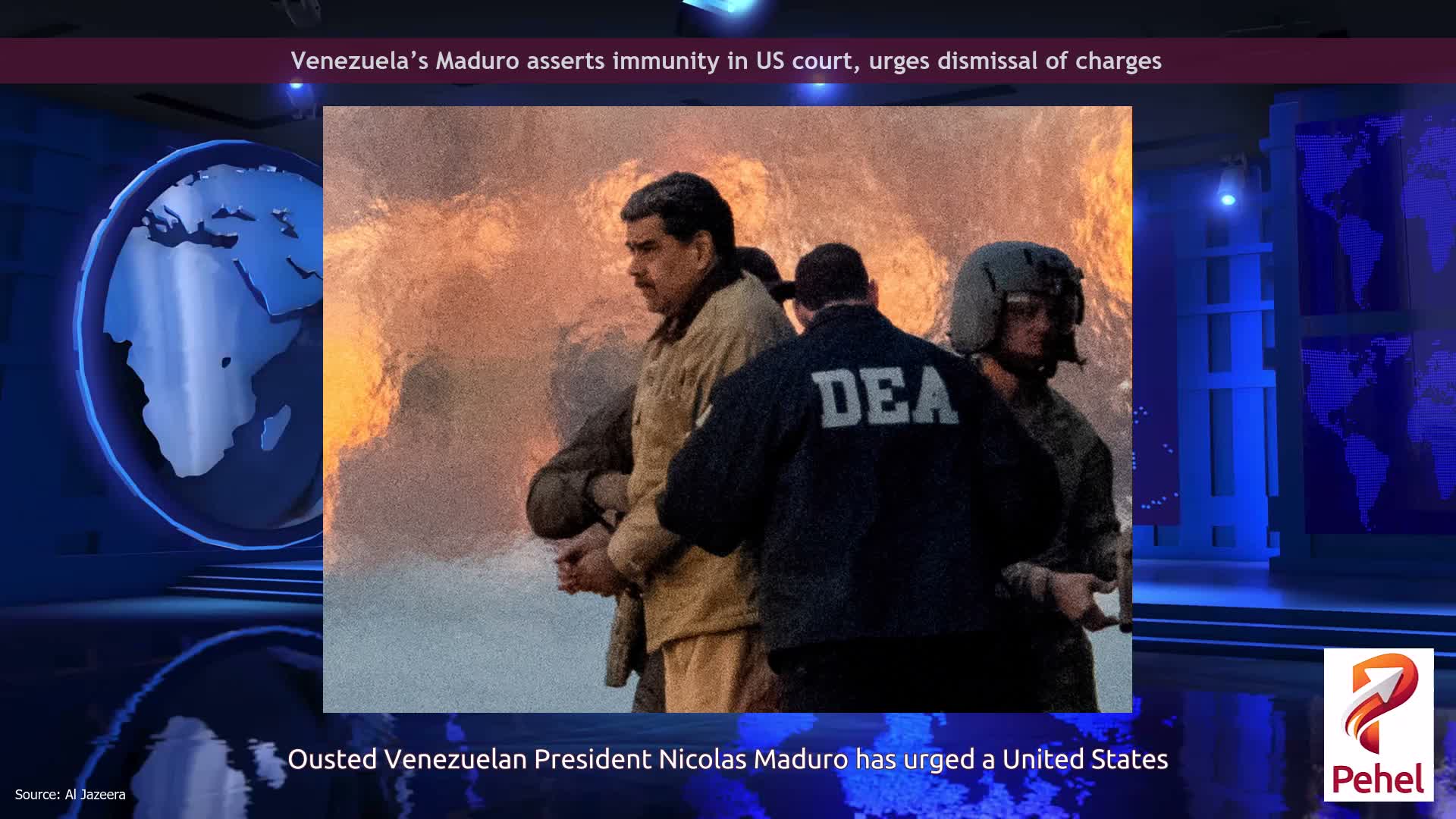
It’s a “new political moment” in Venezuela, to use its interim government’s favored euphemism for the fallout of President Nicolás Maduro’s capture by US forces earlier this year. The operation ushered in a major cabinet reshuffle , as well as new laws favorable to international investment.
A recent military exercise at the US Embassy in Caracas three weeks ago illustrates this new reality. This flex of US strength in Venezuela’s capital city would have been unimaginable just last year – today it underlines the survival strategy of the Chavista regime that came to power 27 years ago with the election of Hugo Chávez.
Venezuela’s acting President Delcy Rodríguez , appears to be continuing the tradition of her predecessors of making tactical concessions while maintaining the ultimate goal of keeping Chavismo in power.
And while anti-imperialist rhetoric aimed at the United States has disappeared from the political spectrum since Maduro’s capture, everything else remains largely the same in Venezuela: A concrete date for democratic presidential elections is still not in sight. The country’s repressive structure remains in place, despite its condemnation by a United Nations International Fact-Finding Mission and investigation for possible crimes against humanity in the International Criminal Court (government has dismissed as politically motivated).
CNN gets rare look inside Venezuela with Maduro imprisoned in US
And despite a timid political opening that has allowed the return of several opposition leaders and the emergence of others from hiding, over 400 political prisoners remain in custody as of May 25, according to figures compiled by the NGO Foro Penal.
Amid all this, Rodriguez has found an unexpected ally in US President Donald Trump.
Seven days after Maduro’s capture, Venezuela’s Minister of Communication and Information, Freddy Ñáñez, held an emergency meeting with pro-government journalists. A leaked video of the meeting showed showed Ñáñez outlining the key messages as the attendees sought to explain — and understand to themselves — what was happening.
Toward the end of the meeting, Ñáñez interrupted one of the speakers with an announcement: acting president Rodríguez was ready to speak with the attendees. She quickly laid out her strategy under US pressure: “We must proceed with patience and prudence, with three very clear objectives, sisters and brothers. The first is to preserve the peace of the Republic, the second is to rescue our hostages, and the third is to preserve political power,” she said.
Five months after that meeting, Rodríguez has indeed kept her political power with the backing of Washington, which benefits from the supply of Venezuelan oil now that it is immersed in a military campaign in the Middle East, ahead of November midterm elections.
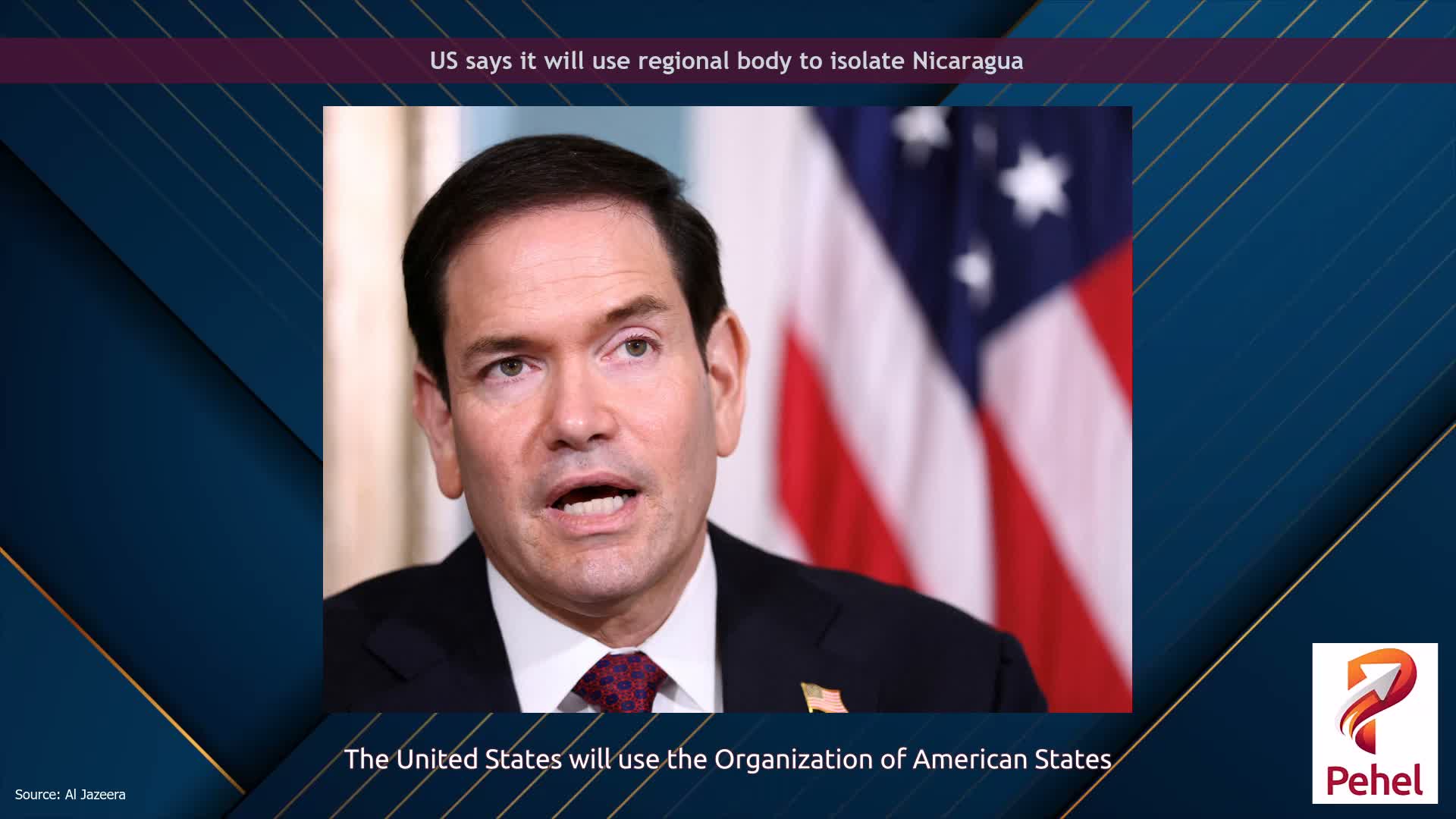
There are few signs that a transition to democracy in Venezuela is a serious priority for Rodriguez or for the current US administration, which, despite the three-phase plan announced by Secretary of State Marco Rubio, seems comfortable with the oversight it exercises over Maduro’s successors.
According to Rubio, this framework focused first on stabilizing Venezuela, then on the country’s recovery, and finally, on the transition to democracy. Venezuela currently appears to be in the second phase, which aims to open the country´s vast resources to US and international companies. The country’s legislature recently amended its Chávez-era Hydrocarbons Law which had centralized control over oil production and increased royalties paid to the Venezuelan state.
“Delcy Rodríguez is doing a fantastic job,” Trump has said on several occasions.
The growing ties between Washington and Caracas were on display this week when the US and Venezuela carried out a joint operation targeting Tren de Aragua, the notorious Venezuelan gang designated as a Foreign Terrorist Organization by the US government.
Trump said Friday that Héctor Rusthenford Guerrero Flores, known as “Niño Guerrero,” and credited with transforming the prison gang into a transnational crime syndicate, was killed in US military strike.
Trump said the operation was “coordinated closely with our friends in Venezuela, with whom we are working very well.” Venezuela’s government said the operation involved intelligence sharing and specialized technical support, highlighting a level of security cooperation that would have been difficult to imagine before Maduro’s capture.
Washington’s determined support for Caracas is producing what some analysts call “normalization without transition.”
Earlier this month, General Dan Caine, chairman of US Joint Chiefs of Staff, landed in Caracas for meetings with high ranking members of Rodríguez’s interim government, while she was in India for a diplomatic visit. Caine, who also visited the US Embassy in Caracas’ Marine security unit, said his visit was tied to Washington’s plan for the country.
CNN boards first commercial flight to Venezuela in nearly seven years
It was a visit interpreted by the most leftist sectors of Chavismo as a betrayal of the ideals of a movement that in 2008, during the presidency of Hugo Chávez, expelled then-ambassador Patrick Duddy from the country with the phrase “go to hell, f–k Yankees.” But it also demonstrates just how far its pragmatic leaders are willing to go in order to stay in power.
Other recent concessions to Washington: Last week, Venezuela’s Congress pushed through changes in the electricity sector, including a reform that partially opened it to private investment. And Rodriguez recently extradited Alex Saab, a former Minister of Industry and close Maduro ally, to the US.
In exchange, Washington has lifted personal sanctions against the interim president and backed measured aimed at Venezuela’s economic recovery, signaling a notable departure for previous policy.
While offering the Trump administration and foreign investors more favorable conditions in strategic sectors — especially oil — Rodriguez is strengthening her control over Venezuela’s economic institutions and political calendar. The easing of sanctions, agreements with Chevron, partial opening of state industries, and institutional changes have all coincided with a growing concentration of power around her –– and uncertainty about the country’s political future.
Asked a few weeks ago when there would be elections in Venezuela, the acting president replied: “I don’t know, sometime.”
While the ruling Chavismo movement is now consolidating its unexpected ties with Washington, Rodríguez appears to aspire to lead this new phase herself, with calls to leave behind the harsh years of her predecessor.
“Get over it, forgive us, and come back,” her brother Jorge Rodríguez, president of the National Assembly, urged the Venezuelan diaspora in late April during a speech.
According to public records , Rodriguez has appointed a California-based lawyer to represent her interests in dealings with US officials. According to the same document, that lawyer may also advise her on a possible future presidential campaign in Venezuela.
This would place Rodriguez and the Chavismo movement in line with other past strongman movements in Latin America, such as Peronism in Argentina. Ultimately, they share the same principle: the government’s ideological orientation may change over time. What is crucial is preserving power.