For decades, drug lords with names like “ El Chapo ” and “ El Mencho ” have been the poster boys of the US fight against Mexican drug trafficking. Now the Trump administration has adopted a new target: well-heeled politicians who allegedly accept dirty money to help the criminals.
The US Treasury recently accused cartels of “increasingly using (their) illicit profits to make cash payments to Mexican political campaigns.” Their goal, the statement said, was to elect candidates “willing to defend the cartels and their interests.”
It’s no secret that Mexican organized-crime groups pour money into electoral campaigns, especially at the local level. But it’s rarely addressed openly by Mexican officials. The alert from the Treasury Department’s Financial Crimes Enforcement Network ignited an uproar, with analysts seeing it as the latest sign the United States wants to go after not just cartel capos, but their suspected enablers in government.
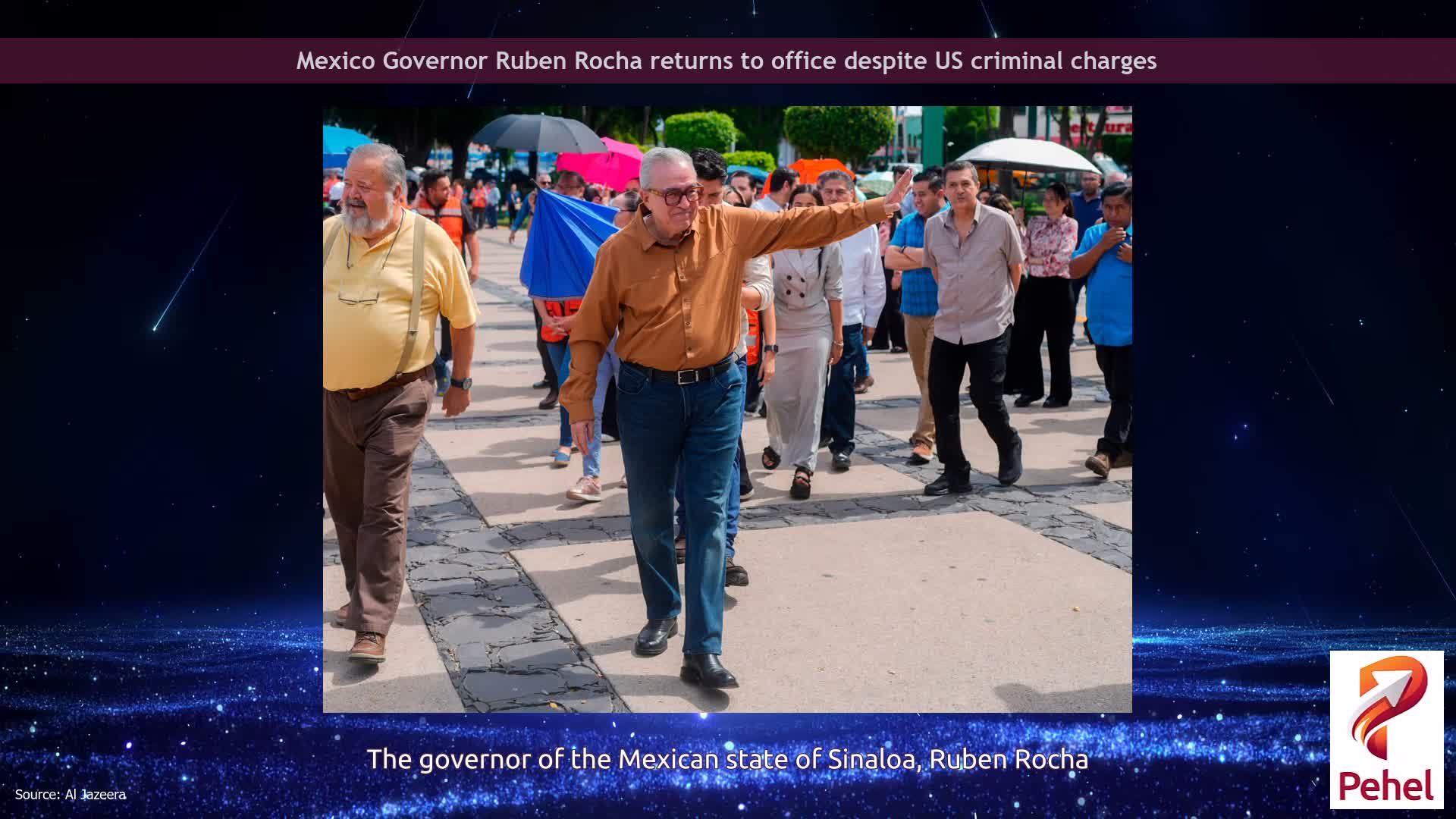
In the last year, the Trump administration has yanked the US visas of at least one governor, Marina del Pilar Ávila Olmeda of the Mexican state of Baja California, and numerous mayors. And in a rare move, US prosecutors indicted a sitting governor – Rubén Rocha Moya of Sinaloa – for allegedly allowing drug traffickers to operate in exchange for bribes and electoral support. Both Rocha and Ávila, who are both from the ruling Morena party, have denied wrongdoing.
The actions mark a sharp break with a US practice of handling bilateral disputes largely behind closed doors, and not openly interfering in Mexican politics.
“This is uncharted territory in US-Mexico relations,” said Pamela Starr, a political scientist at the University of Southern California and author of a recent book, “The Making of Mexico: Revolution, Reform, and Transformation.”
The United States traditionally gave Mexico “a lot of domestic political autonomy,” she said, to ensure stability in a neighbor willing to cooperate on issues ranging from global power relations to illegal migration and trade.
What changed? The Trump administration has embraced a hard-line approach that has included labeling the cartels as terrorist organizations and bombing suspected drug boats in the Caribbean and Pacific. US authorities may also now be in a better position than ever to prosecute politicians who assist organized crime groups. Thanks to aggressive American anti-drug operations and cooperation from Mexico, scores of top-level cartel figures have been sent to US custody in the past two years. Security analysts speculate that many are willing to talk about their bribes to politicians, in hopes of reducing their sentences.
“It’s the only realistic way in this country to detect the ties between organized crime and political campaigns,” said Luis Carlos Ugalde, an academic who led Mexico’s Federal Electoral Institute from 2003-07.
But the US policy is straining relations with Mexican President Claudia Sheinbaum and her left-wing Morena party, which has a congressional majority and holds nearly three-quarters of the country’s governorships. If the Trump administration goes too far, said Starr, “they risk poisoning the waters of bilateral security cooperation.”
No one knows the exact scale of cartel donations to Mexican political campaigns, but even former electoral officials acknowledge the sums are significant.
“It’s a phenomenon that has detonated very rapidly,” said Ugalde, adding that the problem barely reggistered two decades ago, when he was an electoral official.
In 2018, he co-authored a report estimating that candidates for governor typically spend at least 15 times as much on campaigns as they report to authorities. The “dark money” includes not just organized crime contributions, but funds siphoned from government budgets, and donations from business owners hoping to win contracts, he wrote.
Campaigns generally receive such funds in cash, and disburse them the same way, leaving no financial trail. “No one pays for a get-out-the-vote operation with their American Express card,” noted the report, titled “Money Under the Table.”
Jaime García, a political consultant, said campaigns have become increasingly expensive over the past few decades as Mexico transitioned from a one-party state to a competitive democracy. That’s motivated party officials to ignore campaign-finance rules and accept illegal donations, he said.
Rarely have the donors or recipients of narco funds been prosecuted, let alone convicted.
There are multiple reasons for that failure. Mexico has a weak, overwhelmed justice system. Witnesses are often too frightened of the cartels to testify in court. And none of the parties have been keen to scrutinize the cash flowing into their campaigns.
“It’s not convenient for anyone to trace the money spent during the days of official campaigning,” García said.
How Mexico’s ‘El Mayo’ went from feared cartel boss to life imprisonment in the US
While following the money may be difficult, there are other signs of the growing role of organized crime in politics. More than three dozen candidates were killed in the run-up to the 2024 national election, and hundreds more dropped out of the race, as crime groups maneuvered to install their allies. Political control of towns and cities has become more important as cartels have diversified into activities like extortion, illegal logging and domestic drug sales. If they once focused on securing highways to send heroin or cocaine to the United States, they now seek to control local mayors’ offices and police forces, and entire populations.
Sheinbaum has said that little evidence has emerged to substantiate claims of cartels interfering with elections, and noted that a state-level electoral tribunal ratified Rocha’s win in Sinaloa, after examining reports of irregularities. Still, she has proposed that federal electoral authorities establish a verification board to screen candidates for organized-crime links before next year’s mid-term elections.
She has also aired suspicions about the goal of the Trump administration’s targeting of politicians allegedly in bed with cartels. “Is this a legitimate interest to fight organized crime?” Sheinbaum asked in a recent speech. “Or are we perhaps seeing how sectors of the US ultra-right are using our country to position themselves in the run-up to the (November) 2026 elections?”
The recent Treasury statement took aim at one of those newer cartel activities. The contraband sale of oil and gasoline has become a multibillion-dollar business in Mexico, with the government accusing crime groups of working hand-in-glove with corrupt officials and businesses. In some cases, the crime rings steal fuel in Mexico and re-sell it; in others, they smuggle it across the US border.
The Treasury alert said cartels are using profits from such sales to elect corrupt Mexican politicians who provide access to “key administrative posts in the government” so the criminals can more easily smuggle fuel and launder the proceeds.
It was a sweeping indictment of Mexican politics, and Sheinbaum responded indignantly. “What evidence do they have?” she asked at a news conference.
The allegation was just part of a drumbeat of US criticism over the cartels’ political protection rackets.
US Ambassador to Mexico Ronald Johnson signaled in April that the Trump administration was opening a new front in the anti-drug fight, warning that “significant action” was coming against bribery and corruption in Mexico. Almost a week later, the US Justice Department announced the indictment of Rocha and nine other current and former Sinaloa officials. It accused them of working with the Sinaloa cartel to send “massive quantities of narcotics into the United States in exchange for political support and bribes.”
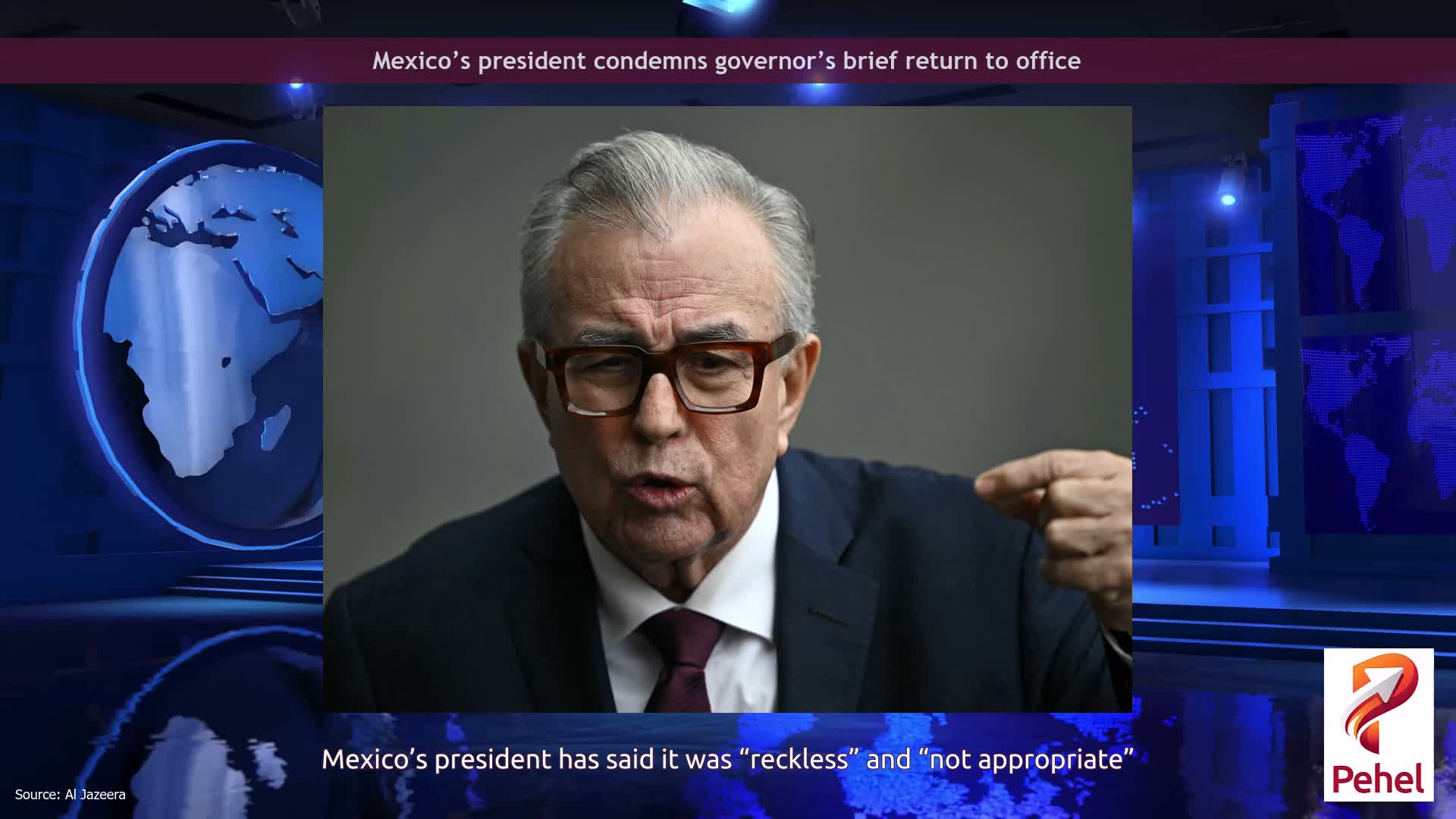
The case is especially delicate because Rocha is a close ally of former President Andrés Manuel López Obrador, Sheinbaum’s mentor. She has refused an American request to detain Rocha for extradition, saying Washington hasn’t handed over proof of his guilt. The Sinaloa governor has taken a leave of absence while the US investigation is underway. He has alleged the accusations were aimed at weakening Morena. “These charges against me are false,” he told reporters. “I will not allow them to use me to damage the movement I belong to.”
Analysts say the Trump administration policy has created a dilemma for Sheinbaum: Morena has promoted itself as an anti-corruption party, and she does not want to give the impression she’s covering up graft. Yet handing over prominent Morena politicians to the United States could damage the party’s popularity and weaken Sheinbaum’s own control of her government.
Governor of Mexico’s Sinaloa state steps down after US drug indictment
Until now, the Mexican leader has largely sought to placate US President Donald Trump in his anti-drug campaign. She sent thousands of soldiers to patrol the Mexican border and transferred more than 90 top drug cartel figures to US custody. Her government has cracked down on fuel theft and arrested dozens of current and former local officials – including some from Morena – accused of colluding with crime groups.
But in recent weeks she has hardened her tone, saying the US government was trying to undermine Mexico’s sovereignty with indictments like Rocha’s. Both the Mexican government and public are highly sensitive to interference from a neighbor that annexed more than half their territory in the 1800s.
“Let’s be clear: first they come for some, then for others, until the offices of the Department of Justice become the main electors in Mexico,” Sheinbaum said in late May. “We cannot allow this.”
While few doubt corrupt politicians offer essential support for organized crime, it’s not clear how much the Trump administration’s policy can ultimately weaken the groups. Cartels, smaller mafias and street gangs hold sway in town halls and state governments around the country and have deepened their role in the economy. Both US and Mexican critics say this country lacks an effective justice system and well-trained police, and has persistently underfunded its security apparatus. The cartels are also fortified by strong US demand for drugs and the illegal flow of American guns over the border.
“Fixing the problem in Mexico is a generational project,” said Starr. “It’s not something that can be done in a year or two, or the remaining four years of the Sheinbaum administration.”