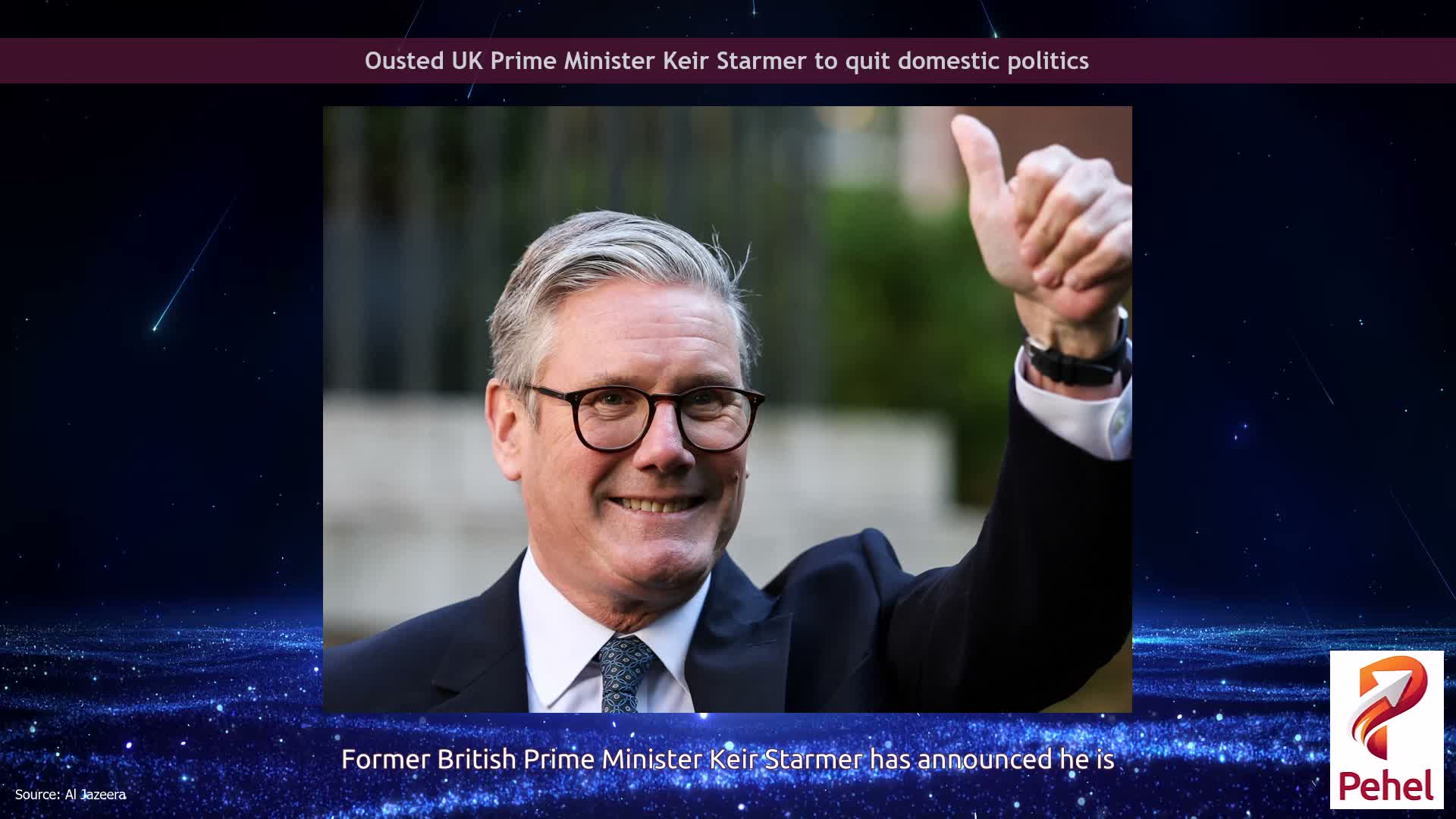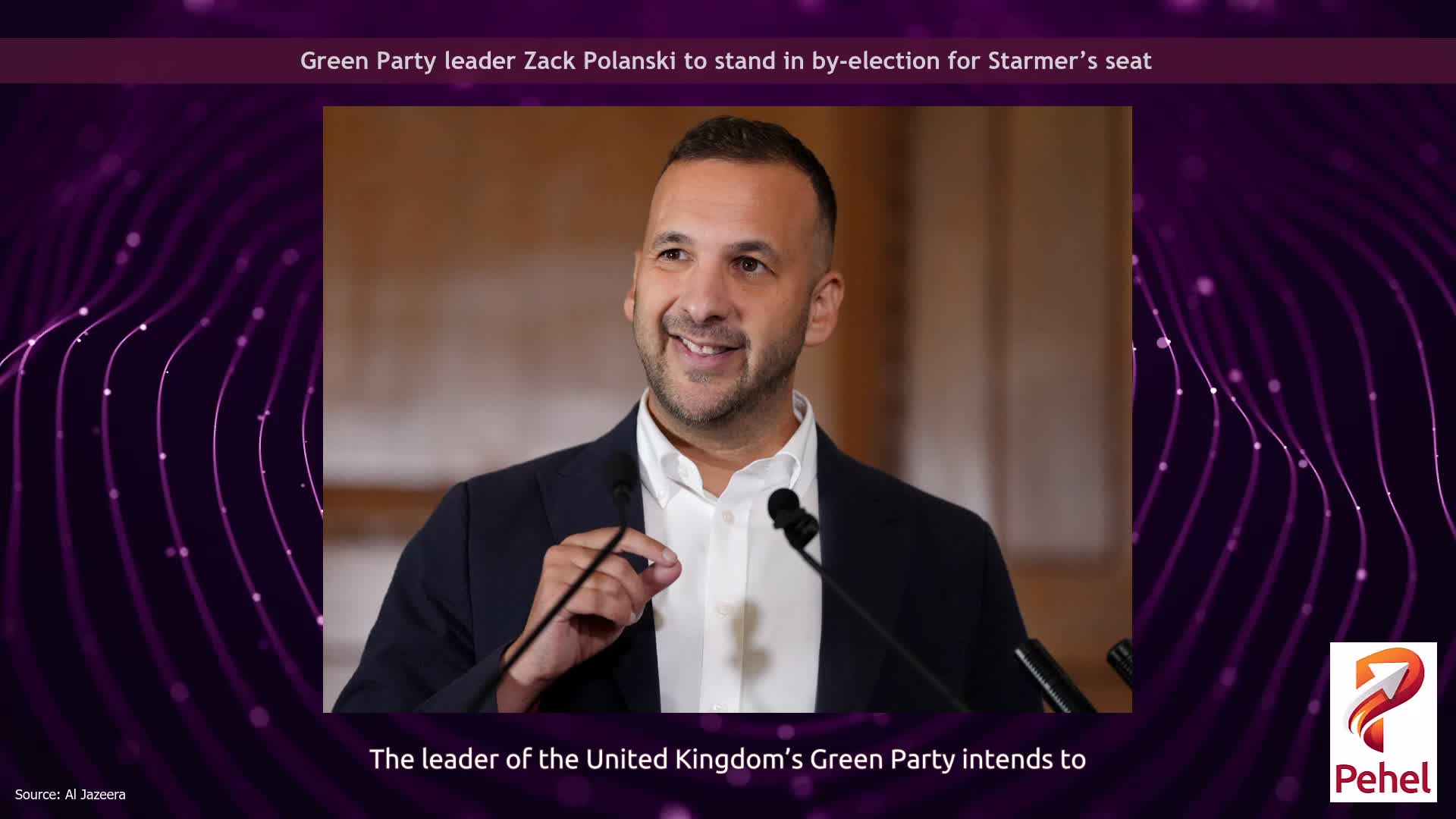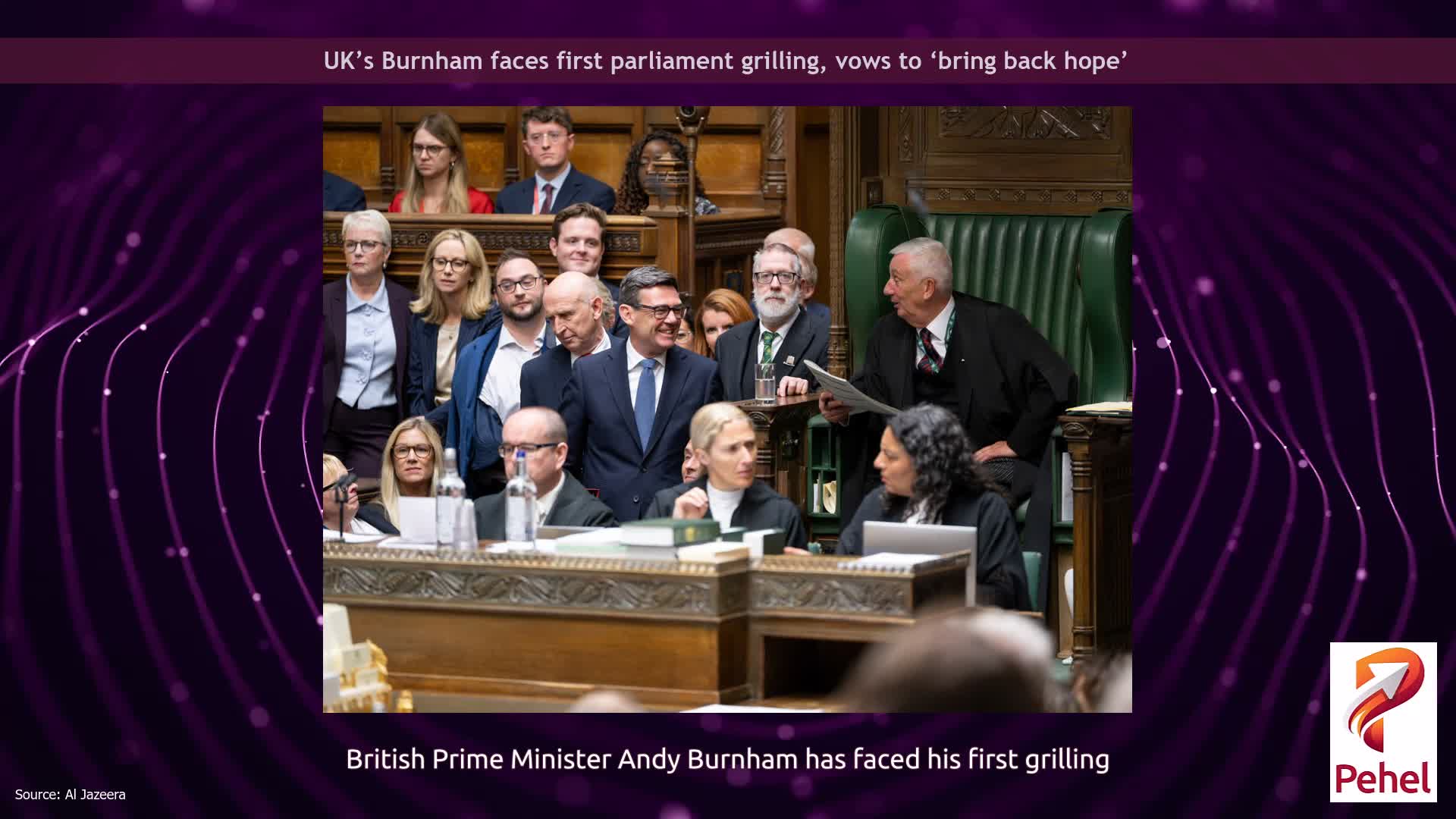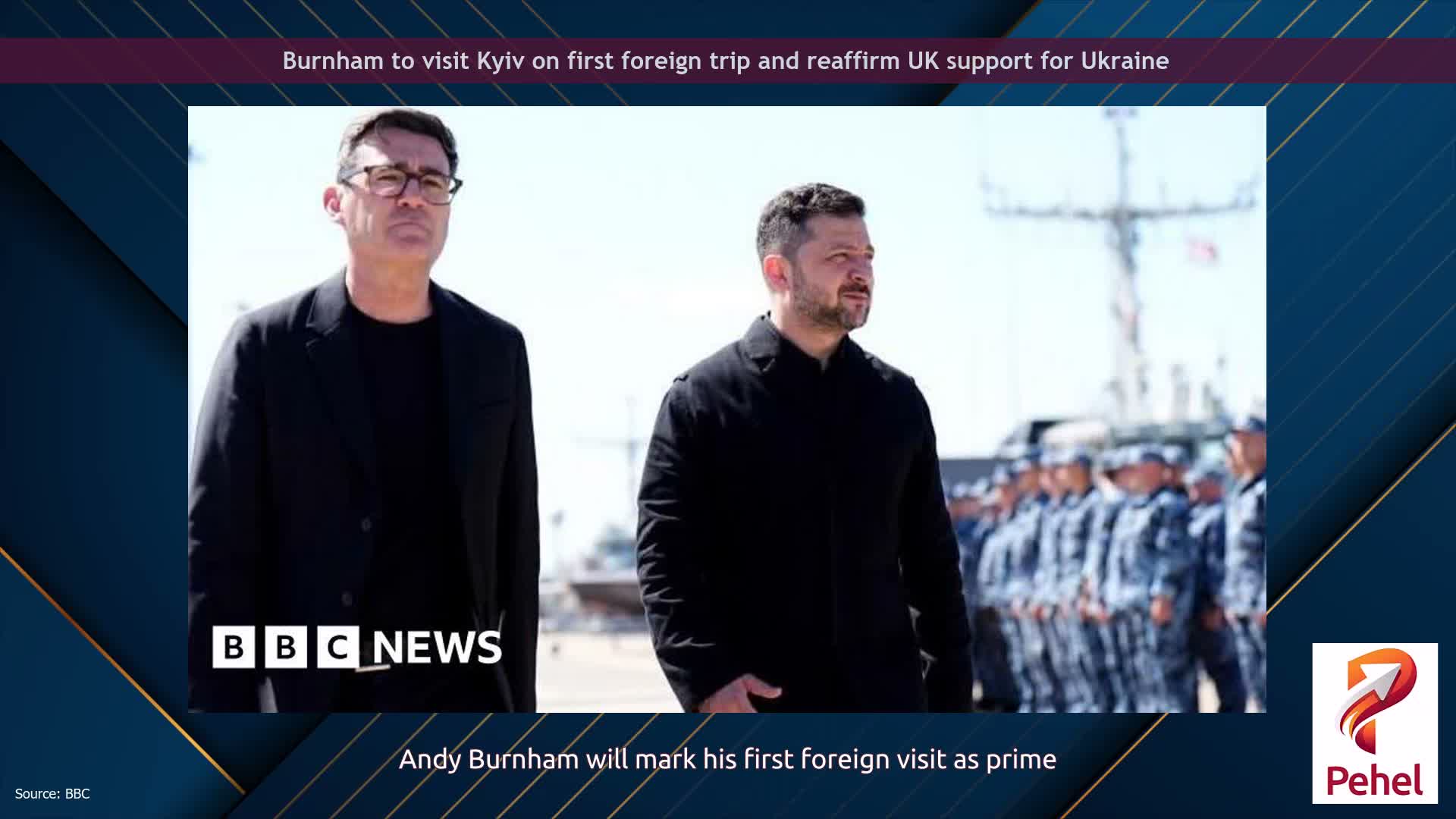
Greater Manchester mayor Andy Burnham is poised to challenge Britain’s Prime Minister Keir Starmer for the country’s premiership on his return to parliament after winning a by-election in Makerfield , northwest England.
Thursday’s election, the equivalent of a US special election, was triggered to pave Burnham’s route to Downing Street.
Despite being one of the country’s most popular politicians, he was previously unable to challenge Starmer for leadership of the governing Labour Party, and the country, since he was not a sitting Member of Parliament (MP).
But, two years after Labour won a landslide election, Starmer’s popularity and authority have crumbled, while Nigel Farage’s populist right-wing party Reform UK and the populist left-wing Green Party have surged in opinion polls.
Only Burnham, his allies said, could stem the party’s electoral decline in a way that the hugely unpopular Starmer cannot.
And the resounding manner of Burnham’s win – comprehensively defeating Reform weeks after Labour was routed in local elections – gives him considerable momentum too.
Already on Friday, some Labour MPs were repeating their calls for Starmer to step down even though Burnham himself shied away from explicitly referencing his leadership ambitions.
“Everyone knows that politics isn’t working,” said Burnham after the results were announced. “Everyone can feel that the country isn’t where it should be. Tonight could just be the turning point.”
Starmer has vowed to fight any leadership contest, deepening the sense of crisis within the Labour Party.
Over the past few years, Burnham has quietly become one of the most popular politicians in the country. His charismatic persona has managed to overshadow any contradictions in his public image, like his insistence he is an outsider to Westminster, despite becoming a parliamentary researcher at 24, a special adviser at 28 and a member of parliament for the first time at just 31.
During his 16 years in parliament, he served in both Tony Blair and Gordon Brown’s governments, eventually rising to become health minister before twice running unsuccessfully for the Labour leadership, in 2010 and 2015. In that second leadership election, he was roundly defeated by Jeremy Corbyn, a veteran socialist whose victory dragged the party leftwards.
Although Burnham initially served in Corbyn’s shadow cabinet, becoming Manchester mayor in 2017 allowed him to largely sit on the sidelines of the factional wars that consumed Labour during and shortly after Corbyn’s leadership.
So, where much of Labour’s left flank despises Starmer for his role in moving the party to the center and ejecting Corbyn from it, Burnham is less associated with this era.
And as Manchester mayor, he showcased his ability to stand up to Westminster in incidents that encapsulated the longstanding North-South divide in British politics, burnished his outsider status and gave rise to his nickname “The King of the North.”
During his tenure, Greater Manchester’s economy surged and he oversaw improvements to its public transit network, as well launching a major home-building program.
He had a “very clear ambition for Greater Manchester, for its economic success, for social inclusion, for everybody being able to live a good life in the city region,” his deputy mayor Kate Green told CNN.
“He’s also been very focused on things that will make a difference for people’s everyday lives.”
Other flagship pledges, like an ambitious promise to end homelessness in Manchester by 2020, were not fulfilled, and critics argue that much of the groundwork for Burnham’s big achievements had already been laid by the time he came to power.
Still, as the face of Manchester’s rejuvenation, Burnham assumed a US governor-style regional leader profile.
In Labour circles, there is an old joke poking fun at Burnham’s chameleon-like ability to blend into whichever set of ideas is in vogue on the left at that moment in time. “A Blairite, a Brownite and a Corbynite walk into a pub,” the joke goes. “The barman says, ‘What’re you drinking Andy?’”
For all his shapeshifting, more broadly Burnham “is associated with the ‘soft left’ of Labour,” said Lotte Hargrave, a political science researcher at Manchester University. “You’d put him a bit further left perhaps than Starmer, but certainly further right than someone like Corbyn.”
And in the media, at least, Burnham has become associated with “Manchesterism,” a term referring to his time as Manchester mayor.
For Burnham, “Manchesterism” means “business-friendly socialism” or the “end of neoliberalism, the end of trickle-down economics that has left out places like Makerfield,” as he said in his campaign launch video.
Most importantly for Mathew Lawrence, founder of the Common Wealth thinktank who is seen as one of the intellectual voices behind Burnham, Manchesterism entails getting “better control of essential services, whether that’s housing, water, energy, transport that have been systematically outsourced, deregulated, privatized.”
Other pillars of Manchesterism, according to Lawrence, include devolving power from Westminster to other towns and cities across the country, as well as a “pro- enterprise culture… but trying to do it on terms that actually directly benefit working people.”
Why 0.1% of Britons could determine the prime minister’s fate
The program is not so different to some policies already pursued by the current Labour government. It has created Great British Energy, a publicly owned investment company, to help fund clean power, and Great British Railways to bring the rail network under greater public control.
“There are some real similarities and continuities of argument,” Lawrence acknowledged. “It’s not necessarily a radical break, but it is a big acceleration.”
With Burnham’s return to front line politics, a leadership race seems all but inevitable. Labour has teetered on the edge of one for weeks after those disastrous local election results, and only Burnham’s inability to run before now seems to have delayed one.
As Labour’s popularity has declined during its two years in government, the party has started tearing itself apart trying to settle on a diagnosis and remedy for the country’s many problems. Adding urgency to its efforts is the need to stave off any prospect of Reform UK winning a general election.
And any potential Burnham policy platform would face the same spending and political constraints as Starmer. Britain has little money to spend, while the country’s political climate is becoming increasingly fractious.
If he tacks too far right on issues like immigration, Burnham risks losing Labour’s progressive, graduate base in the cities to the populist left-wing Green Party, but if he tacks too far left, he risks alienating its traditional working-class base.
Throughout the campaign, Burnham tiptoed around these faultlines, aligning his positions more closely with those of the working-class voters in Makerfield.
On immigration, he has staked out a position closer to the current government’s, backing interior minister Shabana Mahmood’s plans to end permanent refugee status and rowing back on his previous calls to allow immigrants without settled status to claim benefits.
Similarly, he has diluted his criticism towards the fiscal rules, the self-imposed constraints that commit the government to spending less than it borrows, after some jitters in the financial market. And on Brexit, he has distanced himself from his comments in September, in which he said he would like to see Britain rejoin the European Union in his lifetime.
He will take his seat in parliament with the nation’s eyes watching his every move.